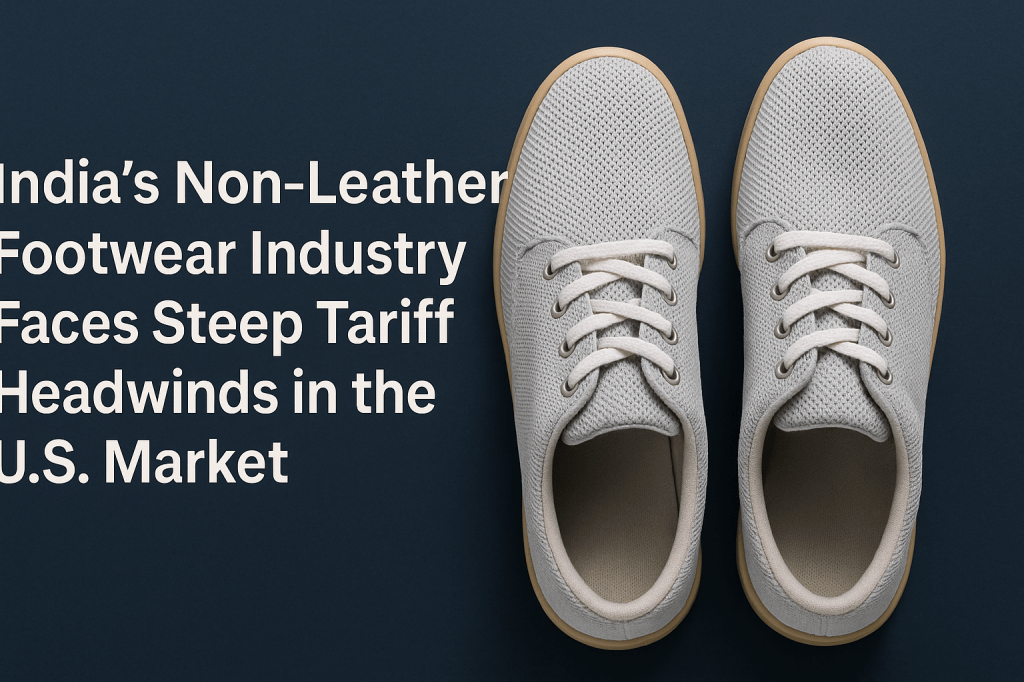
India’s non-leather footwear sector, long considered a rising player in the global value chain, is now facing a significant export challenge. The United States is reportedly considering a steep fifty percent tariff on these products—a move that could substantially erode the industry’s competitiveness in its most lucrative market.
India’s footwear exports, which reached over $3.5 billion in FY 2023–24, are a crucial component of the country’s broader manufacturing and employment ecosystem. Non-leather footwear, in particular, has been gaining global traction due to changing consumer preferences for sustainable, cruelty-free, and affordable products. The U.S. has historically been one of India’s top export destinations for this category, accounting for a sizable share of shipments. However, the proposed tariff threatens to disrupt this trajectory.
A fifty percent duty would significantly raise landed costs in the U.S., making Indian products less attractive compared to those from competitors such as Vietnam, Indonesia, and China, many of whom enjoy preferential or lower-tariff access. This potential price disadvantage is especially damaging in the budget and mid-market segments, where consumer purchasing decisions are highly price-sensitive. For Indian exporters, absorbing the added cost is unviable in the long term, and passing it on to buyers risks losing market share.
From a macroeconomic standpoint, such a tariff could have ripple effects. Non-leather footwear manufacturing in India is labor-intensive, employing a large workforce in states like Uttar Pradesh, Tamil Nadu, and Haryana. Any sharp decline in exports could directly impact employment levels, particularly among semi-skilled and unskilled workers. Furthermore, ancillary industries—ranging from synthetic materials and adhesives to packaging—would also feel the pinch.
The policy also raises questions about global trade norms and the potential for retaliatory measures. While the U.S. may justify the move on grounds of protecting domestic manufacturing, critics argue that such protectionist policies could undermine the benefits of globalization, increase prices for American consumers, and strain trade relationships with key partners like India. The situation underscores a broader shift in U.S. trade policy, where tariff-based bargaining is becoming more common even with strategic partners.
For Indian exporters, the path forward may involve a multi-pronged approach: diversifying into alternative markets such as the European Union, ASEAN, and Africa; investing in product innovation and branding to justify higher price points; and exploring joint ventures or local assembly units in the U.S. to mitigate tariff exposure. At a policy level, India could push for tariff relief through bilateral negotiations or trade agreements, leveraging its growing economic and strategic relevance.
If the fifty percent tariff becomes a reality, the challenge for India’s non-leather footwear industry will not only be about surviving a price shock but also about strategically repositioning itself in a rapidly evolving global trade environment. Whether the sector can adapt and innovate in time will determine if this potential setback becomes a long-term decline or a catalyst for transformation.#NonLeatherFootwear
#IndiaExports
#USTariffs
#TradePolicy
#ExportCompetitiveness
#FootwearIndustry
#GlobalTrade
#MarketDiversification
#ManufacturingJobs
#Protectionism
 "Connecting communities, empowering nations: Unifying the Regional and Global Economy ."
Leave a comment