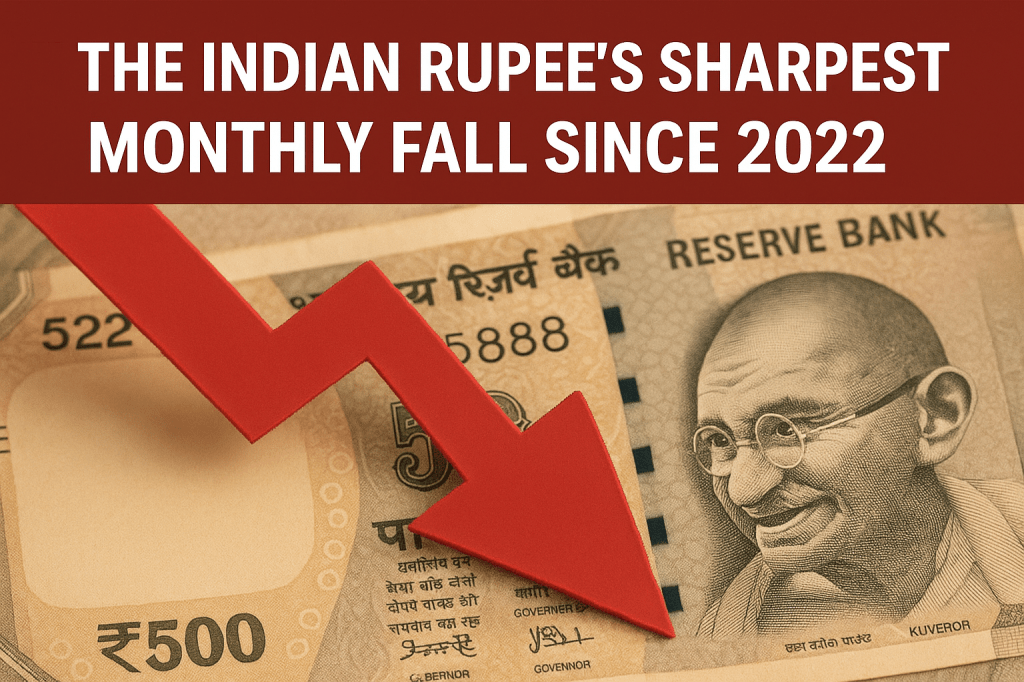
In July 2025, the Indian rupee fell by approximately 2.09%, marking its steepest single-month drop since September 2022. At month-end, it closed around ₹87.5950 per USD, having slid as low as ₹87.74, before modestly recovering to near ₹87.58 .
What Triggered the Steep Decline?
1. Surge in U.S.–India Trade Tensions
A pivotal moment came on July 30, 2025, when former U.S. President Donald Trump announced he would impose a 25% tariff on Indian exports, effective August 1, with additional penalties aimed at India’s ongoing trade with Russia in energy and defense . This rhetoric and policy escalation shattered market expectations of a smooth trade deal, triggering broad risk-off sentiment.
2. Capital Outflows and Global Dollar Strength
Foreign institutional investors withdrew roughly $2 billion from Indian equities over July, adding pressure on the rupee . At the same time, the U.S. dollar appreciated amid global uncertainty, amplifying downward pressure on many emerging‑market currencies, including the rupee .
3. Market Psychology and Month-End Dollar Demand
Technical factors also played a role: month-end demand for dollars from importers and banks increased selling pressure. Forex markets saw the rupee post its steepest one‑day decline since May, weakening to a fresh five-month low before ending at about ₹87.42 .
Broader Economic Context & RBI Response
This depreciation is part of a larger trend—over 2% loss in 2025 so far, punctuated by persistent portfolio withdrawals and weakening export sentiment . Analysts warn the rupee could weaken further, with forecasts targeting ₹88 by year-end, or possibly even ₹89.50 by early 2026, if trade tensions persist and dollar strength continues .
The Reserve Bank of India (RBI) has intervened in prior months, including net forex sales amounting to $3.6 billion in April to temper volatility . But analysts argue that these interventions may have limited impact if sentiment remains broadly negative .
Why It Matters: Risks and Ramifications
1. Higher Import Bills & Consumer Inflation
A weakening rupee makes imports like crude oil, technology components, and pharmaceuticals more expensive, risking inflationary pressure across the economy .
2. Export Competitiveness Under Stress
While higher import prices could theoretically boost export competitiveness, projected tariffs of up to 25–26% on Indian goods to the U.S. would severely undercut that advantage, especially in pharmaceuticals, textiles, and auto-parts sectors .
3. Investment and Growth Sentiment
Deteriorating trade relations and continued outflows may sap business confidence. Some economists estimate these tensions could shave up to 40 basis points off India’s GDP growth in 2025–26, especially hurting manufacturing and investment momentum .
4. Strategic & Balance-of-Power Implications
The U.S. policy moves put India in a challenging position. Maintaining ties with Russia over energy or defense is drawing fresh scrutiny and could complicate diplomatic balance with Washington .
Looking Ahead: What’s Next?
Trade Talks in the Balance: The August 1 deadline to finalize a trade deal has now passed without resolution, escalating risks that tariffs may take effect. A U.S. trade team visit to India is scheduled for late August, but momentum seems waning .
Market Volatility & RBI Vigilance: Expect continued choppy trading conditions. The RBI may step in further, but its ability to stabilize sentiment amid persistent outflows remains limited .
Macro Signals to Watch: Key indicators include U.S. inflation (PCE data), Fed rate policy signals, India’s CPI trends, and any updates on trade negotiations or new sanctions. These will likely shape capital flows, volatility, and rupee direction.
Final Thoughts
June into July 2025 saw a perfect storm: sharp policy rhetoric creating trade uncertainty, capital outflows, and a rising U.S. dollar—all combining to spark the rupee’s worst monthly performance since 2022. A durable recovery hinges on clarity in trade relations, RBI’s policy agility, and broader global macro developments. Otherwise, the rupee may continue its slide toward key psychological levels above ₹88–₹89 per dollar, with ripple effects on inflation, growth, and investor sentiment.#IndianRupee
#CurrencyDepreciation
#TradeTensions
#USTariffs
#CapitalOutflows
#DollarStrength
#RBIPolicy
#ImportInflation
#ExportCompetitiveness
#EconomicOutlook
 "Connecting communities, empowering nations: Unifying the Regional and Global Economy ."
Leave a comment