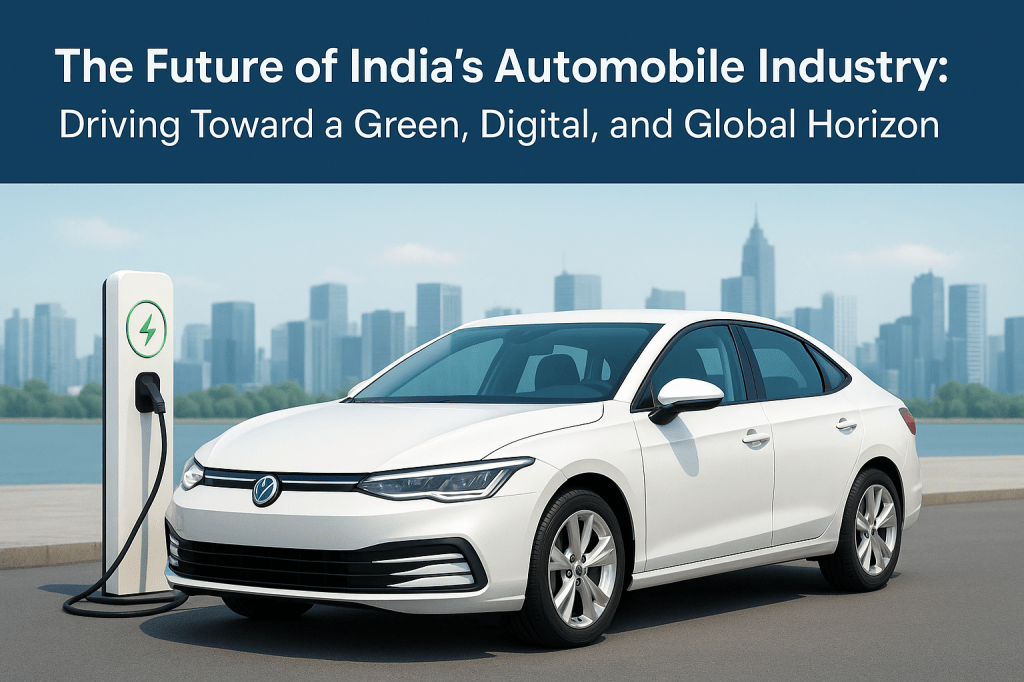
India’s automobile industry stands at the cusp of a historic transformation, with the coming decade set to redefine the country’s mobility ecosystem. As technological innovation, policy reforms, and shifting consumer preferences converge, the sector is evolving into a dynamic force for economic growth, job creation, and sustainable development.
A Growth Engine for the Economy
India’s automobile sector is projected to grow at a compound annual growth rate (CAGR) of 8.2%, reaching a staggering value of around $187.85 billion by 2029. Already the world’s fourth-largest vehicle market, India is poised to become the third-largest globally by 2026, trailing only China and the United States. This expansion is being driven not just by rising domestic demand but also by India’s increasing relevance in the global supply chain, thanks to cost-competitive manufacturing and a young, skilled workforce.
By 2030, automotive sales in India—including passenger and commercial vehicles—are expected to cross 7.5 million units, up from around 5.1 million in 2023. The surge will be supported by rapid urbanization, improved rural connectivity, and increasing disposable incomes.
Electrification and the EV Boom
Electric vehicles (EVs) are at the forefront of the sector’s evolution. Backed by government schemes like FAME (Faster Adoption and Manufacturing of Hybrid and Electric Vehicles), the Production Linked Incentive (PLI) program, and the Electric Mobility Promotion Scheme (EMPS), India is aggressively pushing for electrification. EV registrations reached over 4.4 million by August 2024, achieving a 6.6% market penetration. By 2030, India envisions significant EV integration, particularly in two- and three-wheelers and urban passenger transport.
This transition is not only about reducing emissions but also about economic opportunity. The EV sector could potentially generate 10 million direct jobs and 50 million indirect jobs by the end of the decade. However, to meet these ambitious targets, the country must address key challenges such as battery localization, charging infrastructure, and affordability.
Embracing Technology and Digital Innovation
The digital revolution is reshaping India’s automobile industry. From AI-driven autonomous vehicles to app-based digital showrooms, the entire value chain—from design and production to sales and aftersales—is undergoing digitization. Features like in-vehicle connectivity, remote diagnostics, and digital servicing are no longer optional; they are becoming consumer expectations.
Urban centers are already witnessing a shift toward connected vehicles and digital-first customer journeys. Moreover, safety standards are being upgraded significantly, with the anticipated BS7 emission norms and Bharat NCAP (New Car Assessment Program) guidelines likely to make Indian vehicles safer and cleaner.
Green and Sustainable Mobility
Environmental consciousness is driving not just EVs but also a broader trend toward alternative fuels and green mobility solutions. The future of India’s mobility will likely be a diverse mix: battery electric vehicles, plug-in hybrids, hydrogen fuel cell vehicles, and compressed natural gas (CNG) options. The government’s emphasis on local battery production, recycling ecosystems, and energy-efficient vehicle manufacturing indicates a holistic approach to sustainable development.
This focus on green mobility also aligns with India’s broader climate commitments under the Paris Agreement and its aspiration to achieve net-zero emissions by 2070. The automotive sector, being a major contributor to emissions, will play a critical role in this transition.
Investment Momentum and Employment Impact
The auto industry is not just about cars and bikes—it is a massive employment generator. The sector supports over 37 million jobs (direct and indirect), ranging from factory workers and engineers to service technicians and logistics personnel. Over the last four years, India has attracted more than $36 billion in foreign direct investment (FDI) into the automotive sector, underscoring global investor confidence.
With the shift toward EVs and smart mobility, employment patterns will change, requiring large-scale upskilling initiatives in battery technology, software integration, robotics, and advanced manufacturing.
Secondary Markets and Mobility Services
An often-overlooked growth driver is the rise of the used vehicle market and shared mobility platforms. The used car segment is growing rapidly due to affordability and increasing trust in organized platforms. Simultaneously, shared mobility—ride-hailing, subscription-based fleets, and urban transport aggregators—is expanding in metros, thanks to digitalization and changing urban lifestyles.
As these trends mature, new business models such as Mobility-as-a-Service (MaaS) and pay-per-use will further diversify revenue streams and consumer experiences.
Challenges on the Road Ahead
Despite the bullish outlook, the Indian automobile sector faces several roadblocks:
High cost of technology: Advanced features like autonomy, ADAS (advanced driver-assistance systems), and connectivity remain expensive for mass adoption.
Infrastructure bottlenecks: Especially for EVs, the lack of adequate charging stations in rural and semi-urban areas could slow adoption.
Regulatory clarity and coordination: Inconsistent state-level policies on EVs, retrofitting, and urban mobility can create confusion and disincentivize investment.
Balancing innovation with affordability: Indian consumers are highly price-sensitive. Delivering tech-enabled, green vehicles without significantly raising costs will be key to mass acceptance.
A Strategic Outlook
India’s automobile industry is on a transformational journey—from a volume-driven market to a value-driven, sustainable, and globally competitive ecosystem. The winners in this space will be those who embrace innovation, form strategic alliances, prioritize sustainability, and focus on customer-centric models.
The Indian auto sector is no longer just about transportation—it’s about technology, energy, environment, and employment. As the country gears up for a new mobility era, a coordinated approach involving the government, industry, academia, and consumers will be crucial to drive this evolution forward. With the right investments and policies, India’s automobile industry can emerge not just as a manufacturing hub but as a global mobility leader.
#ElectricVehicles #GreenMobility #AutoIndustryIndia #EVAdoption #AutomobileTrends #FDIinIndia #SharedMobility #DigitalTransformation #BatteryInnovation #SustainableTransport
 "Connecting communities, empowering nations: Unifying the Regional and Global Economy ."
Leave a comment