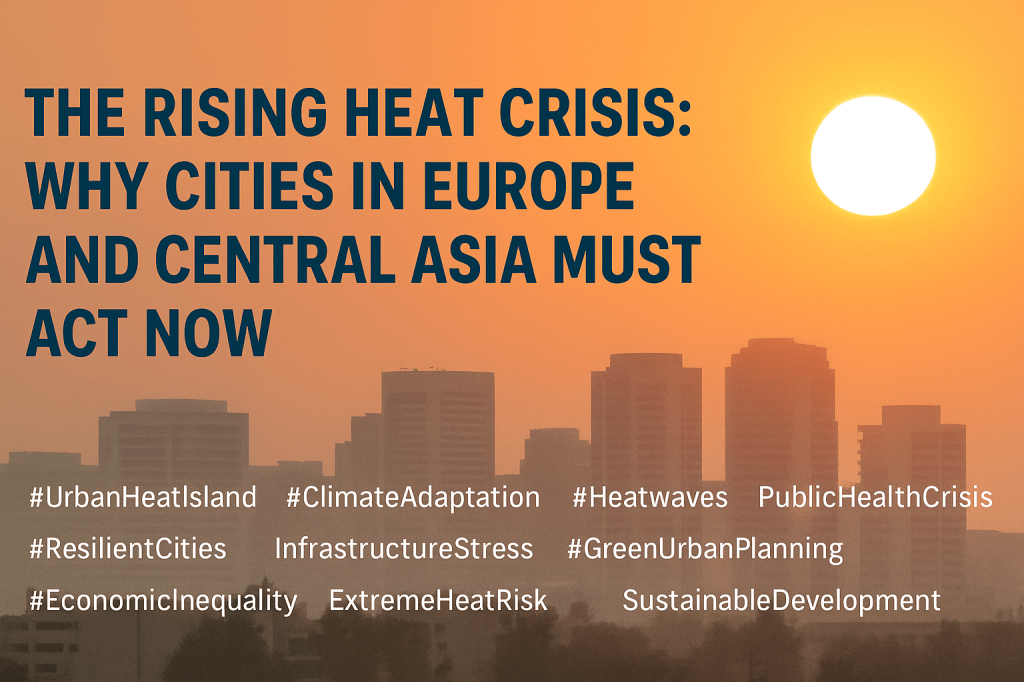
As the planet warms at an unprecedented pace, cities across Europe and Central Asia (ECA) are rapidly emerging as ground zero for one of the most underestimated climate threats: extreme heat. Unlike floods or storms, heat doesn’t topple buildings or leave visible debris, but its impact is lethal, widespread, and quietly devastating. The region is now experiencing an alarming increase in heatwaves, driven by climate change and amplified by urban design choices.
The core issue lies in the “urban heat island” (UHI) effect. Cities, due to their dense construction, limited greenery, and abundance of heat-retaining materials like concrete and asphalt, trap more heat than rural areas—particularly at night. With more than 70 percent of people living in urban settings, this creates a perfect storm: high population density coupled with heat-vulnerable infrastructure. In cities with poor airflow and minimal green cover, temperatures soar during the day and remain dangerously high after sundown.
But this is not merely a discomfort issue—it’s an economic and public health emergency. Productivity falls when it’s too hot to work, especially for those in construction, transport, and informal sectors. The economic toll is magnified for small businesses with limited capacity to adapt. Public health systems, already strained in many regions, face surging demands as heat-related illnesses rise. Older adults and lower-income communities are especially vulnerable, often lacking access to air conditioning or resilient housing.
Moreover, the legacy of climate-tuned design in many European and Central Asian cities—built for long winters and mild summers—means even modest temperature increases now result in severe disruption. Some cities are experiencing frequent days above 40°C, pushing infrastructure to its limits. Roads melt, rail lines warp, and energy systems buckle under the demand for cooling.
This silent crisis worsens other vulnerabilities. Water resources shrink under rising demand for hydropower and agriculture. Wildfires become more intense and frequent. Air pollution spikes as higher temperatures interact with emissions. Cooling systems fail when needed most. The ripple effects touch every sector—from healthcare and logistics to retail and education.
However, cities also offer the best hope for rapid, coordinated response. Local governments have tools to act swiftly—zoning laws, public space management, green infrastructure investments, and early warning systems. Urban heat adaptation, while urgent, also yields high returns. It improves public health, sustains productivity, and enhances overall quality of life.
Europe, now warming faster than the global average, must treat heat as a critical threat multiplier. What’s needed is a systemic shift in how urban planning, health systems, and climate adaptation strategies converge. This is not just about surviving the next heatwave—it’s about ensuring cities remain livable in a rapidly changing world.
In this era of accelerating climate disruption, the choice for cities in Europe and Central Asia is clear: act now to build heat-resilient urban environments or face a dangerously hotter, more unequal, and increasingly uninhabitable future.#UrbanHeatIsland
#ClimateAdaptation
#Heatwaves
#PublicHealthCrisis
#ResilientCities
#InfrastructureStress
#GreenUrbanPlanning
#EconomicInequality
#ExtremeHeatRisk
#SustainableDevelopment
 "Connecting communities, empowering nations: Unifying the Regional and Global Economy ."
Leave a comment