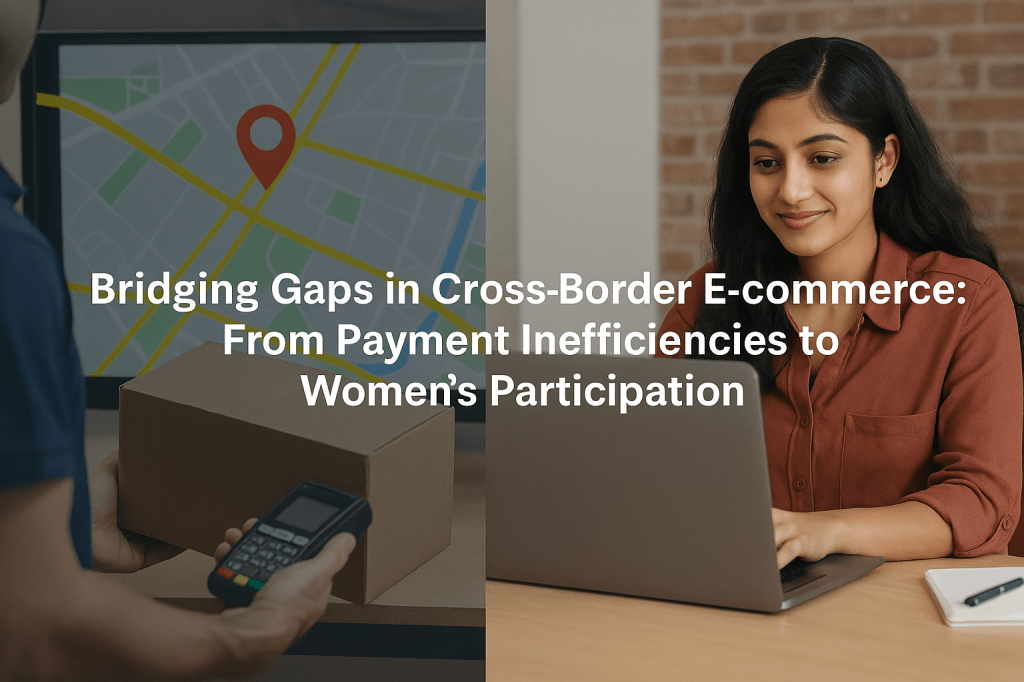
In the rapidly evolving global trade ecosystem, cross-border e-commerce has emerged as a transformative force. It enables sellers from developing markets to access international customers, scale faster, and reduce traditional overheads. Yet, despite its promising facade, two pressing issues persist: outdated payment systems throttling logistics players, and digital gender divides that hold back the full potential of women-led businesses.
Let’s begin with the logistics conundrum. Many cross-border logistics providers in India, Southeast Asia, and the Middle East have modernized nearly every operational aspect—using GPS-tracked deliveries, automated dispatching, and real-time dashboards for clients. These digital-first companies pride themselves on speed, efficiency, and transparency. But there’s a surprising contradiction: they often still rely on the SWIFT banking system—a legacy infrastructure from the 1970s—to receive payments from international clients.
This dependence on SWIFT means waiting 5–7 days for fund transfers, frequent reconciliation issues, and exposure to FX (foreign exchange) costs that eat into tight margins. Clients demand local payment options. Finance teams are slowed down by manual paperwork. For fast-moving supply chain operations, this lag in cash flow becomes a bottleneck. It undermines the very digital efficiency these companies invest in.
To future-proof such businesses, there is an urgent need to align payment systems with digital operations. New-age B2B payment platforms can solve these issues through faster settlements, multi-currency wallets, and localized transaction flows—ensuring that working capital moves as swiftly as goods do. After all, if your logistics move in real time, so should your money.
Equally critical, but often under-emphasized, is the opportunity and challenge around women’s participation in cross-border e-commerce. Recent global discussions, including those led by UN Trade and Development experts, have highlighted both progress and persistent gaps. E-commerce indeed offers a powerful gateway for women to engage in trade—owing to its lower startup costs, flexibility, and digital service ecosystem. Social commerce, in particular, is a game changer. In countries like Indonesia, 60% of women-owned enterprises now use social media to reach customers—outpacing men in this regard.
However, these gains are not without challenges. Only about 10% of exporting firms with websites are owned by women—underscoring the persistent digital and structural barriers they face. These include limited access to finance, digital tools, and trade networks. Time poverty and informality traps—especially prevalent in social commerce—continue to restrict their scale and sustainability.
The way forward demands a multi-pronged approach. First, digital finance solutions should be designed to support women entrepreneurs, particularly in rural or underserved regions. This includes mobile-based trade finance, simplified documentation, and localized onboarding support. Second, platforms and governments must invest in digital literacy and upskilling tailored to women traders. And third, we must rethink trade policies to actively reduce gender-based barriers to market access.
Our collective goal should be to make e-commerce a catalyst for inclusive growth—not a mirror of offline inequalities. Both logistics providers and women-led enterprises are poised for success, but only if the supporting infrastructure—financial, digital, and regulatory—is built to match their ambition.
In a world that moves at digital speed, lagging systems—whether in payments or in social inclusion—are not just inefficiencies; they are barriers to prosperity. It’s time we bridge them.
#CrossBorderTrade #DigitalLogistics #WomenInTrade #Ecommerce #DigitalInclusion #B2BPayments #SocialCommerce #GenderEquality #LastMileLogistics #TradeForDevelopment
 "Connecting communities, empowering nations: Unifying the Regional and Global Economy ."
Leave a comment