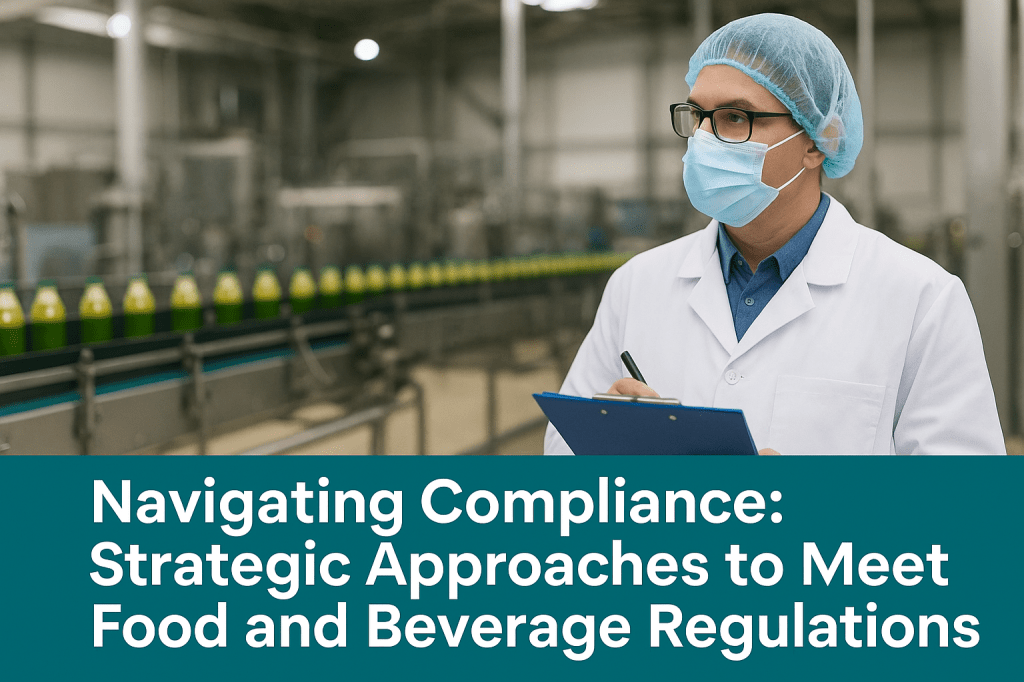
The food and beverage (F&B) industry operates under one of the most tightly regulated environments globally, driven by the need to ensure public health, consumer safety, and environmental sustainability. In this regulatory maze, businesses are not only expected to comply with a growing list of national and international food safety standards but also to adapt quickly to emerging challenges such as new contaminants, cross-border trade requirements, and rising consumer awareness. Meeting these standards is no longer a reactive task but a strategic imperative that calls for a proactive, well-integrated approach across the organization.
The first and most fundamental strategy in aligning with regulatory expectations is to stay informed and proactive. Regulatory frameworks governing food and beverage processing—ranging from Hazard Analysis and Critical Control Points (HACCP) to Good Manufacturing Practices (GMP) and ISO 22000—are dynamic and frequently updated. Businesses must institutionalize a culture of compliance by subscribing to food safety bulletins, engaging in policy consultations, and being active members of professional associations. This allows them to anticipate rather than react to policy shifts, avoiding last-minute compliance crises that often result in reputational damage or financial penalties.
Training and education form the backbone of regulatory adherence. From floor workers to quality assurance managers, continuous skill development ensures that the workforce understands the nuances of hygiene, labeling, traceability, and cross-contamination prevention. Many leading companies have adopted in-house certifications modeled on global standards, empowering employees with not only the technical know-how but also the confidence to respond swiftly to safety lapses or inspection demands.
Certification through independent bodies such as NSF, Intertek, or BRCGS adds a critical layer of validation, especially for companies operating in export markets or handling sensitive products. These certifications act as third-party endorsements of compliance, often streamlining approvals for large retailers and import agencies. They also bring structured audit processes and benchmarking tools that highlight performance gaps and drive continual improvement.
Quality Management Systems (QMS) such as ISO 9001, HACCP, and GMP are indispensable frameworks for embedding compliance into the operational DNA of a business. These systems help standardize internal procedures, ensure detailed documentation, and trigger regular audits to evaluate process consistency. Critically, they offer a methodical approach to identifying potential risks in production lines and addressing them before they escalate into violations.
In the era of globalized supply chains, food safety does not stop at factory gates. Strengthening supply chain management is essential to regulatory success. This involves rigorous vetting of suppliers, setting clear contractual quality requirements, and establishing traceability protocols. Knowing the origin and handling of every raw material helps minimize exposure to contaminated or mislabelled ingredients—issues that have triggered mass recalls in recent years.
Another often-overlooked strategy is the standardization of procedures across all operational sites. Especially for multi-location or multinational businesses, inconsistent practices can lead to uneven quality outcomes and compliance failures. Developing centralized Standard Operating Procedures (SOPs) and ensuring their uniform enforcement across locations is vital for harmonized risk control and brand protection.
Digital transformation has emerged as a powerful ally in the compliance journey. From cloud-based documentation systems to automated monitoring and alerts, technology reduces human error and enhances transparency. Compliance management software platforms enable real-time tracking of regulatory obligations, scheduling of internal audits, and automatic updates on legislation changes—substantially cutting down the burden on manual teams and reducing the risk of oversight.
Documentation, in particular, is a cornerstone of regulatory compliance. Real-time recording of processes, inspections, incidents, and corrective actions provides an audit trail that is indispensable during regulatory reviews or crisis management. Many regulators now emphasize not only doing the right thing but being able to prove it through verifiable records.
These strategies collectively provide a comprehensive shield against regulatory lapses while also contributing to product integrity and brand trust. In an environment where regulatory violations can lead to supply chain disruptions, import bans, or permanent brand erosion, strategic compliance is no longer a choice—it is a core competency. Companies that embrace this mindset do not merely survive regulatory scrutiny; they use it as a foundation to build consumer loyalty, operational excellence, and international credibility.
#FoodSafety
#RegulatoryCompliance
#HACCP
#QualityManagement
#Traceability
#F&BIndustry
#DigitalCompliance
#SupplyChainAudit
#FoodProcessing
#CertificationStandards
 "Connecting communities, empowering nations: Unifying the Regional and Global Economy ."
Leave a comment