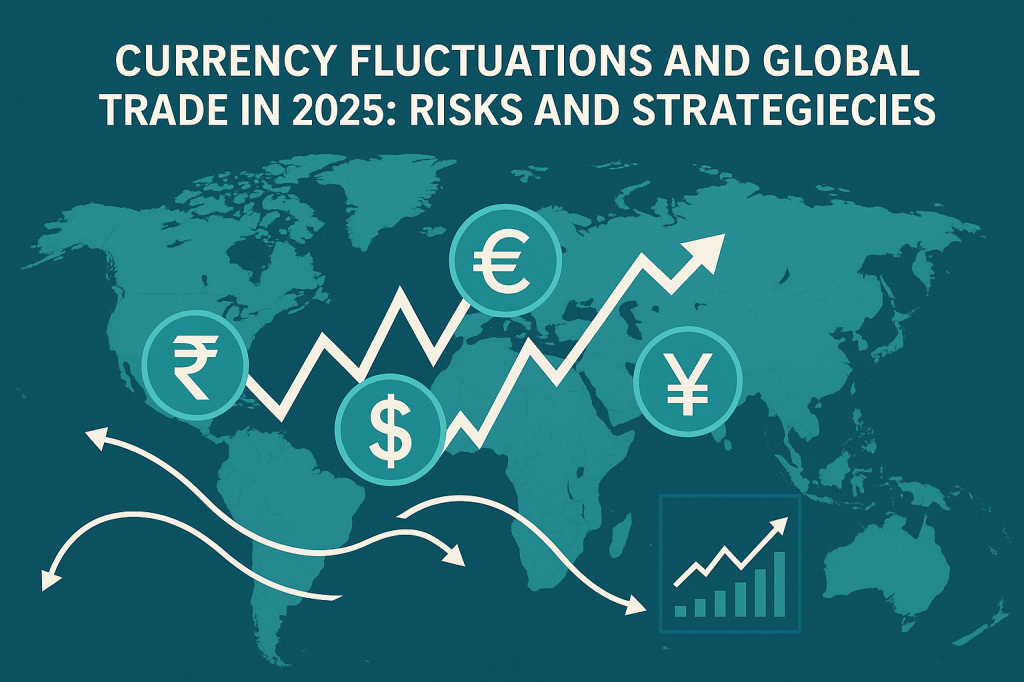
In the intricate web of global commerce, currency fluctuations stand as both a catalyst and a challenge. As 2025 unfolds, the volatility in exchange rates has become a central concern for governments, exporters, importers, and financial planners alike. The shifting value of currencies not only affects the price of goods across borders but also fundamentally alters trade strategies, competitiveness, and economic resilience.
What Are Currency Fluctuations?
Currency fluctuations refer to the constant changes in the value of one currency relative to another. These shifts are driven by a host of economic and political factors—ranging from interest rate differentials and inflation trends to geopolitical instability and investor sentiment. A nation’s currency value is also influenced by trade balances, capital flows, and central bank policies, making it a barometer of macroeconomic health.
How Exchange Rate Volatility Impacts Trade
Exports: The Competitive Edge or Drag
A weaker domestic currency can act as a boon for exporters. As local goods become cheaper for foreign buyers, export volumes tend to increase. This dynamic has been visible in India during early 2025, where depreciation of the rupee has boosted textile and agricultural exports. On the flip side, when a currency strengthens, it erodes price competitiveness abroad, reducing the attractiveness of exports and leading to trade imbalances.
Imports: A Cost Burden or an Advantage
Currency appreciation lowers the cost of imports—crucial for nations like India that rely on foreign inputs for sectors such as pharmaceuticals, electronics, and energy. However, a depreciated currency raises import bills, which can trigger inflationary pressures, especially in import-dependent economies. Rising import costs squeeze margins for manufacturers and increase consumer prices.
Business Uncertainty: The Profit Margin Puzzle
For globally operating firms, exchange rate volatility translates into uncertainty in revenue projections and profit margins. Long-term contracts become risky when future exchange rates are unpredictable. Companies dealing in multiple currencies face accounting complexities and need to invest in hedging instruments—currency futures, options, or swaps—to shield their financial outcomes.
Pricing and Planning: A Moving Target
Frequent currency movements force companies to revisit their pricing models. Firms must either absorb the costs or pass them on to buyers, both of which come with trade-offs. Volatility also complicates inventory procurement, payroll in foreign branches, and cross-border capital investment planning.
Strategic Implications: Managing the Currency Risk
In today’s environment, currency risk management has become a strategic imperative. Firms with international exposure must adopt robust forex risk assessment frameworks. Key tactics include:
Natural Hedging: Matching revenues and expenses in the same currency
Financial Instruments: Using derivatives like forward contracts and currency swaps
Geographical Diversification: Spreading supply chains and market bases to offset regional currency risks
Central banks also play a role. By intervening in forex markets or adjusting interest rates, monetary authorities attempt to stabilize currencies and cushion economic shocks.
Trends in 2025: The Currency Conundrum Deepens
Recent global economic forecasts, including those from the IMF and WTO, suggest greater uncertainty in trade due to exchange rate volatility. The U.S. dollar has shown renewed strength, while emerging market currencies like the Indian rupee and Brazilian real have been under pressure due to inflation and capital outflows.
In India, the export-import sector is grappling with these fluctuations. A 5–7% change in the rupee’s value has altered export competitiveness in sectors like garments, steel, and chemicals. Meanwhile, the import bill for energy and electronics has swelled, forcing businesses to revisit procurement strategies.
Global institutions like the WTO have warned of currency fluctuations becoming a systemic risk for international trade in 2025, urging governments to maintain open dialogues on currency interventions and avoid competitive devaluations.
Currency fluctuations are here to stay. But with proactive policy design, business adaptability, and intelligent risk management, nations and companies can turn this volatility into a strategic advantage. For India and other emerging economies, this means strengthening domestic manufacturing, expanding export baskets, and building resilience through diversified trade and currency strategies.
The future of global trade is inseparable from the currency markets. As the tides of exchange rates rise and fall, success will belong to those who learn to navigate them—not avoid them.
#CurrencyFluctuations
#ExchangeRates
#ImportExport
#GlobalTrade
#ExportCompetitiveness
#RupeeVolatility
#FinancialPlanning
#HedgingStrategies
#TradeMargins
#EmergingMarkets
 "Connecting communities, empowering nations: Unifying the Regional and Global Economy ."
Leave a comment