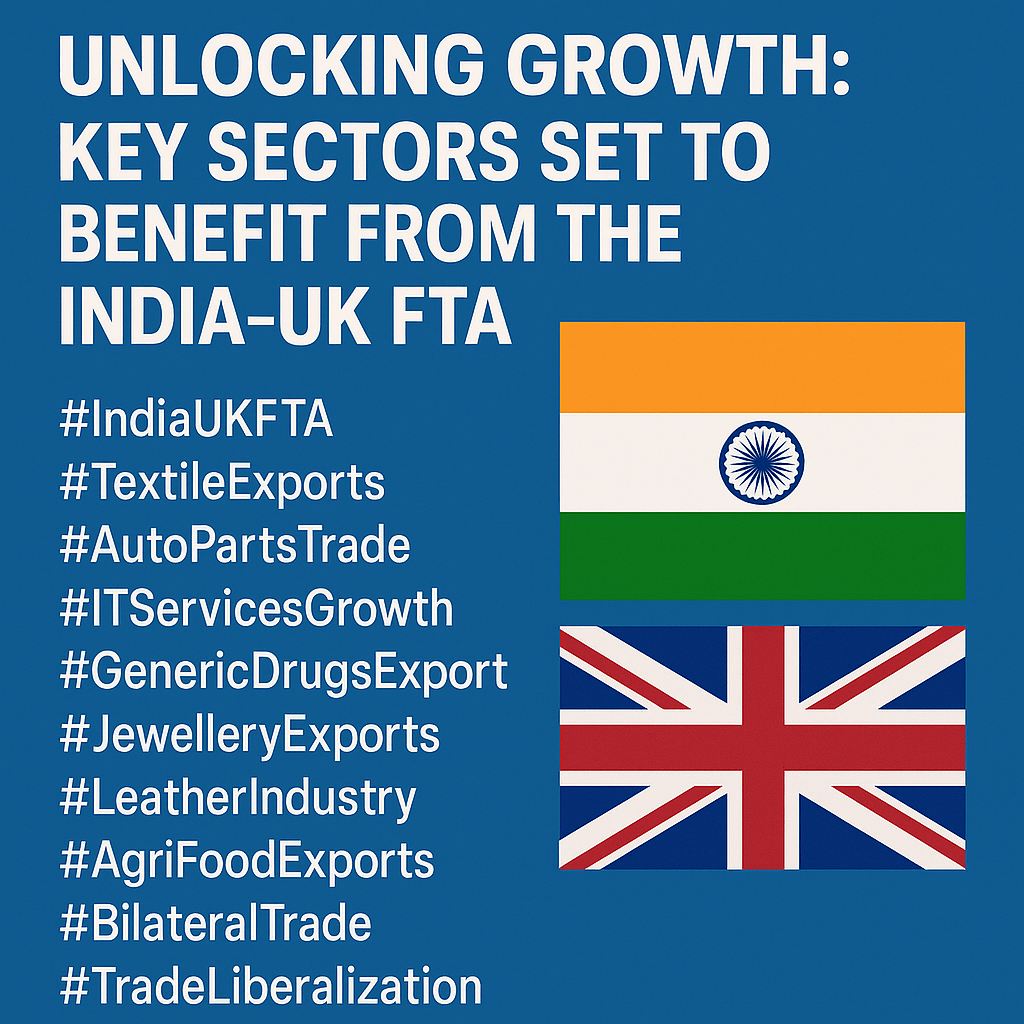
The recently concluded Free Trade Agreement (FTA) between India and the United Kingdom marks a transformative milestone in bilateral relations. Touted as a “historic and ambitious deal,” the agreement covers nearly 99% of Indian exports by value, aiming to double bilateral trade to $120 billion by 2030. Beyond trade liberalization, the deal carries strategic significance by fostering deeper economic integration, enhancing professional mobility, and reducing non-tariff barriers. But which sectors stand to gain the most from this landmark pact? Let’s examine the key beneficiaries and the rationale behind their projected gains.
1. Textiles and Garments: Competitive Edge in a Mature Market
Textiles and garments—a pillar of India’s export basket—are expected to experience significant growth under the FTA. The UK currently imposes tariffs of up to 10% on Indian textile products. The removal of these tariffs levels the playing field for Indian exporters, allowing them to compete more effectively with producers from Bangladesh, Vietnam, and Turkey who already enjoy preferential access. Given that the UK is India’s fifth-largest apparel export market, the tariff-free advantage could translate into multi-billion-dollar opportunities.
2. Auto Parts and Engineering Goods: Manufacturing Muscle in Motion
The Indian auto components and engineering sectors will also benefit from substantial tariff reductions. The UK is a premium market for auto parts and machinery, and Indian manufacturers stand to gain greater access and visibility. This not only bolsters India’s ‘Make in India’ mission but also strengthens supply chains for both electric and hybrid vehicles, where the UK has ramped up investment. Engineering exports are expected to rise particularly in sub-segments like industrial machinery, vehicle components, and electrical equipment.
3. Information Technology and IT-Enabled Services: Bridging Talent and Opportunity
India’s IT sector, already a global leader, will find a more welcoming environment in the UK through streamlined visa regulations and professional mobility provisions. Indian professionals in software services, cloud solutions, and fintech are likely to benefit from easier access and recognition of qualifications. The FTA includes provisions to support service sector growth, acknowledging the integral role of skilled labor movement in the digital economy.
4. Pharmaceuticals and Healthcare: Easing Access, Expanding Impact
The Indian pharmaceutical industry, a global supplier of affordable generics, will benefit from regulatory harmonization and faster approvals. The FTA promises to reduce non-tariff barriers that have historically hindered market access for Indian drug manufacturers. With the UK facing rising healthcare costs and a post-Brexit regulatory vacuum, Indian pharma firms can fill essential gaps in generics, biosimilars, and medical supplies.
5. Gems and Jewellery: Shining Bright on the Global Stage
India is the world’s largest diamond cutting and polishing hub, and the UK is a major importer of high-value jewellery. With duties on gems and jewellery set to be eliminated, Indian exporters will find the UK a more lucrative and accessible market. This boost is especially timely as consumer demand in Europe rebounds post-COVID, and premium handcrafted jewellery continues to gain appeal.
6. Leather, Footwear, and Sports Goods: Labour-Intensive Sectors on the Rise
Labour-intensive industries like leather goods, footwear, and sports equipment are expected to thrive under the FTA. These sectors not only gain from tariff reductions but also benefit from improved trade facilitation measures. India’s traditional strength in handmade leather products and affordable sports gear gives it a competitive edge in the UK market, which values both cost and craftsmanship.
7. Agriculture and Processed Foods: Farm to Fork on a Global Scale
The UK has granted tariff concessions on key Indian agri-products such as tea, spices, rice, and ready-to-eat packaged foods. India’s processed food sector—valued at over $500 billion—is poised to expand its footprint through enhanced export access. Moreover, Indian-origin products that align with health-conscious and cultural preferences among the UK’s South Asian diaspora will find ready demand.
Strategic Implications and Forward Outlook
The India-UK FTA is more than a trade pact—it is a strategic alignment of two economies seeking post-Brexit and post-pandemic resilience. With provisions that include digital trade, dispute resolution, sustainable practices, and investment facilitation, the agreement goes beyond mere tariff cuts. It paves the way for a diversified and balanced trade relationship.
FTA covers 99% of Indian exports by value.
Bilateral trade target: $120 billion by 2030.
Duty-free access in core sectors like textiles, pharma, IT, and agriculture.
The India-UK FTA is a game-changer, especially for sectors that have long waited for deeper market penetration and regulatory clarity. With timely implementation and continuous dialogue, this deal has the potential to redefine India’s export landscape, support job creation, and foster innovation across multiple industries.
As trade corridors open wider, the need for adaptive policies, sectoral support, and institutional frameworks will be crucial to translate this historic agreement into sustainable, inclusive growth.
 "Connecting communities, empowering nations: Unifying the Regional and Global Economy ."
Leave a comment