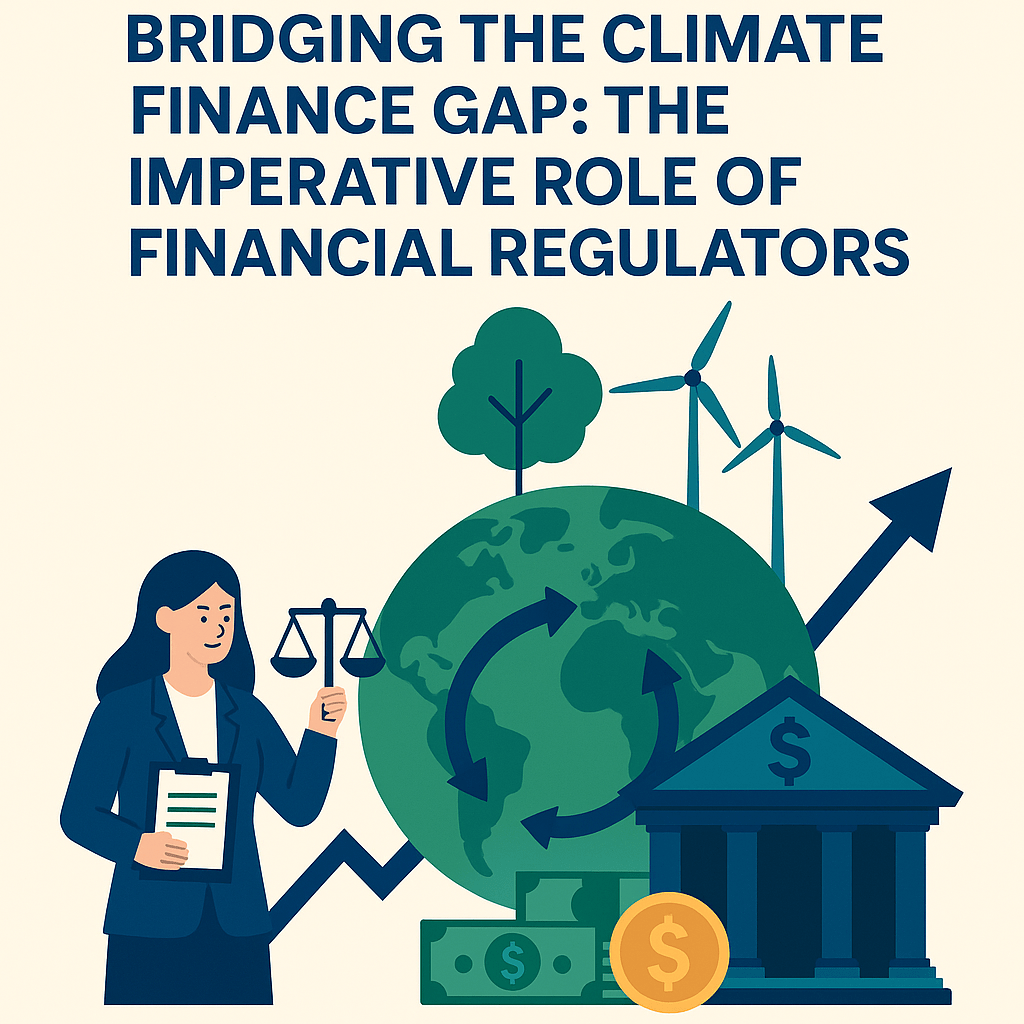
As the global economy grapples with escalating climate risks, the role of financial regulators in steering financial institutions toward climate-conscious practices has become increasingly critical. In India, the Reserve Bank of India (RBI) has acknowledged the threats posed by climate-related financial risks to economic stability. However, regulatory efforts remain largely moralistic and fragmented, highlighting a pressing need for more robust, systemic intervention.
The RBI’s Cautious Approach
Over the past few years, the RBI has engaged in persuasive efforts to influence Regulated Entities (REs)—banks and financial institutions—through draft disclosure guidelines, public speeches, and closed-door consultations. Some REs have responded by incorporating Environmental, Social, and Governance (ESG) metrics and adopting climate-sensitive lending practices. However, these responses are limited in scale and often lack the momentum to become mainstream.
The RBI’s current strategy leans heavily on voluntary compliance and awareness-building. While this is a necessary first step, it is insufficient to drive systemic change. Notably, the RBI has yet to announce concrete measures such as integrating climate risks into monetary policy operations or using the green sector’s credit profile to influence interest rates and lending norms.
A Missed Opportunity
Forward guidance is a powerful tool that the RBI could use more effectively. By clearly signaling its expectations—such as future capital requirements, stress testing norms, or asset classification rules in relation to climate risk—the RBI could influence market behavior and improve long-term financial resilience. Countries like the UK and South Africa have shown how mandatory frameworks can drive meaningful change: the South African Pensions Act mandates that environmental factors be considered in investment decisions, while UK pension trustees are required to assess climate risks systematically.
The Role of Other Regulators
The task of addressing climate risks does not fall solely on the RBI. Regulators like the Pension Fund Regulatory and Development Authority (PFRDA) and the Insurance Regulatory and Development Authority of India (IRDAI) oversee vast pools of capital invested in long-term assets. Yet, these regulators have not fully embraced climate risk disclosure or mitigation frameworks.
Similarly, the Securities and Exchange Board of India (SEBI) has promoted ESG disclosures among listed companies but has remained silent on mutual funds and insurance investments, which are also exposed to climate-related volatility. Mutual funds, with their exposure to long-term bonds and equity, are particularly vulnerable, and SEBI’s lack of mandatory requirements creates a regulatory blind spot.
Global Lessons and the Road Ahead
Globally, regulators are moving ahead with clear prescriptions. The Task Force on Climate-related Financial Disclosures (TCFD) has gained traction as a global standard for climate risk transparency. The International Organization of Securities Commissions (IOSCO) has encouraged member regulators, including SEBI, IRDAI, and PFRDA, to adopt practices aligned with TCFD principles. These include governance reforms, risk metrics, sustainability strategies, and scenario-based stress testing.
South and Southeast Asian peers like Bangladesh and Vietnam have taken proactive steps by introducing climate-specific regulations. These examples underscore a growing consensus: climate risks must be treated as systemic financial risks, not merely environmental concerns.
A Call to Action
India’s financial regulators must go beyond persuasive guidelines and adopt legally binding measures to ensure that the financial system becomes resilient to climate risks. The lack of uniformity across regulatory bodies hinders market transparency and risks underpricing climate threats. Financial regulators must adopt a catalytic role—not only to protect institutional stability but also to enable a just transition toward a low-carbon economy.
A decisive shift from soft rhetoric to enforceable frameworks will allow India’s financial system to bridge the climate finance gap, support national climate ambitions, and contribute to global sustainability goals.
 "Connecting communities, empowering nations: Unifying the Regional and Global Economy ."
Leave a comment