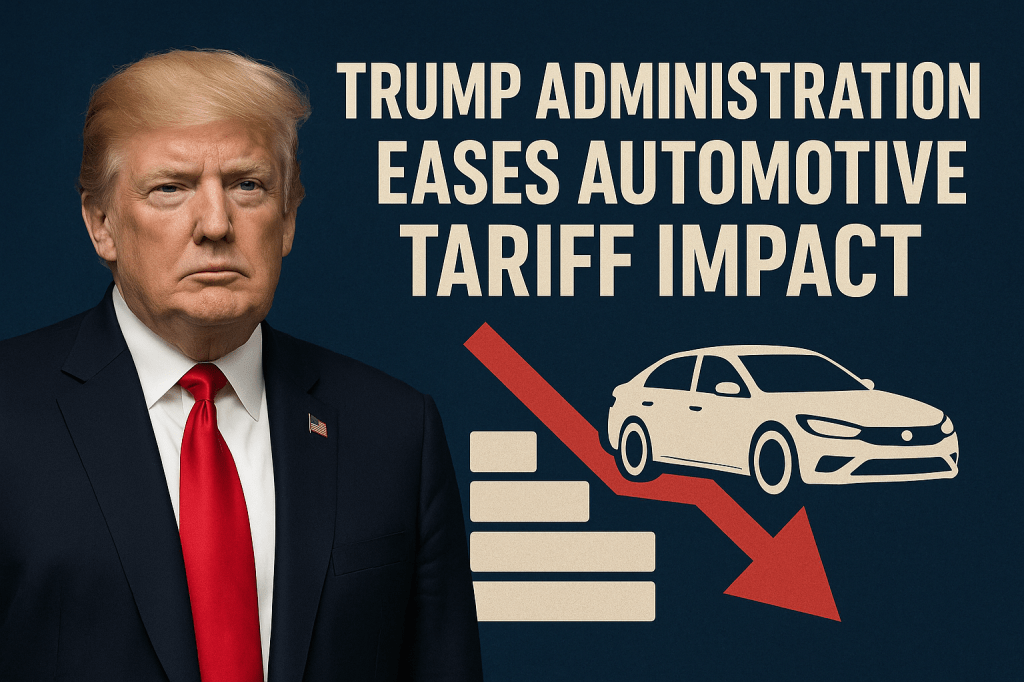
In a significant shift, the Trump administration has announced new measures to soften the blow of its previously imposed sweeping automotive tariffs. The adjustment seeks to alleviate duties on foreign-made parts used in the assembly of vehicles within the United States and prevent double taxation on imported cars — a step that could have otherwise compounded costs for both manufacturers and consumers.
According to official sources, this recalibration aims primarily to strengthen U.S. automakers, safeguard American jobs, and allow more time for supply chain adjustments. Industry leaders had raised alarms that the broad application of tariffs risked disrupting vehicle production, raising consumer prices, and undermining competitiveness. The administration’s response signals a recognition of these risks and a willingness to recalibrate policy tools to minimize collateral economic damage.
While the initial tariffs were framed as part of a broader effort to revive U.S. manufacturing and reduce dependency on foreign supply chains, realities within the complex, globally integrated automotive industry prompted a strategic rethink. Automakers warned that higher costs on imported components—essential even for vehicles assembled in the U.S.—could ultimately hurt domestic production rather than help it.
The easing of tariffs on parts reflects a more targeted approach, allowing companies to maintain access to critical foreign inputs without immediate penalty, thereby preventing price spikes in the U.S. auto market. Furthermore, the decision not to stack tariffs on imported vehicles atop existing duties should reduce the risk of significant consumer price inflation for cars — a sector highly sensitive to cost pressures.
From a broader perspective, this move illustrates the challenges of using tariffs as a blunt economic tool in highly globalized industries. Even as the Trump administration seeks to bolster domestic manufacturing, it faces the intricate realities of cross-border supply chains, investment decisions, and market interdependencies that no single policy lever can easily unwind.
In the months ahead, it remains to be seen whether these mitigations will be sufficient to maintain the health of the U.S. auto industry without compromising broader trade policy objectives. Nonetheless, the administration’s flexibility in adapting its tariff strategy underlines the importance of balancing protectionism with practical economic management.
#AutomotiveTariffs
#USManufacturing
#SupplyChainAdjustment
#TrumpAdministration
#AutoIndustry
#TradePolicy
#ConsumerPrices
#AmericanJobs
#GlobalSupplyChains
#EconomicImpact
 "Connecting communities, empowering nations: Unifying the Regional and Global Economy ."
Leave a comment