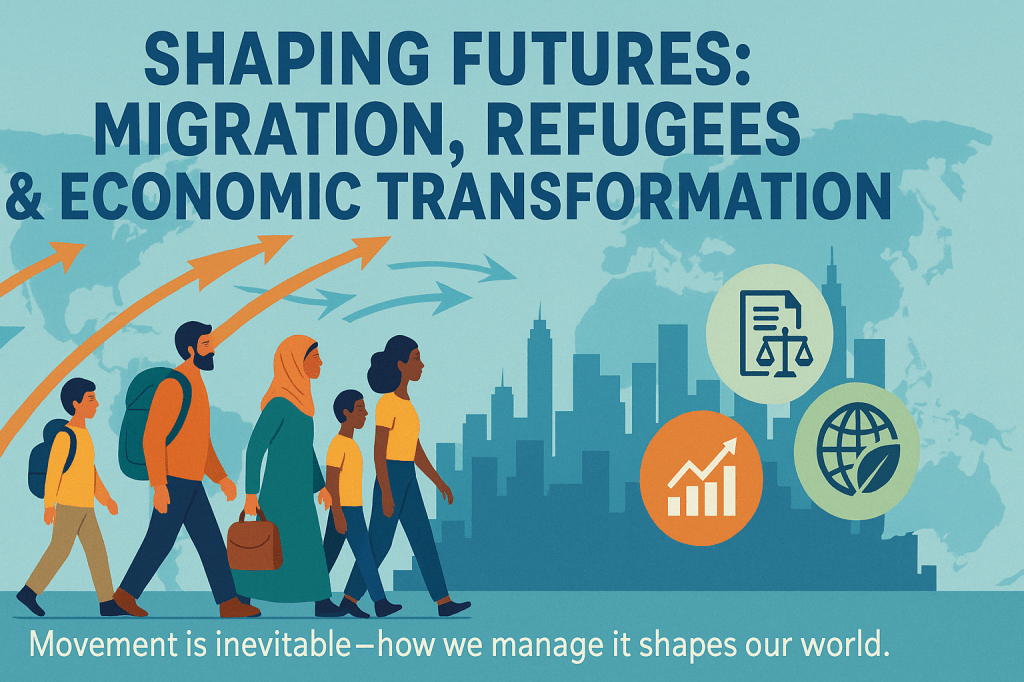
In an era defined by geopolitical upheavals, climate shocks, and economic disparities, migration and refugee flows have become not just humanitarian issues but major economic and policy drivers. The ways nations structure their migration and refugee policies today will determine both the demographic makeup and the economic trajectory of tomorrow.
A World on the Move: The Numbers Behind the Shift
According to the UNHCR, by the end of 2023, over 117 million people were forcibly displaced worldwide, a figure that includes refugees, internally displaced persons (IDPs), and asylum-seekers. Meanwhile, the International Organization for Migration (IOM) estimates that around 281 million people globally were international migrants in 2023, comprising about 3.6% of the world’s population. This movement—voluntary or forced—has profound implications for both origin and destination countries.
Migration as a Development Strategy
Well-regulated migration policies can enhance productivity, address labor shortages, and even stimulate innovation. For instance:
- Germany’s skilled worker migration scheme helped fill gaps in its aging labor force, particularly in engineering and healthcare sectors.
- Canada’s Express Entry program is designed to attract young, skilled migrants, contributing to GDP growth and tax revenues.
On the other end, remittances sent home by migrants are crucial for developing economies. In 2023, global remittances to low- and middle-income countries reached $669 billion, surpassing foreign direct investment (FDI) in many regions. Countries like India, Mexico, and the Philippines heavily rely on these transfers for household consumption and social mobility.
Refugee Policies: Burden or Opportunity?
There’s a persistent belief that refugee populations strain public services and social cohesion. While initial integration costs can be high, research from the OECD and World Bank suggests that long-term inclusion can yield significant dividends.
- In Uganda, refugees are given the right to work, move freely, and start businesses. As a result, many contribute to local markets and even create jobs.
- Turkey, hosting nearly 4 million Syrian refugees, has integrated many into its informal economy. Though challenges remain, sectors like agriculture and textiles have gained from the added labor.
However, restrictive policies that bar refugees from working or accessing education not only perpetuate poverty but also represent lost economic potential.
Challenges of Policy Fragmentation
Migration and refugee issues are transnational by nature, yet global policy responses remain fragmented. The EU’s struggle over asylum quota sharing, the U.S.’s oscillating stance on border control and DACA, and Australia’s offshore detention policies all highlight the lack of consensus.
Moreover, climate change is expected to trigger 216 million climate migrants by 2050, according to the World Bank, adding a new layer of urgency to coordinated policy action.
The Way Forward: Toward Adaptive and Inclusive Policy
The economic case for humane, structured migration is clear—but it requires thoughtful design:
- Flexible Visa Programs: Short- and long-term migration pathways based on labor market needs.
- Investing in Integration: Language training, credential recognition, and housing support to ensure migrants contribute quickly.
- Regional Compacts: Collaborative approaches like the Comprehensive Regional Protection and Solutions Framework (MIRPS) in Central America, can share responsibility and improve outcomes.
- Recognizing Climate Migrants: Existing refugee laws do not account for environmental displacement. A policy vacuum remains.
Conclusion: Migration as a Lever for Inclusive Growth
Migration and refugee policies are no longer just tools for controlling borders—they are levers for shaping economic futures. Forward-looking governments are recognizing that mobility, when managed inclusively and strategically, can be a force for resilience, renewal, and prosperity. The choice is not whether people will move—they already are—but how nations can adapt to this reality and turn migration into a win-win for all.
#MigrationPolicy
#RefugeeIntegration
#GlobalDisplacement
#EconomicGrowth
#LaborMobility
#Remittances
#ClimateMigration
#InclusiveDevelopment
#HumanCapital
#PolicyReform
 "Connecting communities, empowering nations: Unifying the Regional and Global Economy ."
Leave a comment