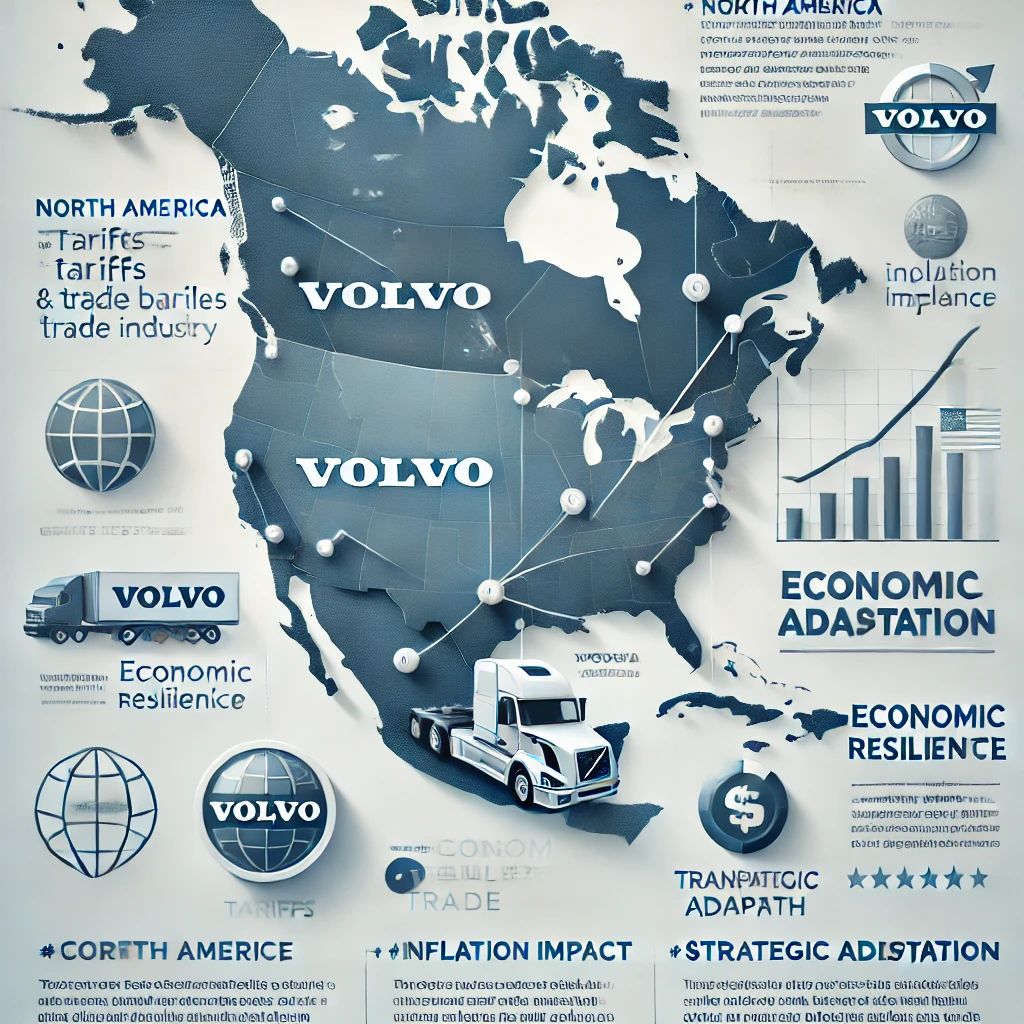
In recent weeks, discussions around tariffs and trade barriers have intensified, with looming uncertainties over U.S. trade policies posing potential challenges to various industries. One sector that stands to be directly impacted is the trucking industry, which forms the backbone of North American logistics. In this context, understanding how a global powerhouse like Volvo is navigating these uncertainties offers critical insights into resilience and long-term business strategy.
Volvo’s Strong North American Footprint
Volvo’s presence in North America is not peripheral — it is central to the company’s global operations. Out of its more than $50 billion in annual revenue, over 30% comes from the North American market. This substantial share underlines the strategic importance of the U.S. and neighboring markets to Volvo’s growth and profitability.
Importantly, Volvo has built a robust industrial footprint in the region. The company operates with a fully integrated value chain that combines in-house operations with key partnerships. This localized manufacturing and supply network positions Volvo to respond swiftly to market changes and shield itself from some of the adverse effects that tariffs might bring.
Potential Impact of Tariffs on the Trucking Industry
Tariffs and trade barriers, while often intended to protect domestic industries, can have complex ripple effects. In the case of the trucking industry, tariffs on imported components could increase production costs, which might, in turn, raise vehicle prices. Additionally, there is the potential for inflationary pressures as costs are passed on to end consumers.
However, the trucking industry is uniquely resilient. The demand for freight transport is largely driven by macro trends like e-commerce expansion, population growth, and industrial activity — all of which show robust trajectories in North America. This demand is relatively inelastic, ensuring that despite cost fluctuations, the sector will continue to grow.
Volvo’s Global Perspective as a Strength
One critical advantage Volvo holds is its global presence in over 190 countries. The company has long experience adapting to varied regulatory and trade conditions, allowing it to remain agile and responsive. This international adaptability helps Volvo leverage learnings from diverse markets, build risk mitigation frameworks, and diversify its sourcing strategies to minimize vulnerability.
Inflation and Economic Development — A Broader View
While tariffs could trigger short-term price pressures, the broader economic impact will depend on policy responses and consumer behavior. Volvo’s leadership has pointed out that these scenarios, while speculative, are not new challenges for a multinational company of their scale. The firm’s well-established local manufacturing facilities and partnerships help reduce reliance on cross-border supply chains, which could buffer the inflationary impact to a degree.
Future Growth and Macro Trends
Despite potential turbulence from tariffs and trade policies, one thing remains clear — the transportation and logistics sector will continue to expand. The growth of e-commerce, infrastructure development, and evolving consumer patterns ensure a sustained demand for heavy-duty trucks and transport solutions.
Volvo’s commitment to this growth is evident. By investing in plants, expanding capacity, and maintaining strong customer relationships, the company is positioning itself to be a key enabler of this future growth.
Navigating Uncertainty with Strategic Resilience
Volvo’s approach to potential tariff challenges reflects strategic foresight. Rather than being reactive, the company relies on its strong North American base, diversified value chain, and global expertise to adapt and thrive. The trucking industry, while susceptible to policy fluctuations, remains a critical component of economic activity and will continue to demand robust solutions.
As trade discussions evolve, the real question is not whether tariffs will affect businesses — they will, to some degree. The critical factor is how well companies are prepared to mitigate these challenges. Volvo’s integrated North American operations, strong partnerships, and global adaptability make it clear: the company is well-prepared to weather these uncertainties and continue driving forward.
 "Connecting communities, empowering nations: Unifying the Regional and Global Economy ."
Leave a comment