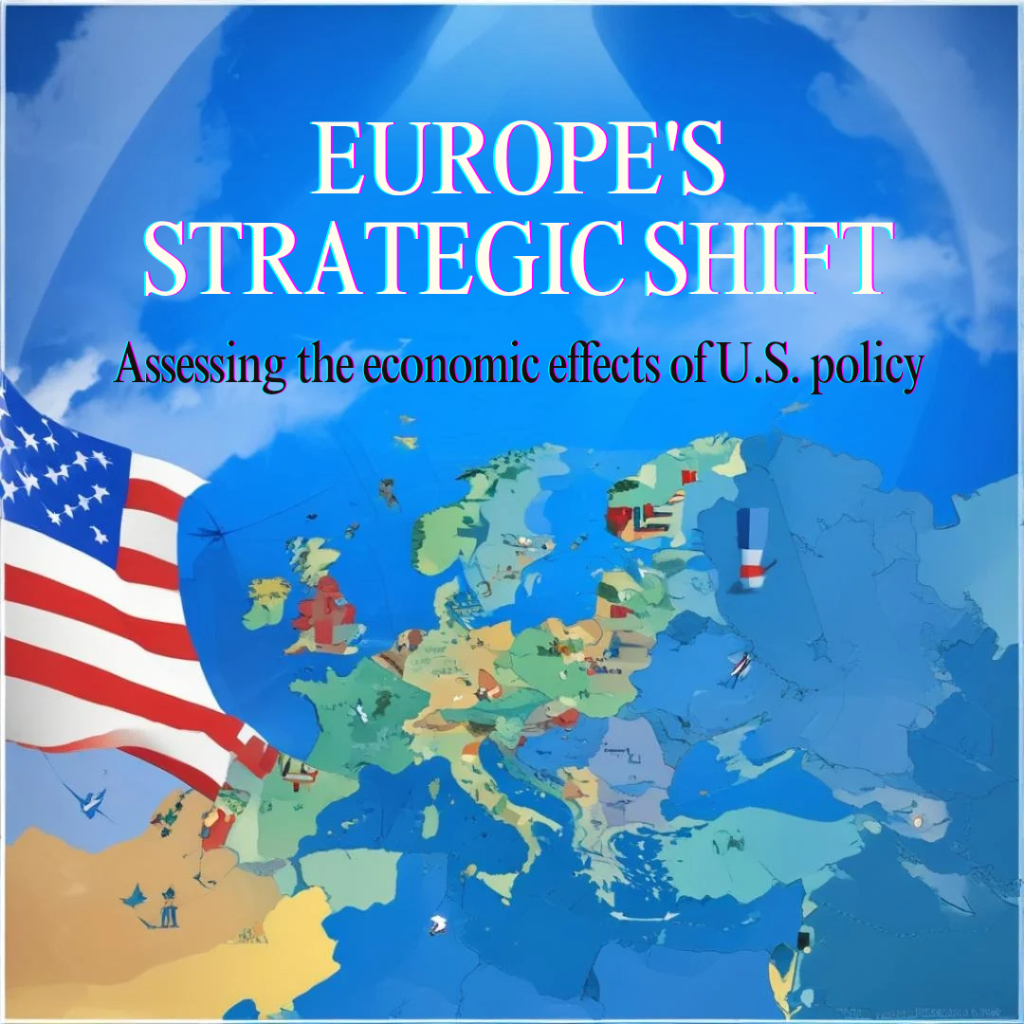
The shifting geopolitical landscape, triggered by evolving U.S. policy toward Europe and Ukraine, is forcing European governments and the European Union (EU) to recalibrate their strategic and economic priorities. The United States, once the cornerstone of European security, has signaled a change in its commitment, prompting European nations to reassess their defense strategies, budget allocations, and economic planning. This transition has profound economic consequences, affecting government spending, industrial growth, and financial markets across Europe.
The U.S. Shift and European Response
Recent statements from senior U.S. officials suggest a reevaluation of America’s role in Europe, particularly in its support for Ukraine. The U.S. has been a principal supplier of military aid to Ukraine, contributing over $75 billion in military, economic, and humanitarian assistance since 2022. However, with changing political dynamics and shifting national priorities, U.S. policymakers are reconsidering the extent of their engagement, leading to uncertainty in European defense strategies.
For European leaders, this shift has been a wake-up call. The European Union and key NATO members, including Germany, France, and Poland, are now accelerating efforts to boost defense spending. The urgency to reduce reliance on U.S. military support has spurred discussions on increasing defense budgets, fostering domestic arms production, and strengthening collective European security mechanisms.
The Economic Consequences of Increased Defense Spending
1. Budget Reallocation and Fiscal Challenges
European governments face the challenge of balancing defense spending with social and economic priorities. Many EU nations, particularly Germany, France, and Italy, have historically maintained moderate defense budgets, prioritizing welfare programs, infrastructure, and green energy initiatives. However, a pivot toward higher military expenditures will require reallocation of funds, potentially leading to:
Increased Fiscal Deficits: Several EU nations are already grappling with high debt-to-GDP ratios. France’s public debt stands at approximately 112% of GDP, while Italy’s exceeds 140%. A surge in defense spending without equivalent revenue generation could strain national budgets.
Reduced Social Spending: Higher military allocations may necessitate cuts in social welfare programs, pensions, and healthcare—areas where European nations have traditionally maintained strong commitments.
Tax Adjustments: To finance increased military budgets, governments might consider raising taxes, which could dampen consumer spending and slow economic growth.
2. Growth in the Defense Industry
The redirection of funds toward defense is expected to benefit European arms manufacturers and the broader defense industry. Major European defense firms like Airbus, Rheinmetall, and BAE Systems are likely to experience increased government contracts, fostering job creation and innovation in military technology.
Domestic Arms Production: European nations are looking to reduce dependence on U.S. arms and bolster domestic production, leading to investments in research, development, and production capabilities.
Supply Chain Expansion: A surge in defense procurement will stimulate related industries, including steel, electronics, and aerospace manufacturing.
Stock Market Impact: Defense stocks have already witnessed an upward trend, with European defense indices outperforming broader market benchmarks in anticipation of higher military spending.
3. European Security and Economic Integration
The evolving security landscape has intensified discussions about deeper European integration in defense and security policy. This shift has the potential to:
Strengthen the European Defense Fund (EDF): The EU has been increasing investments in joint defense projects, and a unified European defense strategy could enhance efficiency and reduce redundancies.
Create Jobs and Technology Transfer: Increased collaboration among European defense contractors and governments could lead to job creation and innovation in dual-use technologies that benefit both military and civilian sectors.
4. Energy and Trade Implications
The geopolitical tensions surrounding Ukraine have already disrupted energy supplies, pushing European nations to diversify energy sources. A renewed focus on defense will further impact trade and economic partnerships:
Energy Security: Military buildups require stable energy supplies. The EU’s push for energy independence from Russia and its transition to renewables could be influenced by defense considerations.
Trade Relationships: European nations may seek new alliances in defense and technology, strengthening partnerships with nations like Japan, South Korea, and India.
Challenges and Risks
1. Inflationary Pressures
Higher government spending on defense, combined with existing inflationary trends, could further push prices upward. The EU’s inflation rate, which has remained above target levels, might face additional upward pressure if defense procurement leads to supply chain bottlenecks or increased demand for raw materials.
2. Political and Public Backlash
A major risk associated with increased defense spending is public opposition. European societies have traditionally prioritized social welfare, and shifting funds toward military buildup could trigger political resistance and protests.
3. Dependence on U.S. Policy Shifts
Despite efforts to strengthen European defense, U.S. policy remains a critical variable. If future U.S. administrations alter their stance on European security, it could render some European policy shifts unnecessary or misaligned.
A Defining Moment for Europe
The changing stance of the U.S. toward Europe and Ukraine marks a defining moment for European policy and economic strategy. The push for higher defense spending signals a fundamental shift in priorities, with both opportunities and risks. While it could enhance Europe’s strategic autonomy, boost the defense sector, and create new economic opportunities, it also poses challenges related to fiscal sustainability, inflation, and public acceptance.
In the coming years, Europe’s ability to balance security needs with economic stability will determine the long-term success of this transformation. Whether this leads to a more independent and resilient Europe or introduces new economic vulnerabilities remains an open question—one that policymakers must navigate with caution and foresight.
 "Connecting communities, empowering nations: Unifying the Regional and Global Economy ."
Leave a comment