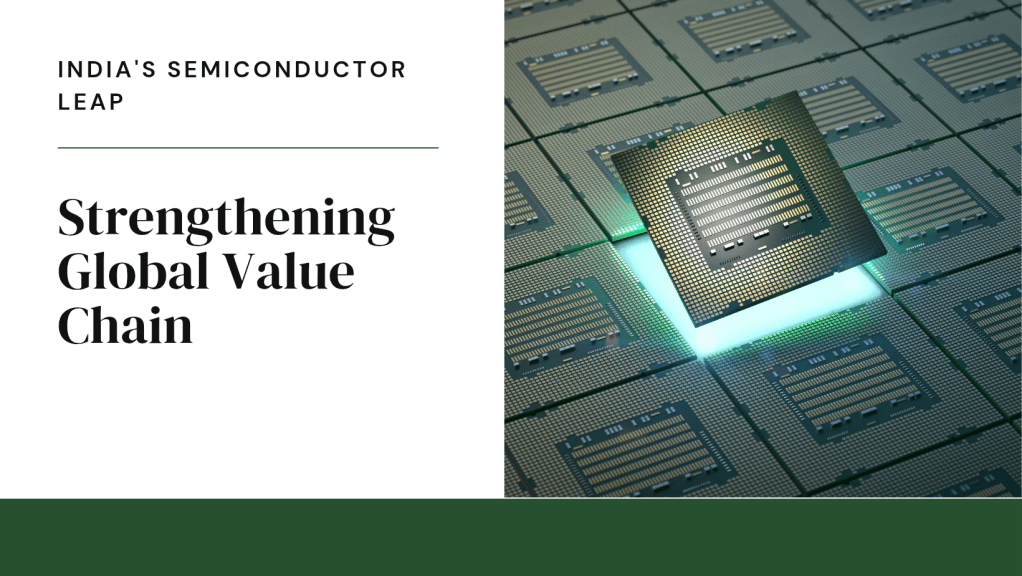
The global semiconductor industry is the backbone of modern technology, enabling everything from smartphones and laptops to medical equipment and electric vehicles. With rising competition, nations worldwide are strategically positioning themselves in this critical sector. India, despite being a growing electronics hub, has yet to establish itself as a major player in semiconductor manufacturing. The country heavily relies on imports for chips, making supply chain resilience and self-reliance imperative.
The semiconductor ecosystem consists of three key segments—design, fabrication (wafer manufacturing), and assembly, testing, and packaging (ATP). While India has made significant strides in semiconductor design, with many global companies having R&D centers in the country, it lags in fabrication and ATP. Learning from global leaders like Taiwan, South Korea, and even emerging players like the Philippines, India must adopt a more strategic approach to establish itself in the semiconductor value chain.
Current State of India’s Semiconductor Industry
1. Heavy Dependence on Imports
India imports nearly 100% of its semiconductors, with major suppliers being Taiwan, China, South Korea, and the U.S. The country’s semiconductor demand is projected to reach $110 billion by 2030, yet domestic production remains negligible.
2. Focus on Design, But Weak in Manufacturing
India has a strong presence in semiconductor design, with firms like Intel, Qualcomm, Texas Instruments, and MediaTek operating large R&D centers. However, there are no major fabrication plants (fabs) in India, making the country vulnerable to supply chain disruptions.
3. Rising Demand and Policy Interventions
The Production-Linked Incentive (PLI) scheme for semiconductors, introduced in 2021, aimed to attract global players to set up fabs in India. Additionally, India has launched the Semicon India Programme with an incentive package of ₹76,000 crore ($10 billion) to develop a domestic semiconductor ecosystem. However, no major foundries have started operations yet, highlighting the challenges in execution.
Challenges Facing India’s Semiconductor Industry
Despite policy efforts, several structural challenges hinder India’s progress in semiconductor manufacturing:
1. High Capital Investment Requirement
Setting up a semiconductor fab requires an initial investment of $5–$10 billion. India has struggled to attract private players due to high capital costs, long gestation periods, and uncertain returns.
2. Infrastructure and Supply Chain Gaps
Semiconductor fabs require an uninterrupted power supply, ultra-pure water, and high-end logistics infrastructure. While India has made progress in industrial infrastructure, power shortages, logistics inefficiencies, and bureaucratic delays pose hurdles.
3. Shortage of Skilled Workforce
India has a strong IT talent pool, but semiconductor manufacturing requires specialized chip fabrication, material science, and cleanroom technology skills. The lack of semiconductor-focused training programs in Indian universities limits talent availability.
4. Global Supply Chain Uncertainties
Geopolitical tensions, particularly between the U.S. and China, and Taiwan’s dominance in semiconductor production create uncertainty in global supply chains. India must build domestic resilience while strategically positioning itself in global value chains.
5. Competition from Established Players
Countries like Taiwan (TSMC), South Korea (Samsung), and the U.S. (Intel, GlobalFoundries) dominate semiconductor manufacturing. Emerging players like Vietnam and the Philippines are also strengthening their ATP segments. India must develop a niche strategy to compete effectively.
Seven Strategies for Strengthening India’s Semiconductor Industry
To overcome these challenges, India needs a comprehensive, long-term roadmap. Below are seven actionable strategies:
1. Fast-Track Semiconductor Fabs Under the Semicon India Programme
The government should expedite approvals and incentives for companies that have shown interest in setting up fabs in India, such as Vedanta-Foxconn, ISMC (with Tower Semiconductor), and Tata Electronics.
A single-window clearance system should be established to reduce bureaucratic delays and make investment decisions smoother.
2. Develop Advanced Packaging and ATP Capabilities
Since setting up wafer fabrication is capital-intensive, India can start with Assembly, Testing, and Packaging (ATP), similar to what the Philippines has done successfully.
Partnerships with global firms specializing in ATP can create employment and technological spillovers.
3. Strengthen Domestic Semiconductor R&D and Innovation
India should set up a National Semiconductor Research Center, bringing together IITs, IISc, and private industry players.
Incentives should be provided for local startups working on semiconductor innovation, particularly in AI chips, 5G modems, and automotive electronics.
4. Expand and Reform Semiconductor Talent Development
Introducing specialized semiconductor courses in IITs, NITs, and technical institutes will build a long-term talent pipeline.
Industry-academia partnerships should be promoted to facilitate internships and research collaborations with global semiconductor firms.
5. Strengthen Supply Chain Infrastructure
India should develop semiconductor manufacturing clusters with reliable power, logistics, and water supply.
Establishing partnerships with Japan, South Korea, and the EU for securing raw materials like silicon wafers, neon gas, and rare earth metals is critical.
6. Foster Strategic Global Alliances
India has already signed semiconductor cooperation agreements with the U.S., Japan, and Taiwan. These should be expanded to ensure technology transfer and joint ventures.
Encouraging foreign direct investment (FDI) from global players through better policy clarity and investment security is crucial.
7. Promote Domestic Semiconductor Demand
The government should incentivize local electronics manufacturers (such as smartphone and automobile companies) to source chips from Indian firms.
A ‘Make in India’ semiconductor mandate for government procurement could boost domestic semiconductor consumption.
India’s Semiconductor Future
With rising domestic demand, strong policy support, and a growing electronics manufacturing base, India has the potential to become a key player in the global semiconductor industry. However, achieving this requires timely execution of policies, strong public-private collaboration, and continuous investment in infrastructure and skill development.
If India successfully implements these strategies, it can not only reduce import dependency but also become an integral part of the global semiconductor value chain, creating millions of high-tech jobs and strengthening the country’s technological sovereignty. The next decade is critical, and India must act with urgency to seize this semiconductor opportunity.
 "Connecting communities, empowering nations: Unifying the Regional and Global Economy ."
Leave a comment