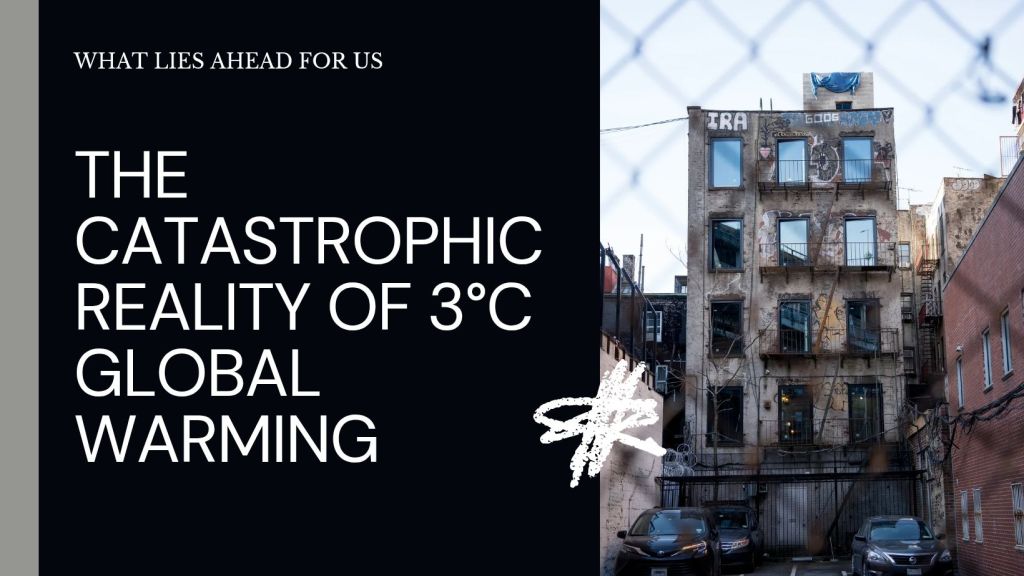
In our day-to-day lives, the difference between 1°C and 3°C might not seem significant. However, from a climate perspective, the implications are catastrophic. Heatwaves, prolonged droughts, extreme precipitation, rising sea levels, and wildfires would become commonplace. Scientists warn that a 3°C rise in global temperatures would push the planet into an unprecedented climate crisis—one that future generations will have to endure if decisive action is not taken today.
Where Are We Now?
Since the Industrial Revolution, Earth’s temperature has already risen between 1.1°C and 1.3°C due to greenhouse gas emissions, primarily from burning fossil fuels. While this may sound like a small shift, it has already triggered major climatic changes—melting glaciers, more intense hurricanes, and widespread habitat destruction. The reality is clear: climate change is not a distant threat; it is unfolding right now.
A stark illustration of this can be found in Bangladesh, where rising sea levels and intense flooding are displacing thousands. The slums of Dhaka, the country’s capital, are filling with climate refugees—people who have lost their homes due to swollen rivers and erratic rainfall. Every year, nearly 400,000 migrants move to the city, and this number is only expected to rise as climate conditions worsen.
What Happens at 3°C Warming?
Climate models show that if global temperatures rise by 3°C, the world will become increasingly uninhabitable. The consequences include:
1. Unbearable Heatwaves
Heatwaves, like those already experienced in Europe and South Asia, will become more frequent and intense. Many regions will see temperatures exceeding 50°C, making some parts of the world unlivable.
2. Rising Sea Levels and Coastal Destruction
At 3°C warming, sea levels could rise by over 1 meter by 2100. This would submerge major coastal cities such as Mumbai, Jakarta, New York, and London. Small island nations like the Maldives could disappear entirely.
3. Mass Migration and Climate Refugees
The combination of rising sea levels, desertification, and extreme weather will lead to hundreds of millions of climate refugees. Bangladesh is just the beginning—many other countries will face large-scale displacement.
4. Global Food Shortages
Climate change is already affecting food production. A 3°C rise will significantly reduce crop yields, disrupt supply chains, and lead to food price inflation. Countries heavily reliant on agriculture, such as India and sub-Saharan African nations, will be severely impacted.
5. More Frequent Natural Disasters
Hurricanes, wildfires, and floods will occur with increasing intensity. Countries like the United States, Australia, and the Philippines will face more destructive storms, while prolonged droughts will cripple economies dependent on agriculture and water resources.
Can We Avoid This Future?
The Intergovernmental Panel on Climate Change (IPCC) warns that without drastic intervention, the world has a one in four chance of reaching 3°C warming by the end of this century. However, if all policy commitments made by governments worldwide are fulfilled, we could limit warming to around 2°C.
While 2°C is still dangerous, it is significantly better than 3°C. A critical step in achieving this goal is rapid decarbonization—transitioning from fossil fuels to renewable energy sources such as solar and wind power.
What Needs to Be Done?
1. Phasing Out Fossil Fuels – Governments and industries must commit to net-zero emissions and end reliance on coal, oil, and gas.
2. Scaling Up Renewable Energy – Investment in clean energy solutions must be accelerated.
3. Strengthening Climate Policies – Governments need to enforce stricter regulations on carbon emissions and hold corporations accountable.
4. Global Cooperation – Climate change is a global issue that requires international collaboration, particularly from the world’s largest polluters.
5. Encouraging Sustainable Practices – Businesses and individuals alike must adopt sustainable habits, such as reducing waste, conserving energy, and supporting green initiatives.
The Cost of Inaction
Many people would never board a plane if there was a one in 20 chance of it crashing. Yet, we are on a trajectory where there is at least a 5% chance of hitting 3°C even if all climate policies are met. The risk is too great to ignore.
If we continue business as usual, future generations will inherit an unrecognizable world—one where survival, rather than progress, becomes the primary goal. The time to act is now. Every fraction of a degree matters, and every effort to cut emissions counts. The choice is ours: a habitable planet or an irreversible catastrophe.
 "Connecting communities, empowering nations: Unifying the Regional and Global Economy ."
Leave a comment