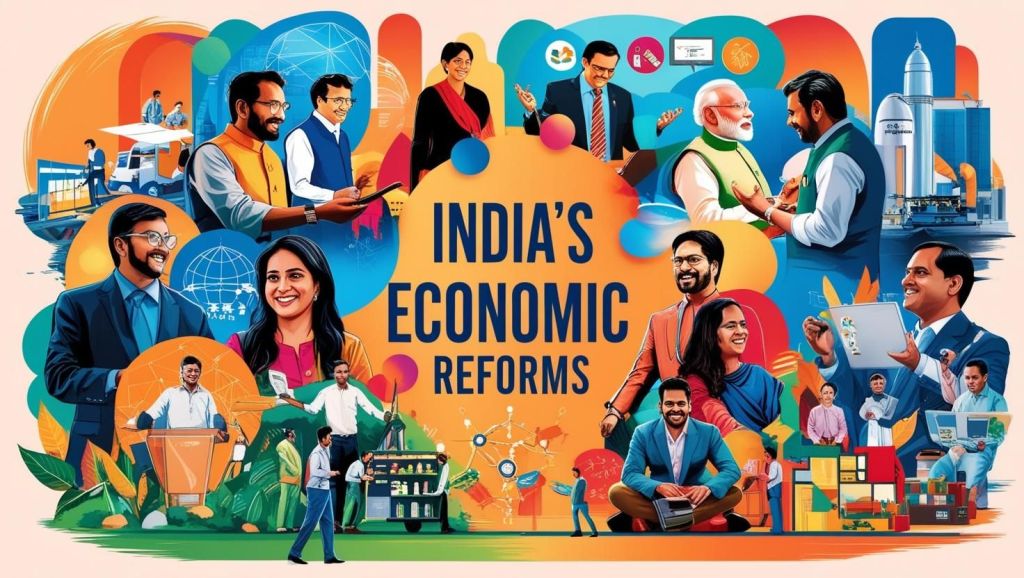
India’s economic journey since 1991 has been shaped by a series of crucial reforms that transformed it from a protectionist economy to one of the fastest-growing major economies in the world. The vision for modernization and liberalization, however, was not a product of the 1990s alone. Former Prime Minister Rajiv Gandhi, in his early speeches in Parliament, emphasized the urgent need for reforms, stating that India could not compete globally with outdated systems that were 20 years behind the rest of the world. Yet, despite recognizing the need, his tenure was cut short due to political controversies, particularly the Bofors scandal.
Since then, India has undergone significant liberalization, but the question remains—have we done enough? As countries like China and even Europe continue to embrace market-friendly reforms, where does India stand today? More importantly, what must India do in the next decade to achieve its aspiration of becoming a $10 trillion economy?
The 1991 Reforms and Their Legacy
The landmark economic liberalization of 1991, led by then-Finance Minister Dr. Manmohan Singh under the leadership of Prime Minister P.V. Narasimha Rao, dismantled India’s stringent import control regime and reduced bureaucratic red tape. Before 1991, India followed a highly restrictive licensing system where almost every business decision required government approval. This approach stifled entrepreneurship, reduced competition, and hindered economic growth. The reforms of 1991 focused on:
1. Dismantling the License Raj: Businesses no longer required extensive government permissions to operate, leading to increased investment and efficiency.
2. Opening Up to Foreign Investment: FDI was gradually allowed in multiple sectors, bringing in capital, technology, and global expertise.
3. Reduction of Import Tariffs and Trade Barriers: This allowed greater access to international goods and services, improving competitiveness.
4. Privatization and Disinvestment: Several public sector enterprises were either privatized or restructured to improve efficiency.
These reforms laid the foundation for India’s rapid economic growth in the following decades, helping the country emerge as a major player in global trade and services.
Current Economic Landscape: A Soft Spot?
Despite the success of past reforms, India is currently at a critical juncture. While GDP growth has remained above 6% in recent years, concerns persist regarding the sustainability of high growth rates. The economic recovery post-COVID-19 has been steady, but several challenges need to be addressed:
Sluggish Private Investment: Domestic and foreign investors still face hurdles such as regulatory uncertainty, slow judicial processes, and inconsistent taxation policies.
High Unemployment Rates: While India produces a large number of graduates each year, job creation has not kept pace with population growth.
Global Economic Uncertainty: The ongoing geopolitical tensions, disruptions in global supply chains, and financial instability in key markets such as the U.S. and China pose risks to India’s growth.
Infrastructure Deficit: Despite improvements, India still needs significant investments in roads, railways, ports, and digital infrastructure to sustain higher growth.
Slow Pace of Structural Reforms: Land and labor reforms remain politically sensitive and largely unaddressed.
Given these challenges, it is imperative to set a clear roadmap for the next decade.
Where Will India Be in the Next 10 Years?
India is at a “soft spot” at the moment, with growth hovering around 6%. However, if India aims to reach the $10 trillion economy mark faster, it needs to target at least a 7.5% annual GDP growth rate. While this may seem ambitious, several factors can propel India toward this goal:
1. Strengthening Manufacturing and Exports: India must focus on increasing its manufacturing output through initiatives like ‘Make in India’ and ‘Production-Linked Incentive (PLI)’ schemes. Competing with China in global exports requires significant improvements in efficiency, scale, and technology adoption.
2. Expanding Digital and Financial Inclusion: The rapid adoption of digital payments and fintech solutions has made India a global leader in digital transactions. Continued expansion of financial inclusion can boost consumption and entrepreneurship, particularly in rural areas.
3. Boosting Infrastructure Investments: Expanding highways, modernizing railways, and increasing renewable energy capacity will create millions of jobs and improve productivity.
4. Enhancing Human Capital: India’s demographic dividend can be fully utilized only if the workforce is equipped with the right skills. Strengthening vocational education and digital literacy programs can ensure that young people are prepared for the evolving job market.
5. Policy and Governance Reforms: Cutting down bureaucratic delays, improving the ease of doing business, and ensuring regulatory stability will encourage both domestic and foreign investments.
What Could Have Been Done Differently?
Had India initiated deeper reforms earlier, its transition to a $10 trillion economy could have been much faster. A few missed opportunities include:
Delayed Labor and Land Reforms: These structural issues continue to hinder industrial expansion.
Over-reliance on Services Sector: While IT and financial services have driven economic growth, the manufacturing sector has not reached its full potential.
Lack of Consistency in Policy Execution: Frequent changes in tax laws and regulatory frameworks have discouraged long-term investments.
Underutilization of Private Sector Participation: Public-private partnerships in infrastructure, healthcare, and education could have accelerated growth further.
India has come a long way since the reforms of 1991, yet there is much work to be done. The next 10 years will be crucial in determining whether India can achieve its ambitious economic goals. By focusing on structural reforms, enhancing infrastructure, fostering innovation, and creating a business-friendly environment, India can move toward sustained high growth and global leadership.
The question remains: Will India seize this opportunity, or will it once again find itself playing catch-up while the world moves ahead?
 "Connecting communities, empowering nations: Unifying the Regional and Global Economy ."
Leave a comment