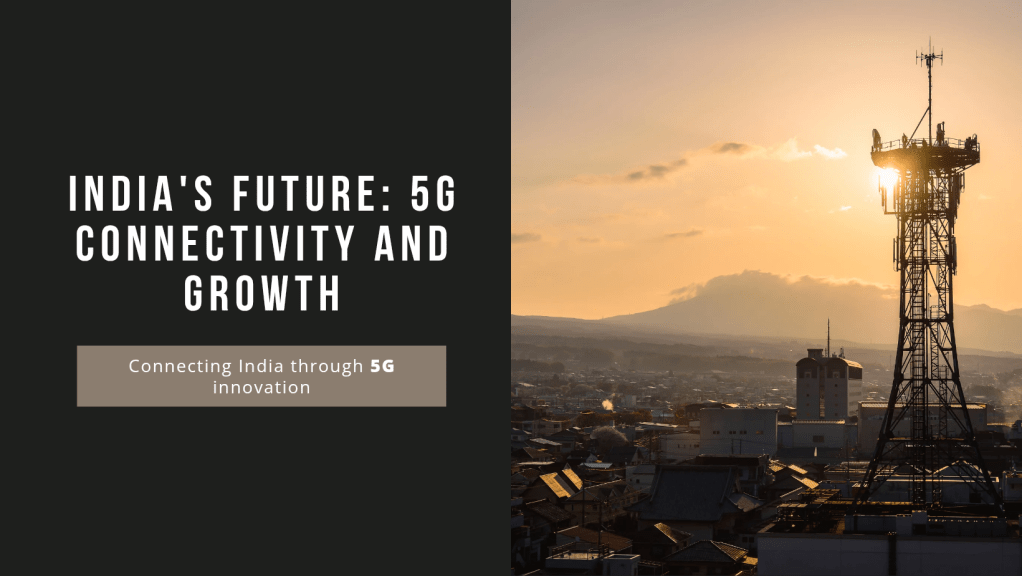
India’s rapid strides in technology have often been a source of global admiration. Among these, the deployment of 5G networks stands out as a testament to the country’s determination and innovative spirit. In less than two years, India has not only rolled out a robust nationwide 5G network but also emerged as a world reference for the speed and scale of its implementation. With over 270 million 5G subscribers as of last year and projections to reach hundreds of millions more by 2030, India is poised to redefine digital connectivity for consumers and industries alike.
The Phenomenal Uptake of 5G in India
The sheer pace at which India adopted 5G underscores its potential to embrace cutting-edge technologies. What started as a consumer-centric revolution is now expanding into broader applications, including fixed wireless access for households, smart manufacturing, digital healthcare, and AI-driven education systems. These developments are paving the way for India to establish itself as a global leader in digital innovation.
Fixed wireless access, enabled by 5G, is addressing India’s longstanding challenge of providing affordable and reliable broadband to millions of households, particularly in rural and semi-urban areas. This expansion not only boosts digital inclusivity but also enhances opportunities for remote work, online education, and e-commerce, which are critical for India’s socio-economic development.
The Role of Openness and Programmability
To unlock the full potential of 5G, openness and programmability are critical. The concept of open network systems, characterized by network APIs, open architectures, and programmability, is a game-changer. It allows the creation of multiple virtual 5G networks on a single physical infrastructure, enabling differentiated services for diverse use cases.
For instance, a smart factory requires ultra-low latency and high reliability, while a streaming platform prioritizes bandwidth. Open networks make it possible to cater to these varying demands simultaneously, driving efficiencies and reducing costs. India is already advancing towards this openness, positioning itself to lead the global shift toward programmable and virtualized 5G networks.
The Indian Context: When Will It Happen?
While India is on the right path, the full maturity of an open 5G network system will require overcoming several challenges:
1. Policy and Regulatory Framework: The government must establish clear policies to encourage investments in open network systems while ensuring fair competition among operators.
2. Infrastructure Development: Expanding fiber connectivity and upgrading legacy systems are essential to support the scalability of 5G and its associated technologies.
3. Skilling and Talent Development: As 5G and AI converge, there will be a growing demand for skilled professionals capable of managing and innovating within open network ecosystems.
4. Affordability and Accessibility: Ensuring that 5G services remain affordable, especially for rural and underserved communities, will be crucial for widespread adoption.
Given the pace at which India has adopted 5G, it is reasonable to expect significant progress in open network systems within the next five to seven years. By then, we could see a comprehensive ecosystem where industries, households, and public services leverage the benefits of openness and programmability.
The Impact on Operators
For telecom operators, the transition to open network systems represents both opportunities and challenges:
Opportunities: Operators can diversify their revenue streams by offering tailored services to industries like healthcare, manufacturing, and education. They can also partner with startups and enterprises to co-develop solutions using 5G and AI.
Challenges: The shift requires substantial investments in technology and talent. Operators must also adapt to increased competition from tech companies entering the telecom space through programmable networks.
Despite these challenges, the benefits far outweigh the risks. Operators who embrace openness and innovation will not only thrive but also play a pivotal role in driving India’s digital transformation.
A Radical Shift for India
India’s progress in 5G and its move towards open network systems is nothing short of a radical shift. It reflects a broader vision of leveraging technology to bridge socio-economic gaps, foster innovation, and enhance global competitiveness. By embracing openness, programmability, and differentiated services, India is setting a benchmark for the world.
As this journey unfolds, India will not only transform its domestic landscape but also inspire other nations to reimagine connectivity and digitalization in the 21st century. The future is bright, and India is ready to lead the way.
 "Connecting communities, empowering nations: Unifying the Regional and Global Economy ."
Leave a comment