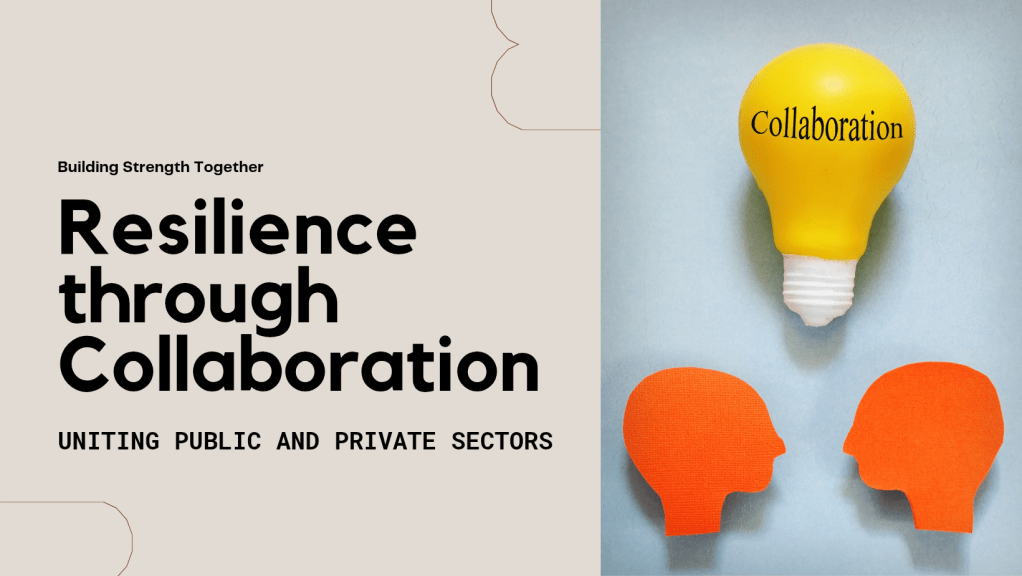
In the evolving landscape of global public policy, there is a growing tendency among nations to lean back toward state-led solutions, resisting full-scale privatization. While this approach may seem like a route to asserting national sovereignty, it raises critical questions about long-term resilience and the role of private sector engagement. Public-private collaboration emerges as a cornerstone for creating resilient economies, but this requires well-crafted policies, robust financing mechanisms, and a commitment to long-term planning.
Pillars of Resilience-Building
1. Policy Development for Private Investment
A central pillar of resilience-building is developing policies that encourage private sector investment. Governments cannot address all challenges solely through state-owned enterprises or public sector initiatives. Private sector engagement is indispensable for bridging gaps in resources, innovation, and expertise. Policies must be designed to attract private investors by ensuring transparency, predictability, and a conducive business environment. Regulatory frameworks that simplify procedures, reduce risks, and provide fiscal incentives can play a pivotal role in this regard.
2. Financing and Project Preparation
Financing is perhaps the most visible aspect of public-private collaboration. However, effective financing relies on thorough project preparation. Developing a pipeline of well-structured, bankable projects instills confidence among private investors. Collaborative project design can help align private sector goals with public sector objectives, creating opportunities for shared risk and reward.
A critical factor in fostering private sector confidence is transparency regarding the performance of investments. Data on default rates, losses, and successful outcomes are vital in changing the perception of emerging markets as overly risky. Multilateral institutions and governments can play a key role by publishing granular data on lending outcomes, offering reassurance to asset managers, pension funds, and other investors.
3. Risk Sharing and Mobilization of Private Capital
Mobilizing private capital requires innovative tools and strategies. By sharing risks through mechanisms such as guarantees, co-financing, and blended finance, governments can encourage private sector participation in large-scale infrastructure and development projects. These approaches not only attract private capital but also multiply the impact of public investments. Transparency in risk-sharing agreements and outcomes is essential for scaling such initiatives.
Resilience vs. Short-Term Priorities
Building resilience often takes a backseat to short-term economic and industrial priorities. For instance, while new industrial policies might dominate political agendas, resilience-building projects—such as climate adaptation, sustainable housing, and long-term infrastructure planning—might receive less attention. Governments and multilateral institutions must, therefore, advocate for long-term perspectives that integrate resilience into broader development strategies.
Climate as a Central Resilience Challenge
Climate change is a prime example of why long-term resilience planning is crucial. The impacts of climate change cut across public sectors, manufacturing, and housing, requiring comprehensive strategies that address these interconnected challenges. Governments must use scenario modeling, data analysis, and policy advisory services to anticipate future challenges and develop sustainable solutions. However, decision-making ultimately rests with governments, highlighting the importance of strong political will to implement these long-term strategies.
Encouraging Private Sector Leadership
Private sector actors must also walk the talk on resilience-building. Their involvement should go beyond financial contributions to include advocacy for sustainable practices and long-term investments. Private enterprises, particularly in sectors like manufacturing and housing, can drive innovation and set examples for resilience-focused development. Collaborative initiatives, where public and private actors co-design and implement projects, offer a pathway to achieving shared resilience goals.
The Way Forward
To create a sustainable and resilient future, public policy must prioritize long-term collaboration with the private sector. This involves:
Crafting policies that provide a conducive environment for private investment.
Enhancing transparency by sharing detailed data on risks and outcomes.
Innovating financing mechanisms that share risks and attract private capital.
Promoting resilience-building as a key priority alongside short-term economic goals.
While governments have the primary responsibility for setting the direction, the private sector’s role in delivering resources, innovation, and operational efficiency is indispensable. Together, these efforts can ensure that resilience becomes not just a goal but a fundamental principle of economic development.
In the face of global challenges, collaboration between the public and private sectors is not just an option—it is a necessity. Only through shared commitment and responsibility can nations build economies that withstand crises and thrive in the long run.
 "Connecting communities, empowering nations: Unifying the Regional and Global Economy ."
Leave a comment