The airline industry has long been perceived as a glamorous sector that bridges continents and connects cultures. Yet, behind the sleek aircraft and modern airports lies a harsh financial reality – the airline industry consistently ranks among the least profitable sectors globally. Despite massive revenues and increasing passenger numbers, airlines struggle to generate substantial profit margins. This paradox begs the question: why is the airline industry so unprofitable, and who reaps the most benefit in this intricate value chain?
The Profitability Paradox in the Airline Industry
At first glance, the airline business might seem lucrative. In 2023 alone, the global airline industry generated over $850 billion in revenue, transporting nearly 4.6 billion passengers. However, the net profit margin for most airlines hovered between 2-5% – a fraction of what other industries enjoy. For context, tech giants like Apple, Microsoft, or Google operate with margins often exceeding 20-30%.
This discrepancy stems from several inherent challenges that uniquely burden the airline sector:
1. High Operating Costs
Airlines operate under one of the highest cost structures of any industry. Major expenses include:
Fuel Costs – Accounting for 20-30% of total operational costs, fuel prices are volatile and beyond airline control. A slight increase can erode profitability significantly.
Aircraft Maintenance and Acquisition – New aircraft can cost between $100 million to $400 million, while maintaining older fleets incurs substantial expenses.
Labor Costs – Pilots, cabin crew, ground staff, and technical experts command high wages, contributing to around 30% of total operating expenses.
Airport Fees and Taxes – Landing fees, gate charges, and security taxes make up a considerable part of operational expenditures.
2. Price Sensitivity and Competition
Air travel is highly price-sensitive. Low-cost carriers (LCCs) and full-service airlines engage in fierce price wars to attract customers. This competition leads to razor-thin profit margins. Passengers, armed with online price comparison tools, prioritize affordability over loyalty, intensifying pressure on ticket prices.
3. External Volatility
Events like pandemics, geopolitical tensions, and economic downturns severely impact passenger demand. For example, during the COVID-19 pandemic, the airline industry suffered losses exceeding $180 billion globally. Even minor disruptions such as strikes, weather events, or fuel price fluctuations can destabilize financial performance.
4. Capital-Intensive Industry
Airlines require significant capital investment in fleet expansion, technology upgrades, and regulatory compliance. Yet, these investments have long payback periods, often exceeding 10-15 years.
Who Really Profits in the Aviation Value Chain?
While airlines bear the brunt of financial risk, other players in the aviation ecosystem enjoy healthier margins and more consistent profitability. The broader aviation value chain comprises aircraft manufacturers, fuel suppliers, airports, technology providers, and travel agencies – all of whom command a larger share of the industry’s value.
1. Aircraft Manufacturers (Boeing, Airbus, Embraer)
Airbus and Boeing dominate the commercial aircraft market, often enjoying profit margins exceeding 12-15%. The duopoly nature of this sector allows them to dictate prices, with long backlogs ensuring steady cash flow. Airlines, on the other hand, are price takers, absorbing the high acquisition costs.
2. Fuel Suppliers (Oil and Gas Companies)
Fuel suppliers consistently profit regardless of airline performance. The aviation fuel market is controlled by major oil and gas conglomerates that capitalize on fluctuations in global oil prices. They enjoy margins in the range of 8-12%, benefiting from sustained demand.
3. Airports and Infrastructure Operators
Airports operate as monopolies in many regions, generating profits through landing fees, passenger charges, retail, and parking facilities. Some of the world’s major airports, like Heathrow and Singapore Changi, report EBITDA margins of 30-40% – far exceeding those of airlines.
4. Leasing Companies (Avolon, AerCap)
Aircraft leasing has emerged as a lucrative business, with leasing companies commanding margins of 10-15%. Leasing reduces capital risk for airlines but comes at the cost of higher long-term operational expenses. Currently, over 40% of the global airline fleet is leased, further increasing dependency on lessors.
5. Technology and Reservation Systems (Amadeus, Sabre)
Global Distribution Systems (GDS) that handle airline reservations and ticketing operate with profit margins of 20-25%. Airlines pay GDS companies for each ticket sold, adding to their operational burden.
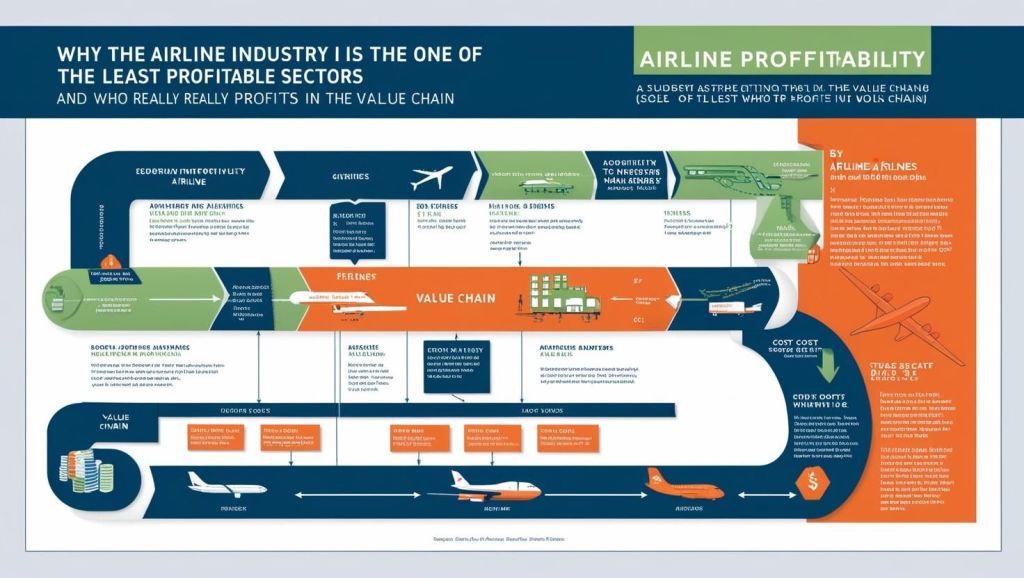
The Value Chain Breakdown
Airlines (2-5%) – High risk, low margins
Aircraft Manufacturers (12-15%) – Stable, high-value contracts
Fuel Suppliers (8-12%) – Profitable, regardless of airline performance
Airports (30-40%) – Monopolistic control, diverse revenue streams
Leasing Companies (10-15%) – Consistent revenue from long-term leases
GDS (20-25%) – Tech-driven high margins
Why Airlines Persist Despite Low Margins
Despite the profitability challenges, airlines persist due to several factors:
National Interest – Many national carriers receive government support due to their strategic importance for tourism, trade, and national connectivity.
Revenue Volume – Although margins are low, airlines handle billions in revenue, allowing some level of sustainability.
Brand Value and Loyalty – Leading airlines build global brand recognition, which can drive premium ticket sales, boosting overall profitability.
Rethinking the Airline Business Model
For airlines to thrive, diversification beyond passenger transport is essential. Increasing cargo operations, investing in loyalty programs, and developing ancillary services (e.g., inflight sales, premium upgrades) can bolster revenue streams. Simultaneously, partnerships with airports, technology providers, and manufacturers could lead to cost-sharing models.
Ultimately, while airlines might be the face of aviation, the real winners lie further up the value chain. Understanding this dynamic is crucial for investors, policymakers, and industry leaders as they navigate the turbulent skies of the airline business.
 "Connecting communities, empowering nations: Unifying the Regional and Global Economy ."
Leave a comment