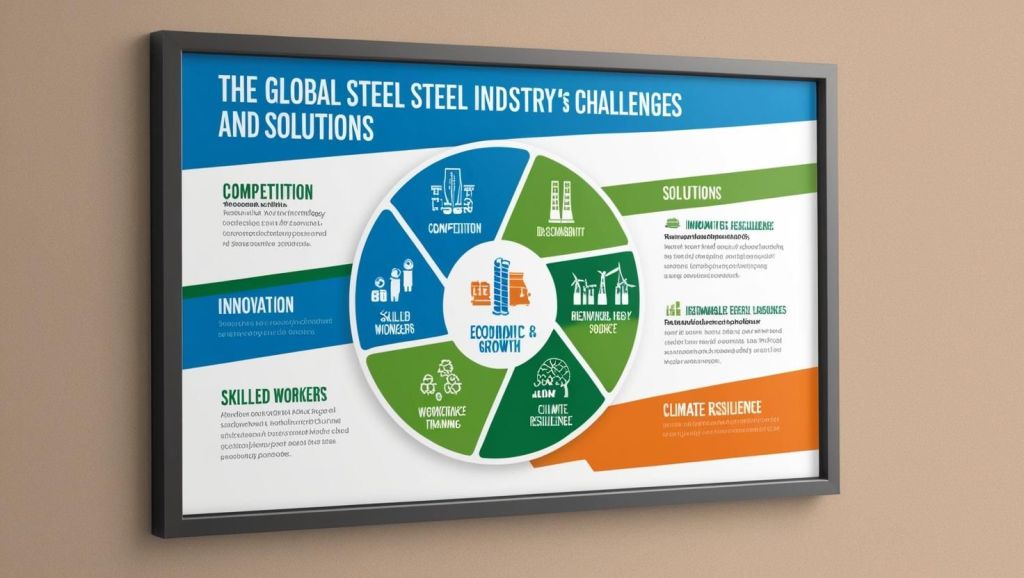
The steel sector, long considered a cornerstone of industrial development and economic growth, finds itself grappling with persistent and multifaceted challenges. Once a symbol of industrial might, the sector now faces headwinds that threaten its stability and long-term prospects. Key issues such as stagnant productivity, vulnerability to natural disasters, declining employment opportunities, and sluggish growth rates have created an urgent need for introspection and reform.
1. Stagnant Productivity: A Lingering Concern
Despite technological advancements and significant capital investments, productivity in the steel sector has plateaued. One of the primary reasons behind this stagnation is the reliance on aging infrastructure and outdated production techniques, which hinders efficiency.
Global benchmarks reveal that while countries like China and South Korea have aggressively modernized their steel plants, many regions, particularly in developing economies, continue to operate facilities that lack automation and digitization. This technological gap results in higher energy consumption, wastage of raw materials, and inflated operational costs.
To combat this, the sector must prioritize innovation through the adoption of Industry 4.0 solutions – incorporating artificial intelligence, IoT (Internet of Things), and advanced robotics. The integration of smart technologies can streamline production, reduce inefficiencies, and improve overall output.
Case Study:
Japan’s steel industry, which faced similar productivity issues in the early 2000s, witnessed a revival by investing heavily in automation and eco-friendly production methods. This approach not only boosted productivity but also minimized environmental impact.
2. Natural Disasters: A Growing Threat
The steel industry’s extensive dependence on natural resources and energy makes it particularly vulnerable to natural disasters. From floods that disrupt supply chains to earthquakes that damage infrastructure, the frequency and intensity of such events have increased in recent years.
For instance, in 2023, severe flooding in parts of Southeast Asia led to prolonged disruptions in steel production, causing supply shortages and driving up prices globally. Such disruptions underscore the importance of developing disaster-resilient infrastructure and diversifying supply sources.
Strategic Measures:
Establishing geographically dispersed production units
Building redundancy into supply chains
Investing in climate-resilient technologies
3. Declining Employment Opportunities
The steel sector, once a major source of employment, has witnessed a steady decline in job opportunities. Automation, mechanization, and the shift toward leaner production models have significantly reduced the demand for manual labor.
Moreover, the transition to greener steel production methods – while necessary for environmental sustainability – often requires fewer but more highly skilled workers. This shift has created a mismatch between workforce skills and industry needs, exacerbating unemployment in regions heavily dependent on steel manufacturing.
Solution:
Investment in retraining and upskilling programs is vital. Governments and industry leaders must collaborate to develop initiatives that reskill workers for emerging roles in the green steel and tech-driven segments of the industry.
Example:
The European Union’s Green Steel Initiative includes provisions for worker retraining, ensuring that employees are equipped to operate and maintain new, sustainable technologies.
4. Low Growth Rates: A Structural Challenge
The steel sector’s growth rate has remained subdued over the past decade. Several factors contribute to this sluggish performance, including fluctuating global demand, trade tensions, and the rising costs of raw materials. Additionally, increasing competition from alternative materials such as aluminum and composites further restricts the sector’s growth potential.
Path to Revitalization:
To reignite growth, the steel sector must diversify its product offerings and explore new markets. The expansion into high-value segments, such as advanced high-strength steel (AHSS) used in automotive and aerospace industries, presents significant opportunities.
Furthermore, governments can play a pivotal role by implementing policies that promote domestic steel consumption through infrastructure projects and incentives for sustainable steel production.
A Roadmap for the Future
While the challenges facing the steel sector are significant, they are not insurmountable. By embracing technological innovation, fostering workforce adaptability, and investing in climate resilience, the steel industry can secure its relevance in a rapidly evolving global economy.
A collaborative approach involving governments, private enterprises, and international bodies is essential to drive the sector forward. The transformation will not only reinvigorate steel manufacturing but also ensure its critical role in future economic development.
 "Connecting communities, empowering nations: Unifying the Regional and Global Economy ."
Leave a comment