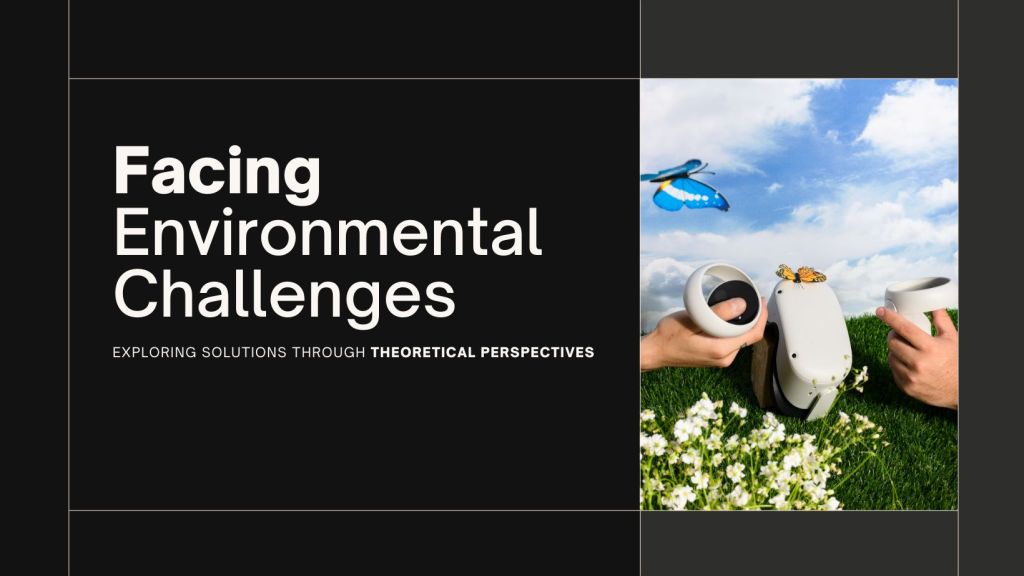
As we continue grappling with environmental issues, the global stage is once again witnessing changes in leadership that could have substantial implications for environmental policies worldwide. With Donald Trump returning to power, questions loom over the direction the United States, and in turn, the world, might take on pressing environmental challenges. Understanding these challenges through various theoretical perspectives offers a way to interpret and predict potential shifts in policy and international cooperation.
1. Realism and Environmental Politics
Realist theory, often centered around national interests and security, offers a pragmatic view of environmental policy. Realists argue that countries prioritize their own stability and prosperity, and while climate change is a significant issue, it only becomes a priority if it directly impacts a nation’s immediate interests.
Under Trump’s previous administration, we saw the U.S. prioritize domestic fossil fuel industries and step back from multilateral agreements like the Paris Climate Accord. With his return, it is likely that similar actions could resurface, positioning the U.S. environmental policy through a lens of economic realism, which might prioritize resource independence over cooperative environmental action.
2. Liberalism and Global Cooperation
In contrast, liberalism emphasizes international cooperation and the importance of intergovernmental organizations. Liberal theorists argue that climate change is a global issue that requires collective action, with organizations like the United Nations playing a crucial role in setting and enforcing environmental standards.
The absence of the U.S. from multilateral agreements or a decrease in funding to global environmental programs could potentially weaken international environmental efforts. Trump’s stance could shift focus from cooperative climate actions toward individualistic policies, potentially leading other countries to follow suit if multilateral efforts lose effectiveness.
3. Constructivism and Environmental Identity
Constructivists believe that state behavior is shaped by ideologies, identities, and social factors rather than mere material interests. Environmental constructivism focuses on how societies construct their environmental identities, which influence their policies.
During his first term, Trump’s administration dismissed climate change as a significant issue, which influenced public discourse and the environmental priorities of the U.S. Constructivist theory suggests that another term could reinforce skepticism around climate change, potentially undermining the cultural and ideological foundations of environmental action in the U.S.
4. Eco-Socialism: Addressing Environmental Justice
Eco-socialist theories critique the role of capitalism in environmental degradation. This perspective argues that true environmental reform requires addressing socioeconomic inequalities that drive environmental exploitation.
The U.S. remains one of the largest emitters of greenhouse gases, and Trump’s economic policies could continue to favor deregulation, which, from an eco-socialist perspective, would exacerbate wealth inequality and environmental exploitation. Without policies targeting sustainable economic growth, eco-socialists argue that environmental justice will be further delayed.
5. The Global Environmental Outlook Post-Trump
Trump’s return may redefine the global environmental landscape, especially as the U.S. is a significant global influencer. We could see increased tension between countries that push for climate action and those that backtrack. Additionally, the move could embolden other leaders who are critical of climate action to sidestep environmental commitments.
With the Paris Agreement, the world made substantial commitments, but individualistic approaches from the U.S. may hinder global progress. Countries might reconsider their commitments if they see powerful nations deprioritizing climate policies.
6. Impacts on the Developing World
The Global South, already facing climate vulnerabilities, often depends on international support for adaptation and mitigation efforts. A shift in the U.S. policy could result in reduced financial and technological aid to developing countries, widening the disparity in climate resilience between developed and developing nations.
The situation might push developing countries to pursue less sustainable development routes due to economic pressures, potentially accelerating global warming and environmental degradation.
Trump’s return to power has the potential to challenge the global environmental outlook significantly. Realist priorities could outweigh liberal ideals of cooperation, while social ideologies may influence how citizens view environmental policies. These theoretical perspectives show that while climate change is an existential issue, its handling is deeply influenced by ideologies, economic interests, and national identity. As countries face environmental challenges, the role of global leaders remains pivotal, highlighting that tackling climate change requires not only science and policy but also a concerted shift in global values and priority.
 "Connecting communities, empowering nations: Unifying the Regional and Global Economy ."
Leave a comment