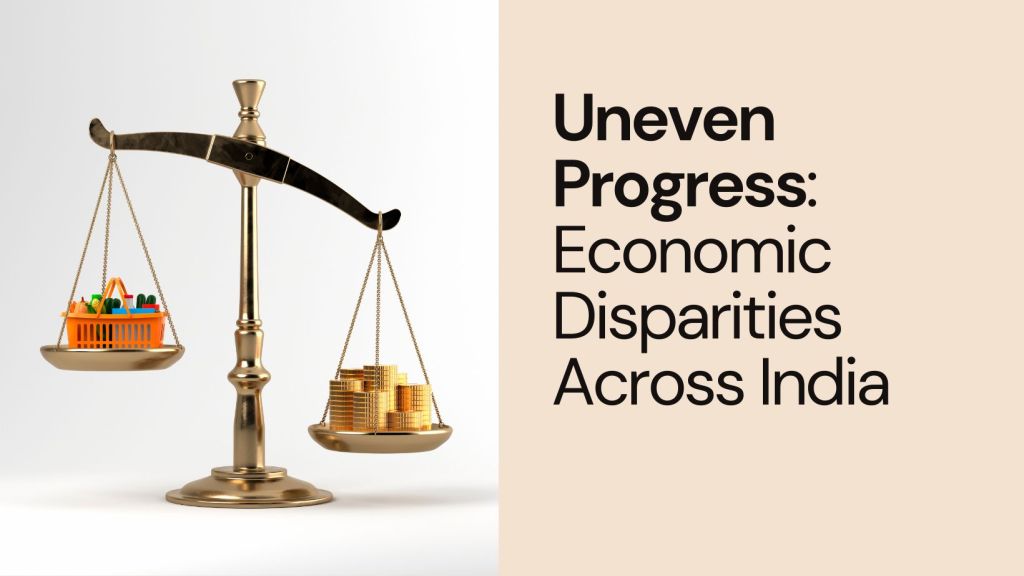
India’s economic journey since independence has been marked by striking regional disparities, with some states emerging as dynamic industrial hubs while others have struggled to keep pace. This divide is not so much about the often-discussed north-south axis but more about an east-west dichotomy. Western and southern states have, over the years, surged ahead in economic growth and industrial prowess, while several eastern and northern states face persistent developmental challenges. This divergence stems not only from economic policies at the central and state levels but also from regional cultural factors and migration patterns. In examining the cases of Punjab, West Bengal, and Bihar, we can understand how policy choices, cultural outlooks, and urban migration patterns have shaped India’s uneven economic landscape.
Punjab’s Missed Opportunities in Industrialization and Urban Growth
Punjab, historically known for its agricultural strength, particularly the Green Revolution, missed critical opportunities to diversify into industrial sectors. Unlike Bangalore, which capitalized on the software boom and built a world-class tech industry, Punjab failed to evolve beyond its agricultural roots into high-value industries. As a result, instead of becoming a hub for sports goods or manufacturing, Punjab saw many of its educated and economically mobile residents migrate abroad, often to Canada, particularly Vancouver, seeking better job opportunities.
This migration pattern speaks to a broader issue of urban economic stagnation within Punjab. The lack of attractive, high-paying urban jobs within the state discourages talent retention and urban growth. Consequently, those who could have contributed to Punjab’s economy choose to leave. This brain drain and the absence of proactive policies to foster an urban, knowledge-driven economy contribute to Punjab’s inability to climb the value chain in national and global markets.
The Decline of West Bengal’s Industrial Prowess
In the mid-20th century, West Bengal was one of India’s industrial powerhouses, with Kolkata as a major industrial hub. However, the state’s industrial base has steadily eroded over the years, partially due to both central and state policy missteps. One key policy that hampered West Bengal’s growth was the freight equalization policy. Initially intended to promote equitable industrial development across India, this policy ended up undermining Kolkata’s strategic advantage by neutralizing its proximity to raw materials in nearby Jharkhand. The policy essentially made it unprofitable for industries to be based in Kolkata, as raw materials could be transported at similar costs to other states, eroding Kolkata’s geographical advantage.
Furthermore, West Bengal’s domestic policies discouraged entrepreneurship and business investment. Through the 1970s and 1980s, policies increasingly demonized private enterprise, and political instability fueled an exodus of businesses. This period, marked by labor strikes and anti-capitalist sentiment, drove many entrepreneurs away. As a result, Kolkata’s once-thriving industrial economy withered, and today, the city is no longer a major player on the national industrial stage. Like Punjab, West Bengal experiences significant outmigration, with young, talented individuals seeking opportunities in metropolitan hubs like Delhi, Bangalore, or even abroad.
Bihar’s Low Developmental Base and Stabilized Stagnation
Bihar’s economic story starkly highlights the East-West divide in India. With a per capita income that remains only 33% of the national average, Bihar’s development challenges are profound. While the state’s economic decline has stabilized somewhat in the past decade, it remains at a very low base level, and historical policy failures continue to haunt its development trajectory.
For decades, Bihar’s economic output was in decline, with minimal investments in infrastructure, education, or industrial development. The situation has somewhat improved with recent efforts to stabilize the state’s economy, but the effects of these efforts have been limited, given the exceptionally low base from which Bihar started. Moreover, migration remains a factor in the state’s economy; many households rely on remittances sent from family members working outside the state. While this inflow of remittances provides a safety net, it does not contribute to sustainable, internal economic growth or development within Bihar.
East vs. West: A Persistent Divide in Growth and Development
Today, we observe a clear divide between the relatively prosperous western and southern states and the lagging eastern and some northern states. States like Gujarat and Maharashtra have established themselves as industrial powerhouses, thanks to a combination of favorable policies, entrepreneurial cultures, and proactive governance. Gujarat, for example, has capitalized on industrial investments and maintains a robust infrastructure that has made it a model for other states. Similarly, small states like Goa, with a per capita income three times the national average, highlight the economic possibilities achievable with the right mix of policy, governance, and resources.
By contrast, the eastern states, including Bihar and West Bengal, face persistent challenges. The lack of aspirational opportunities, inadequate infrastructure, and policy missteps contribute to an economic environment where skilled and educated individuals often seek better prospects elsewhere. This migration exacerbates the region’s issues, as the local economy loses human capital essential for innovation and development.
Policy Implications: Moving Towards Equitable Development
India’s regional economic disparities are not a new phenomenon, but addressing them remains an urgent priority. Central and state governments need to adopt strategies that focus on creating urban jobs, fostering industrial growth, and encouraging entrepreneurship in lagging regions. Furthermore, targeted policies to retain talent within these regions—by making cities like Kolkata, Patna, and Amritsar attractive hubs for high-value industries—are essential to mitigate outmigration and strengthen local economies.
Additionally, state governments need to examine successful policy frameworks in states like Karnataka, Telangana, and Gujarat, where urbanization and industrial policies have fostered sustainable economic growth. By replicating elements of these success stories, states that have lagged behind may find pathways to revitalize their economies.
The Road Ahead for India’s Regional Economies
The east-west divide in India’s economic landscape underscores the importance of policies that consider regional disparities and aim to create balanced development across the country. While migration will always be a factor in regional economies, it should be driven by opportunity rather than necessity. India’s policymakers must look beyond historical divides and implement strategies that foster inclusive growth and build resilience in underperforming regions. By doing so, India can move towards a more balanced and prosperous future where all regions can contribute meaningfully to the nation’s economic success.
 "Connecting communities, empowering nations: Unifying the Regional and Global Economy ."
Leave a comment