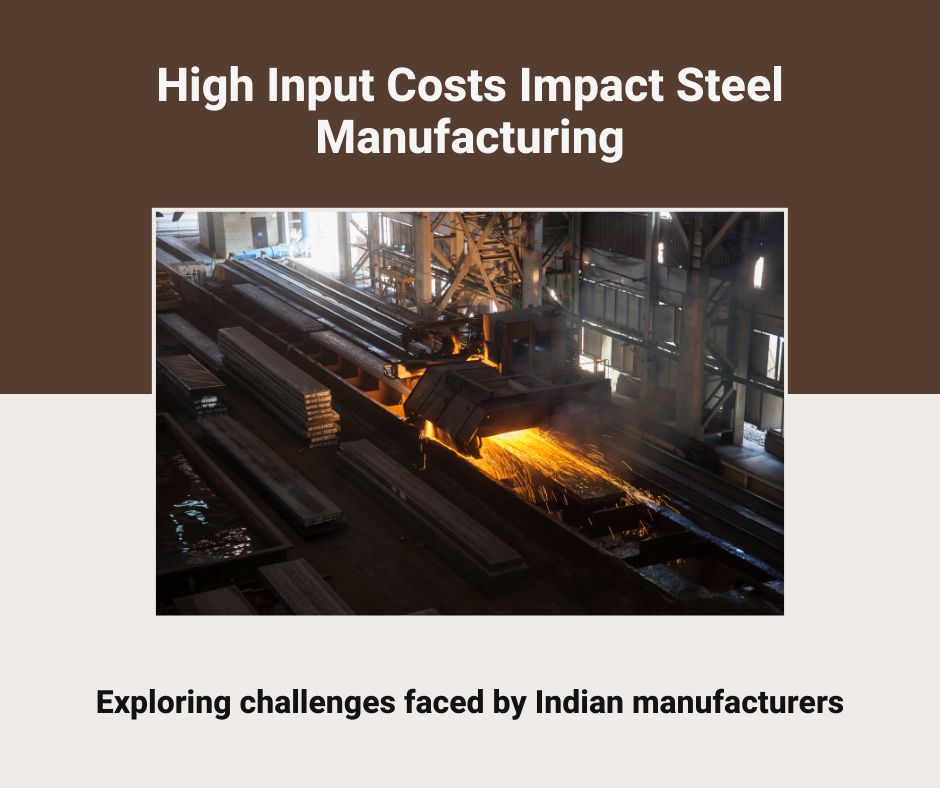
The Indian steel industry, a key pillar of the country’s industrial growth, is facing significant challenges due to high input costs. Raw materials like iron ore and coking coal, essential for steel production, have witnessed a sharp rise in prices, putting intense pressure on manufacturers’ margins. While India holds a prominent position as one of the largest steel producers globally, it struggles to compete with more cost-efficient steel producers in other regions due to this pricing issue.
The Burden of Raw Material Costs
The steel manufacturing process relies heavily on two main inputs: iron ore and coking coal. Both of these materials are subject to global price volatility. For Indian steel manufacturers, the reliance on imports, particularly for coking coal, further exacerbates cost pressures. While India has vast reserves of iron ore, the quality and extraction costs sometimes limit cost-effectiveness compared to global peers. Moreover, high transportation costs and logistical inefficiencies within the country compound the problem, raising the overall cost structure.
Global Competitiveness: A Major Challenge
In global markets, Indian steel manufacturers are pitted against producers from countries like China, where economies of scale, more advanced technologies, and lower input costs give them a competitive edge. Additionally, manufacturers in countries like Russia and Brazil benefit from access to lower-priced raw materials and government support, further reducing their costs. These factors make it increasingly difficult for Indian steel manufacturers to compete, especially in export markets, where pricing is often the key deciding factor.
The Impact on Margins and Profitability
The high input costs directly eat into the profitability of Indian steel companies. Even though demand for steel, both domestically and internationally, remains strong, the ability of Indian firms to maintain attractive margins is limited. This pressure on profitability can lead to a slowdown in capital investments, which may hinder modernization efforts and reduce the industry’s global competitiveness in the long term.
A Path Forward: Solutions and Opportunities
To mitigate the challenges posed by high input costs, Indian steel manufacturers must explore several avenues:
1. Resource Efficiency: Optimizing the use of raw materials through improved production techniques and advanced technology can help reduce waste and improve cost-efficiency.
2. Domestic Resource Development: Investing in the exploration and development of better-quality domestic raw materials could reduce reliance on costly imports, particularly in the case of coking coal.
3. Logistical Improvements: Streamlining transportation and reducing logistical inefficiencies can significantly lower costs associated with moving raw materials and finished products across the country.
4. Policy Support: Government intervention, whether through subsidies, tax incentives, or tariff adjustments, could help relieve some of the cost burdens on steel producers.
While Indian steel manufacturers face substantial challenges due to high input costs, there is also room for improvement and opportunity. Through a combination of technological advancements, strategic investments, and policy support, the industry can navigate these challenges, strengthen its competitiveness, and continue contributing to India’s industrial success on the global stage.
 "Connecting communities, empowering nations: Unifying the Regional and Global Economy ."
Leave a comment