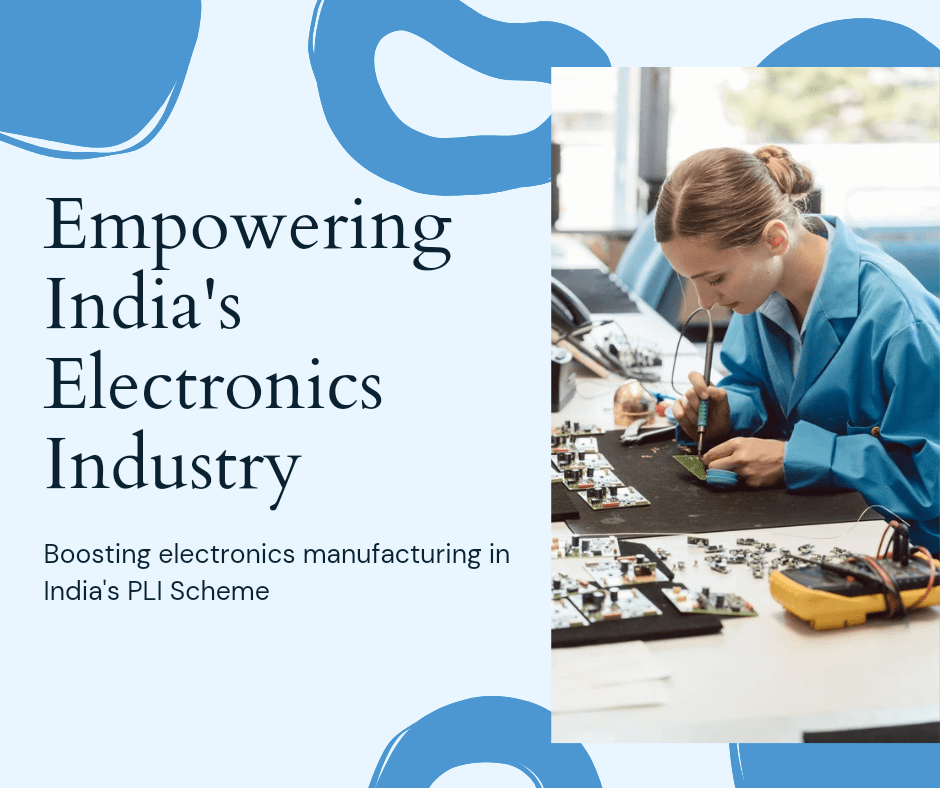
In recent months, the Government of India has proudly touted the success of the Production-Linked Incentive (PLI) scheme for the electronics sector. With the scheme aimed at bolstering domestic manufacturing, reducing imports, and creating jobs, the government claims that it is yielding positive results, notably in mobile phone exports. However, a closer look at the numbers reveals a more complex picture—one that raises critical questions about the actual progress being made beyond mere assembly activities.
The PLI Scheme: What’s the Objective?
Introduced in April 2020, the PLI scheme was designed to elevate India’s position in various key sectors, with electronics being one of the primary areas of focus. According to reports, mobile phone exports soared to a staggering USD 15.6 billion in FY24 alone, marking a 40% increase compared to previous years. Major international companies, including Apple and Samsung, have shifted assembly lines to India, driven by increased global smartphone demand.
While these statistics seem promising, they are indicative of assembly operations rather than a well-rounded enhancement of domestic production capabilities.
The Assembly vs. Actual Production Conundrum
A crucial point of concern is that, while India may be seeing increased assembly activities, the actual manufacturing capabilities remain limited. Currently, a mere 15% of the components used in mobile phones are produced locally. The overwhelming dependence on imports for essential high-value components—like chips and camera modules—raises alarms about the sustainability of this progress.
The PLI scheme’s emphasis on attracting large assemblers fails to fully develop a robust domestic supply chain. Industry experts voice concerns that without supporting local component manufacturers, the gains from the PLI initiative may be confined to assembly houses. This scenario not only threatens the long-term ambitions of the electronics sector in India but may also hinder job creation and technological advancements.
A Comprehensive Approach is Essential
To navigate these challenges, there is an urgent call for a broader strategy that encompasses the entire electronics manufacturing ecosystem. While the current focus of the PLI scheme primarily benefits large assembly operations, smaller manufacturers and component producers must not be overlooked. Integrating these players into the supply chain is crucial to fostering a self-sustaining electronics manufacturing environment capable of satisfying both local and global demands.
The Indian Cellular and Electronics Association (ICEA) underscores the necessity of developing a comprehensive components and sub-assembly ecosystem. By extending PLI benefits to cover component manufacturing, the government could create a more integrated electronics industry that promotes long-term growth, innovation, and job opportunities.
Conclusion: A Call for Strategic Reevaluation
While the assertions of success surrounding the PLI scheme paint a picture of commendable progress, they must be scrutinized in light of the ongoing reliance on imports and the lack of local production capabilities. Moving forward, it is critical for the government to consider a strategic reevaluation of the PLI framework.
The real success of this scheme should not only be measured by soaring assembly figures but by the establishment of a resilient manufacturing ecosystem. By directing more incentives toward local component production, India can recalibrate its approach and truly realize its ambitions of becoming a global manufacturing powerhouse. Only then can the claim of success resonate beyond assembly lines and into the realm of genuine domestic innovation and production.
In embracing this more holistic strategy, India can indeed pave the way for a brighter and more self-sufficient electronics manufacturing future.
Citations:
1. [PLI for electronics is working well, but the sector’s readiness for incentives withdrawal is questionable](https://theprint.in/economy/pli-for-electronics-working-well-but-the-sector-isnt-ready-for-incentives-to-be-withdrawn-yet/2179774/)
2. [Production Linked Incentives Schemes in India – Invest India](https://www.investindia.gov.in/production-linked-incentives-schemes-india)
3. [Now’s The Time To Broaden PLI Focus, Urges Indian Electronics Industry](https://inc42.com/features/union-budget-2024-nows-the-time-to-broaden-pli-focus-urges-indias-electronics-manufacturing-industry/)
4. [India’s Electronic Manufacturing Likely to Double in the Next Five Years](https://economictimes.indiatimes.com/industry/cons-products/electronics/indias-electronic-manufacturing-likely-to-double-in-the-next-five-years-govt-sources/articleshow/111022446.cms)
5. [India’s Electronics Imports Remain Above $20 Billion Despite PLI Scheme](https://www.communicationstoday.co.in/indias-electronics-imports-remain-above-20-billion-despite-pli-scheme/)
6. [Developing India as the Manufacturing Hub for Electronics](https://visionias.in/current-affairs/news-today/2024-06-27/economics-%28macroeconomics%29/developing-india-as-the-manufacturing-hub-for-electronics-components-and-sub-assemblies-cii-report)
7. [How Budget 2024 can Cash in on PLI Scheme to Unlock Aatmanirbhar Bharat’s Manufacturing Potential](https://economictimes.indiatimes.com/news/economy/policy/how-budget-2024-can-cash-in-on-the-pli-scheme-to-unlock-aatmanirbhar-bharats-manufacturing-potential/articleshow/111728397.cms)
8. [Budget 2024 Anticipates a ₹40,000-crore PLI Scheme for Electronics Sub-Assemblies and Components](https://www.moneycontrol.com/news/business/budget/budget-2024-a-rs-40000-crore-pli-scheme-for-electronics-sub-assemblies-and-components-likely-to-be-announced-12763100.html)
 "Connecting communities, empowering nations: Unifying the Regional and Global Economy ."
Leave a comment