Introduction
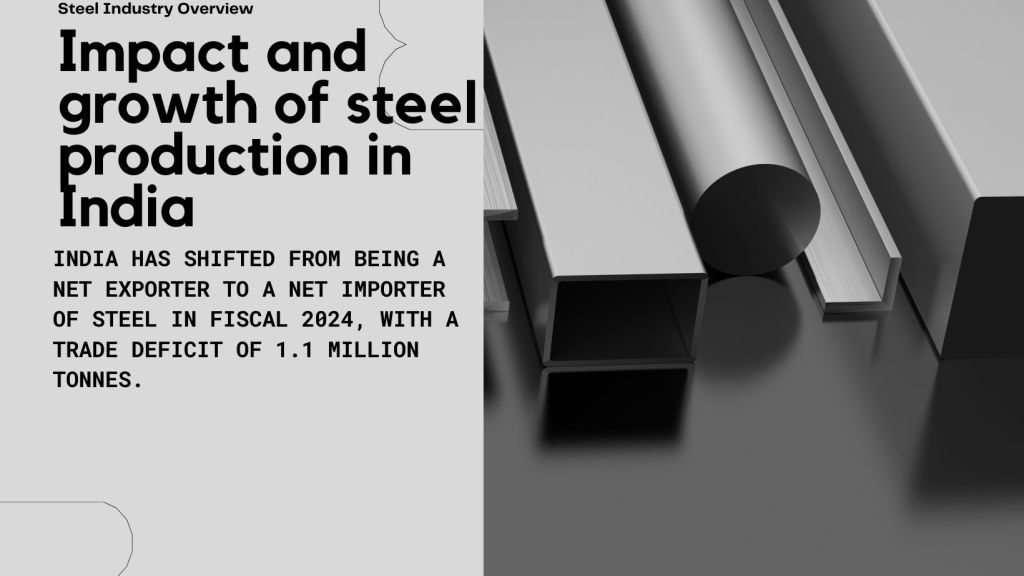
India’s steel industry has historically been one of the bedrocks of its manufacturing sector, playing a crucial role in the nation’s industrialization and economic growth. As one of the largest producers of crude steel worldwide, India has significantly shaped the global steel market dynamics. However, the industry is undergoing a complex transition. Factors such as import scenarios, policy changes, and environmental regulations from trade partners like the EU are starting to impact the industry’s trajectory. This blog explores these dimensions in detail, assessing the current status, reasons behind the trend of India becoming a net importer of steel, and the long-term impacts of EU’s environmental policies on Indian steel exports.
Current Status of the Indian Steel Industry
India is the second-largest steel producer in the world, with an output of 118.2 million tonnes (MT) in 2022. Key players in the industry include Tata Steel, JSW Steel, SAIL, and ArcelorMittal-Nippon Steel India. The sector employs millions of people directly and indirectly and contributes around 2% to the nation’s GDP. The government’s National Steel Policy (NSP) aims to ramp up steel production capacity to 300 MT by 2030.
While domestic production has been robust, demand for steel in India is also soaring, fueled by infrastructure projects, automotive production, and construction activities. Despite these positive indicators, a recent shift has been India’s emergence as a net importer of steel.
Why India is Gradually Becoming a Net Importer of Steel
1. Increasing Domestic Demand: As India strides towards its ambitious economic and infrastructural goals, the demand for steel has outpaced domestic production. This surge in demand especially from infrastructural projects propelled by government schemes like ‘Make in India’ and ‘Smart Cities Mission’ has necessitated the import of steel to fill the supply gap.
2. Quality and Specialty Steel: Indian steel manufacturers currently lack the capacity to produce certain high-grade, specialty steel required in defense, aerospace, and automobile industries. This has led to a higher dependency on imports from countries like Japan, South Korea, and China, which have advanced technology and expertise in producing these specialized steel grades.
3. Cost Competitiveness: Tariff and non-tariff barriers, along with regional imbalances in raw material availability, often render Indian steel more expensive compared to imports. High input costs, especially for coking coal, hinder the competitiveness of the domestic steel industry.
4. Global Trade Policies and Relations: Trade agreements, anti-dumping measures, and tariffs significantly influence import-export balance. For instance, bilateral deals that provide preferential treatment to certain countries make it cheaper to import specific steel types, thereby impacting local production and consumption dynamics.
Environmental Regulations in the EU: Long-term Impact on Indian Steel Exports
1. Carbon Border Adjustment Mechanism (CBAM):The EU is planning to implement the CBAM to levy tariffs on imported goods based on their carbon content, effectively penalizing products with higher emissions. Indian steel producers, who rely on coal-intensive processes, may face significant additional costs, making their exports less competitive in the European market.
2. Stringent Emission Standards:The EU’s focus on stringent emission standards means Indian steel manufacturers must invest heavily in green technologies and cleaner production mechanisms to meet these standards. While some leading Indian companies are making strides towards more sustainable practices, widespread adoption across the sector will be resource-intensive and time-consuming.
3. Adoption of Green Steel:The EU is increasingly pushing for the adoption of ‘green steel’ produced with minimal carbon footprints. This shift will potentially shrink the market for traditional steel exports, affecting countries that cannot rapidly transition to green steel production. Indian firms will face pressure to innovate and adapt, necessitating significant capex in plant and machinery upgrades.
4. Environmental, Social, and Governance (ESG) Compliance: As global investors and consumers become more conscious of ESG factors, Indian steel companies will need to align with these principles to maintain their market share in Europe. Failing to meet ESG norms can result in the loss of key European customers, impacting long-term export prospects.
Future Outlook and Strategies for Sustainable Growth
To mitigate these challenges and secure a robust future for the steel industry, India needs a multi-pronged strategy:
1. Invest in R&D: Focus on R&D to develop and commercialize high-grade and specialty steel locally. Adoption of new technologies will not only cater to domestic demand but make Indian steel globally competitive.
2. Green Initiatives: Prioritize investment in green technologies, such as hydrogen-based steelmaking and recycling, to reduce the carbon footprint. Collaborating with global leaders in green tech can accelerate this transition.
3. Policy Support:Government policies should encourage local steel production by reducing raw material and energy costs. Incentivization schemes for modernization and sustainable practices could propel the industry forward.
4. Diversification of Export Markets: Reducing dependency on traditional markets like the EU by exploring new markets in Africa, Southeast Asia, and Latin America.
5. Collaborative Approach:Foster collaborations between public and private sectors to streamline regulatory frameworks, financial incentives, and infrastructural support necessary for achieving sustainable growth objectives.
The Indian steel industry stands at a critical juncture, balancing the challenges of rising imports, increasing demand, and stringent international environmental norms. Strategic investments, policy reforms, and a concentrated push towards sustainability and innovation are essential for the sector to thrive in the long-term. Navigating these complex dynamics successfully will not only secure India’s position in the global steel market but also contribute significantly to its broader economic objectives.
—
By embracing these strategies, India can ensure that its steel industry remains a pillar of the economy, forging a future that is both resilient and sustainable.
 "Connecting communities, empowering nations: Unifying the Regional and Global Economy ."
Leave a comment