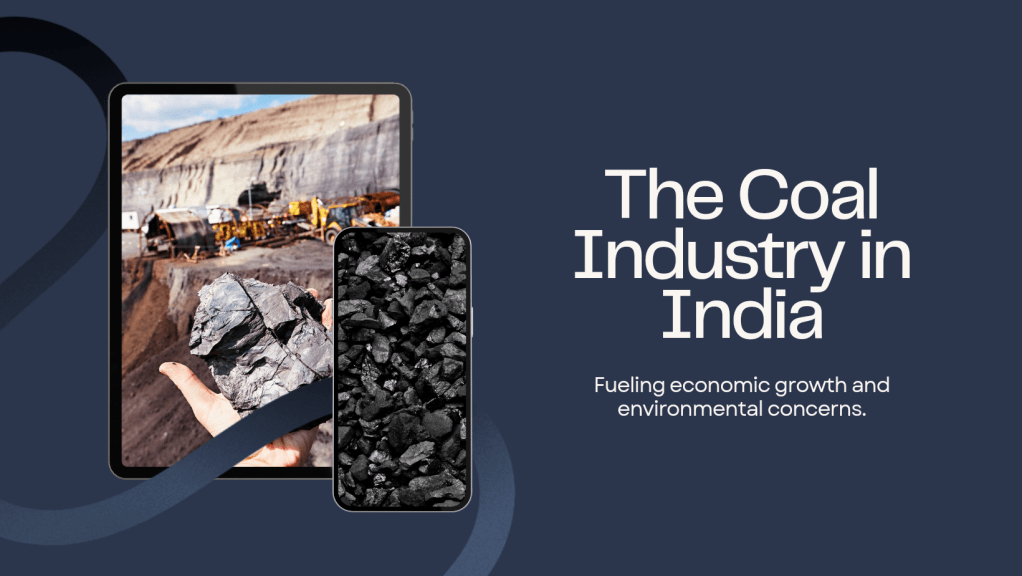
The coal industry in India holds a pivotal position in the country’s energy framework. Accounting for about 55% of India’s energy needs, coal remains the core contributor to the production of electricity and industrial power. With India being the second-largest producer of coal globally, the industry is fundamental to its economic growth, industrial development, and employment generation.
Historical Overview
The history of coal mining in India dates back to the 18th century when commercial exploitation started in the Raniganj Coalfield. Over the years, the industry has evolved with modernization and strategic planning, leading to significant advancements in production and technology. Post-independence, the sector witnessed a surge with nationalization in the early 1970s under the Coal Mines (Nationalization) Act, which established Coal India Limited (CIL) in 1975. This initiative streamlined operations and improved productivity.
Current Landscape
Today, the coal industry is dominated by Coal India Limited (CIL), which contributes to over 80% of the country’s coal production. Given India’s vast coal reserves, estimated at around 319 billion tonnes, the ongoing exploitation of these resources ensures a steady supply of energy.
- Production and Reserves:
- India holds the fifth-largest coal reserves in the world. The primary reserves are located in states like Jharkhand, Odisha, Chhattisgarh, West Bengal, Madhya Pradesh, and Telangana.
- The country produced about 730 million tonnes of coal in the financial year 2021-2022, catering to domestic consumption and reducing potential dependency on imports.
- Major Coal-Producing Companies:
- Coal India Limited (CIL): The largest producer, responsible for the majority of domestic production.
- Singareni Collieries Company Limited (SCCL): Another significant player in the industry.
- Private Sector Enterprises: With recent reforms, various private companies have entered the coal mining arena through auctions and contracts.
Government Reforms and Policies
The Indian government has initiated several reforms to augment coal production and introduce competition in the sector. Some of the key policy changes include:
- Commercial Mining: The introduction of commercial coal mining has enabled private sector participation. Approximately 19 coal blocks were auctioned for commercial mining, inviting bids from both domestic and international companies.
- Coal Block Allocation: The transparent auction process for coal block allocation aims to improve efficiency and production capabilities.
- Environmental and Safety Regulations: Stricter regulations have been introduced to ensure sustainable mining practices and safeguard worker health and safety standards.
- Coal Gasification and Liquefaction: Promoting coal gasification to produce syngas and other chemicals, which provides a cleaner alternative to direct coal combustion. Projects like Talcher Fertilizers are dedicated to this transformation.
Technological Advancements
The coal industry is embracing cutting-edge technology to enhance productivity and ensure ecological balance. Implementation of modern technologies like automation, drone surveillance, and real-time monitoring systems have revolutionized mining operations. These advancements have improved production efficiency, reduced wastage, and minimized the environmental footprint.
Sustainability and Environmental Challenges
Coal mining and combustion are under scrutiny due to their environmental impacts, including greenhouse gas emissions and landscape degradation. Addressing these challenges requires a concerted effort:
- Emissions Reduction: Transitioning to cleaner coal technologies and promoting renewables is critical.
- Reclamation and Rehabilitation: Post-mining land reclamation and rehabilitation of affected communities are integral for sustainable development.
- Carbon Capture and Storage (CCS): Investing in CCS technology can significantly mitigate CO2 emissions from coal-fired power plants.
Future Outlook
The future of the coal industry in India is poised to balance between sustaining vital energy needs and transitioning towards a more sustainable energy mix. With initiatives like the National Clean Energy Fund and strategic investments in renewables, India aims to reduce its carbon footprint.
Key Areas of Focus:
- Increased Efficiency: Adopting advanced technologies to maximize coal extraction efficiency.
- Cleaner Technologies: Investing in advanced coal technologies and exploring non-conventional uses of coal.
- Renewable Integration: Gradually integrating renewable energy sources into the grid to reduce reliance on coal.
The coal industry remains indispensable for India’s economic growth and energy security. While the sector is faced with environmental and sustainability challenges, ongoing reforms, technological enhancements, and strategic policy initiatives are steering it towards a more balanced and sustainable future. India’s coal industry is adapting to meet the demands of a rapidly evolving energy landscape, ensuring that it continues to underpin the nation’s development for years to come.
 "Connecting communities, empowering nations: Unifying the Regional and Global Economy ."
Leave a comment