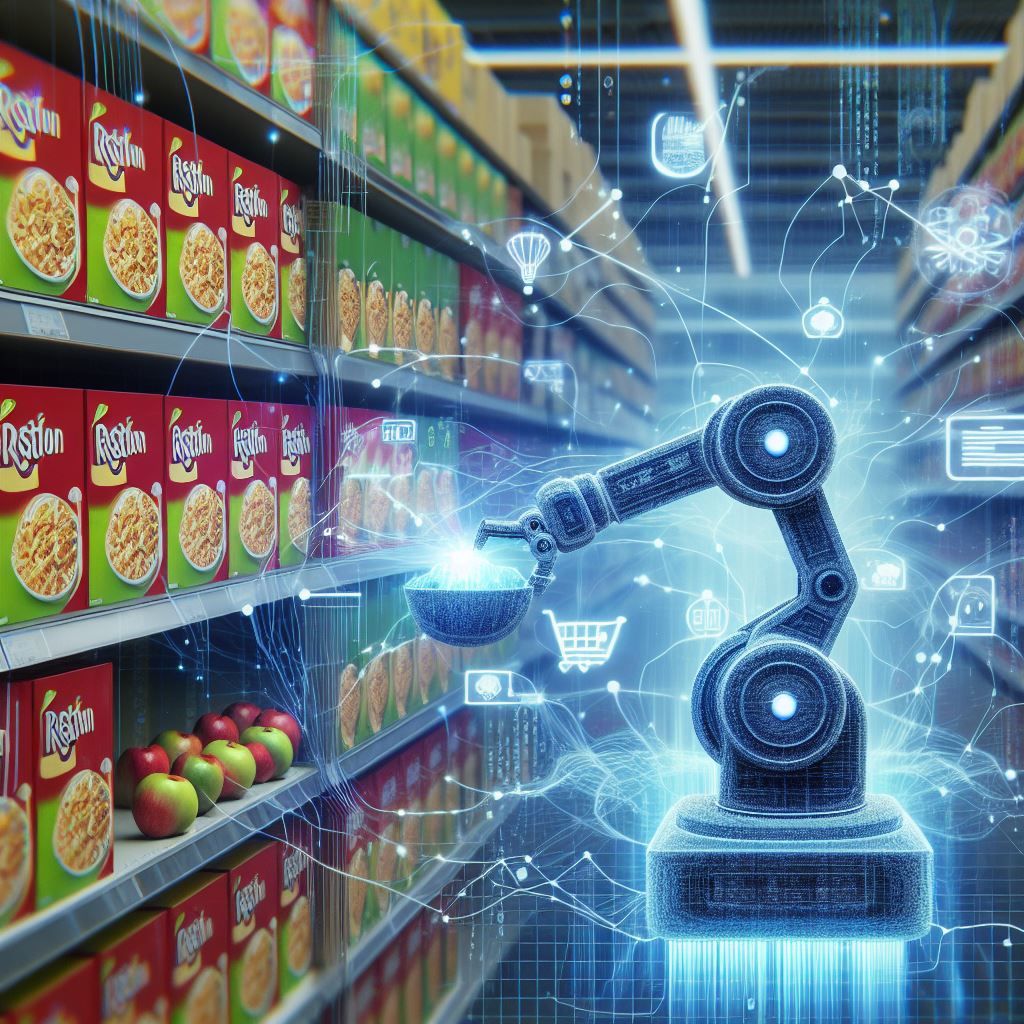
In the ever-evolving landscape of the Fast-Moving Consumer Goods (FMCG) sector, a profound transformation is underway, driven by the unstoppable force of artificial intelligence (AI). This revolution is poised to redefine the very foundations of the industry, transcending the boundaries of traditional business models and ushering in a new era of unprecedented efficiency, personalization, and customer-centric innovation.
Hyper-Personalization: A Customer-Centric Future
At the heart of this AI-driven transformation lies the promise of hyper-personalization – a future where the FMCG industry becomes laser-focused on understanding and catering to the unique needs and preferences of each individual consumer. Imagine a world where AI-powered chatbots effortlessly analyze your purchase history and recommend personalized product bundles, tailored to your specific tastes and habits. Gone are the days of one-size-fits-all marketing; instead, the FMCG landscape is embracing a future where every interaction, every product, and every brand experience is meticulously crafted to resonate with the individual.
The power of facial recognition technology, integrated seamlessly into store shelves, takes this hyper-personalization to new heights. As you browse the aisles, the shelves themselves adjust their promotional displays, offering personalized discounts and recommendations based on your demographic profile and past buying behaviors. This level of precision marketing not only delights the consumer but also empowers brands to forge deeper, more meaningful connections with their target audience.
But the AI revolution in FMCG extends far beyond the confines of the physical store. Social media has become a veritable goldmine of consumer insights, and FMCG companies are harnessing the power of AI to extract invaluable data from this vast digital landscape. By analyzing social media trends, sentiment, and conversations, AI-powered systems can predict emerging buying habits and inform product development, ensuring that brands stay ahead of the curve and deliver the products that their customers truly desire.
Precision Production and Optimized Supply Chains
The impact of AI in the FMCG sector extends far beyond the customer-facing aspects of the business. The backbone of the industry – the complex web of production, logistics, and supply chain management – is also undergoing a transformative shift driven by the integration of AI technologies.
At the heart of this transformation lies the ability of AI to analyze vast datasets and identify patterns that elude human cognition. By leveraging predictive analytics, FMCG companies can now forecast demand fluctuations with unprecedented accuracy, enabling them to optimize their production lines and minimize waste. Gone are the days of overproduction or stockpiling; AI-powered systems can precisely calibrate output to meet the dynamically changing needs of the market, ensuring that every product that rolls off the assembly line has a clear path to the consumer.
But the AI revolution in FMCG extends beyond mere production optimization. Predictive maintenance, powered by AI algorithms, can now identify potential equipment failures before they occur, allowing for proactive maintenance and ensuring smooth, uninterrupted operations. This not only reduces downtime and maintenance costs but also enhances the reliability and timeliness of product deliveries – a critical factor in an industry built on meeting the ever-changing demands of the consumer.
The optimization of supply chains is another area where AI is poised to make a transformative impact. Smart logistics systems, driven by AI, can analyze real-time data on traffic patterns, weather conditions, and delivery routes to optimize the movement of goods, reducing transportation costs and minimizing the carbon footprint of the industry. This end-to-end optimization, from production to delivery, is a hallmark of the AI-driven FMCG landscape, where efficiency and sustainability go hand in hand.
The Rise of the “Smart” Product
The AI revolution in FMCG is not limited to the behind-the-scenes operations; it is also redefining the very nature of the products themselves. Welcome to the era of the “smart” product – where AI-powered features and capabilities are seamlessly integrated into the goods we consume, creating a truly personalized and responsive experience for the end-user.
Imagine a world where the packaging of your favorite FMCG products is equipped with dynamic expiry dates, based on real-time temperature monitoring and analysis. No more guesswork when it comes to freshness; the product itself will communicate its optimal consumption window, ensuring that you never waste a single item. This level of smart packaging not only enhances the consumer experience but also contributes to the industry’s overarching goal of reducing waste and improving sustainability.
But the AI-powered evolution of FMCG products extends far beyond the packaging. Imagine a household item, such as a refrigerator, that is equipped with embedded sensors capable of tracking usage patterns and automatically generating shopping lists based on what’s running low. The days of manually monitoring your pantry and creating endless shopping lists are behind us, as AI-driven product intelligence takes the burden off the consumer and ensures that their homes are always stocked with the essentials.
This integration of AI into the core of FMCG products fosters a deeper, more meaningful relationship between the consumer and the brand. The product becomes a trusted companion, a responsive ally that anticipates our needs and seamlessly integrates into our daily lives. This shift from passive consumption to active engagement is poised to redefine brand loyalty, as consumers gravitate towards the FMCG companies that truly understand and cater to their unique preferences and requirements.
Marketing with Machine Learning Muscle
The AI revolution in FMCG is not limited to the realm of production, logistics, and product design; it is also transforming the very heart of the industry – marketing and customer engagement. The power of machine learning algorithms is being harnessed to create highly targeted, personalized advertising campaigns that speak directly to the individual consumer.
By delving deep into the vast troves of consumer data, AI-powered systems can now analyze buying patterns, demographic information, and online behavior to craft marketing strategies with laser-like precision. Gone are the days of blanket advertising; in its place, FMCG companies are employing AI to create hyper-targeted campaigns that resonate with the specific needs and preferences of each customer segment.
But the AI revolution in FMCG marketing extends far beyond traditional advertising channels. Social media platforms have become the new battlegrounds, where AI-powered chatbots engage in personalized conversations with potential customers, offering tailored product recommendations and addressing their unique concerns. This level of one-on-one interaction, powered by the intelligence of AI, fosters a sense of genuine connection between the brand and the consumer, breaking down the barriers of traditional marketing and creating a more authentic, engaging experience.
Moreover, the AI revolution in FMCG marketing extends to the realm of customer feedback and sentiment analysis. By harnessing the power of real-time data monitoring, FMCG companies can now analyze online reviews and social media conversations to gain invaluable insights into consumer perceptions and concerns. This real-time feedback loop allows brands to swiftly address issues, improve product quality, and maintain a pulse on the ever-evolving needs of their target audience.
A Brave New World of Ethical Considerations
As the FMCG industry embraces the transformative power of AI, it must also grapple with a new set of ethical and societal challenges that come hand-in-hand with this technological revolution.
Chief among these concerns is the issue of data privacy and the responsible use of consumer information. FMCG companies must navigate the delicate balance between leveraging the power of AI to deliver personalized experiences and ensuring that the personal data of their customers is protected and used ethically. Transparent data policies, robust security measures, and clear communication with consumers will be essential in building trust and maintaining the integrity of the industry.
Another pressing concern is the potential displacement of jobs due to the automation and optimization enabled by AI. As FMCG companies streamline their operations and adopt intelligent systems, there is a valid concern about the impact on traditional workforce models. To address this challenge, FMCG leaders must prioritize proactive skill development and retraining programs, ensuring that their workforce is equipped to thrive in the AI-driven future and that the benefits of this technological transformation are shared equitably across the organization.
Equally crucial is the imperative to ensure fairness and eliminate bias in the AI algorithms that are shaping product development, marketing, and customer engagement. FMCG companies must be vigilant in auditing their AI systems, identifying and mitigating any instances of algorithmic bias that could perpetuate societal inequities or discriminate against certain consumer segments.
By addressing these ethical considerations head-on, the FMCG industry can harness the transformative power of AI while upholding the principles of responsible innovation and sustainable growth. It is a delicate dance, but one that is essential in shaping a future where technological progress and human-centric values coexist in harmony.
The Future is Now
The FMCG industry stands on the precipice of a new era, where artificial intelligence is poised to reshape the very foundations of the business. From hyper-personalized customer experiences to precision production and smart product capabilities, the AI revolution is redefining the landscape of the FMCG sector, unlocking new frontiers of growth, efficiency, and customer satisfaction.
As FMCG companies embrace this transformative shift, they must also navigate the complex ethical and societal challenges that come with the adoption of AI. By striking the right balance between technological innovation and responsible stewardship, the industry can unlock a future where the consumer is not just a nameless, faceless entity, but a valued partner in the journey of growth and innovation.
The AI revolution in FMCG is not a distant dream; it is a reality unfolding before our very eyes. The companies that seize this opportunity and lead the charge will emerge as the champions of a new era, where the lines between brand and consumer blur, and the products we love become more than just inanimate objects – they become intelligent, responsive companions, catering to our every need and shaping the very fabric of our daily lives.
 "Connecting communities, empowering nations: Unifying the Regional and Global Economy ."
Leave a comment