Introduction
Inflation is commonly referred to as the unwelcome guest at the global economic party. It exerts pressure on the economy by eroding purchasing power and squeezing household budgets. Central banks are entrusted with the responsibility of maintaining price stability, but the tools at their disposal, such as interest rate hikes, present a double-edged sword. While raising interest rates can curb inflation, it also risks stifling economic growth.
The Risks of Taming Inflation
Central banks implement interest rate hikes as a means to control inflation. By increasing borrowing costs, businesses invest less, and consumers tighten their belts, thereby dampening economic activity. This slower pace of activity eventually leads to a decline in the rate at which prices rise. However, applying too much pressure on the brakes can cause the engine to stall. Businesses may halt expansion plans, hiring freezes could become the norm, and consumer spending might plummet, resulting in an economic slowdown.
Complicating Factors
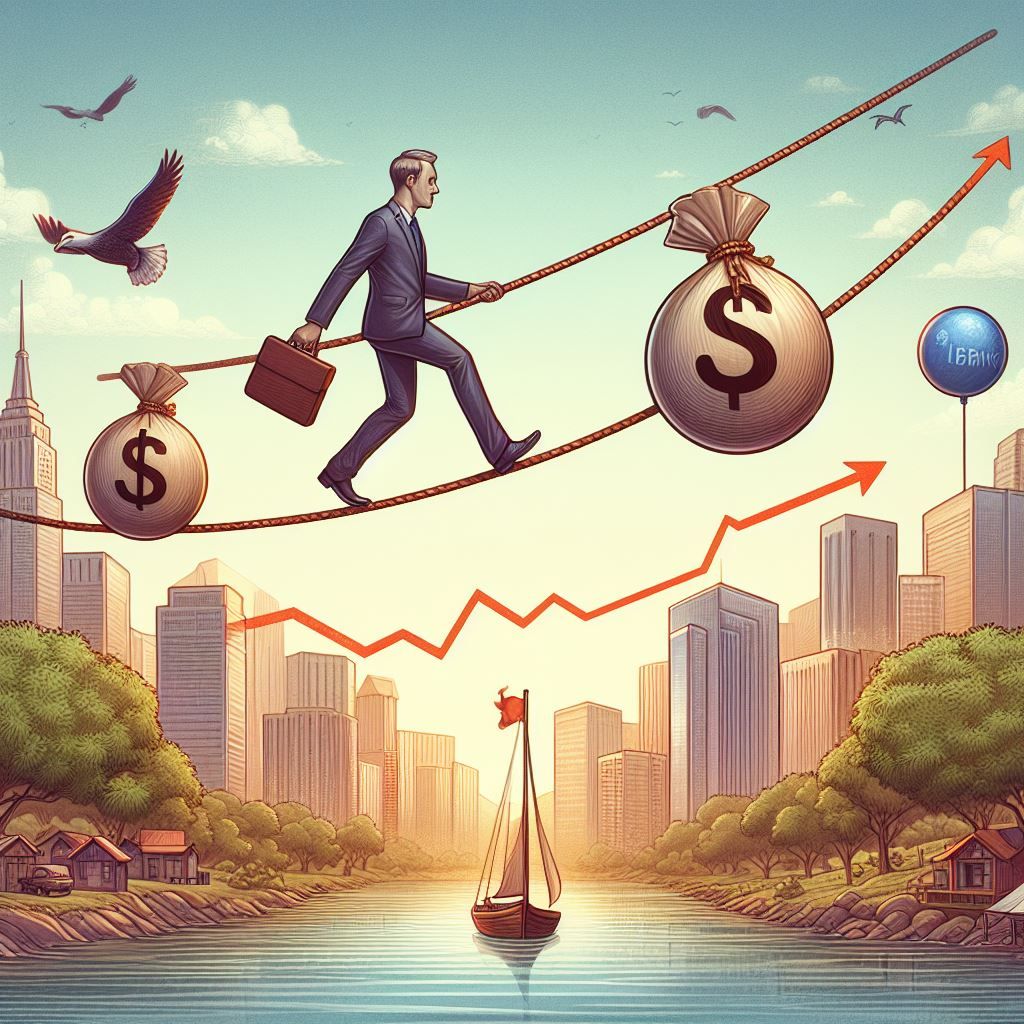
The tightrope walk for central banks is made even more challenging by various factors that contribute to the complexity of controlling inflation:
1. Global Interconnectedness: Interest rate hikes in one country can trigger a ripple effect that impacts economies worldwide. Given the highly interconnected nature of the global financial system, actions taken by one central bank can have unintended consequences elsewhere.
2. Supply Chain Disruptions: Lingering bottlenecks in supply chains have contributed to rising prices. These disruptions make it harder to control inflation solely through traditional monetary policy. The ongoing challenges in global trade, such as transportation bottlenecks and raw material shortages, exacerbate the task of central banks.
3. Geopolitical Tensions: Ongoing geopolitical conflicts, like the war in Ukraine, create uncertainty and volatility in energy and commodity markets. These tensions fuel inflationary pressures, making it even more challenging for central banks to strike the delicate balance between taming inflation and supporting economic growth.
Navigating the Complex Landscape
To successfully navigate the intricate landscape of inflation management, central banks must adopt a nuanced approach. Some key strategies they may consider include:
1. Data-driven Decisions: Central banks should closely monitor economic data and inflation trends to inform their policy actions. By analyzing data, they can tailor the pace and magnitude of interest rate hikes to achieve the desired outcome of controlling inflation without derailing economic growth.
2. Communication is Key: Clear communication of policy decisions and rationale is vital for managing market expectations and building public trust. By effectively communicating the reasoning behind interest rate actions, central banks can reduce uncertainty and provide stakeholders with the confidence needed to make informed decisions.
3. Targeted Measures: Central banks can explore complementary policies in conjunction with interest rate hikes. For example, temporary tax breaks for specific sectors can mitigate the impact of rising interest rates on businesses, thereby minimizing any potential negative effects on the economy.
A United Front Against Inflation
Taming inflation requires a united front and coordinated efforts across various stakeholders. Apart from central banks, governments have a crucial role to play in supporting the fight against inflation. They can introduce targeted subsidies for vulnerable populations and invest in infrastructure projects to boost economic growth without exacerbating inflationary pressures.
Furthermore, consumers also have a part to play in managing inflation. By making informed choices, prioritizing essential goods and services, and avoiding impulsive purchases, individuals can contribute to mitigating inflationary pressures on the economy.
Taming inflation without sacrificing economic growth is undoubtedly a delicate art. Central banks must exercise careful judgment, considering the interplay of factors such as global interconnectedness, supply chain disruptions, and geopolitical tensions. Collaboration and adaptation are key in navigating this economic tightrope walk. By adopting a nuanced approach, leveraging data-driven decision-making, effective communication, and targeted policy measures, we can successfully tame inflation while maintaining sustainable economic growth. It is through these concerted efforts that we can emerge stronger on the other side, with an economy that is both stable and vibrant.
 "Connecting communities, empowering nations: Unifying the Regional and Global Economy ."
Leave a comment