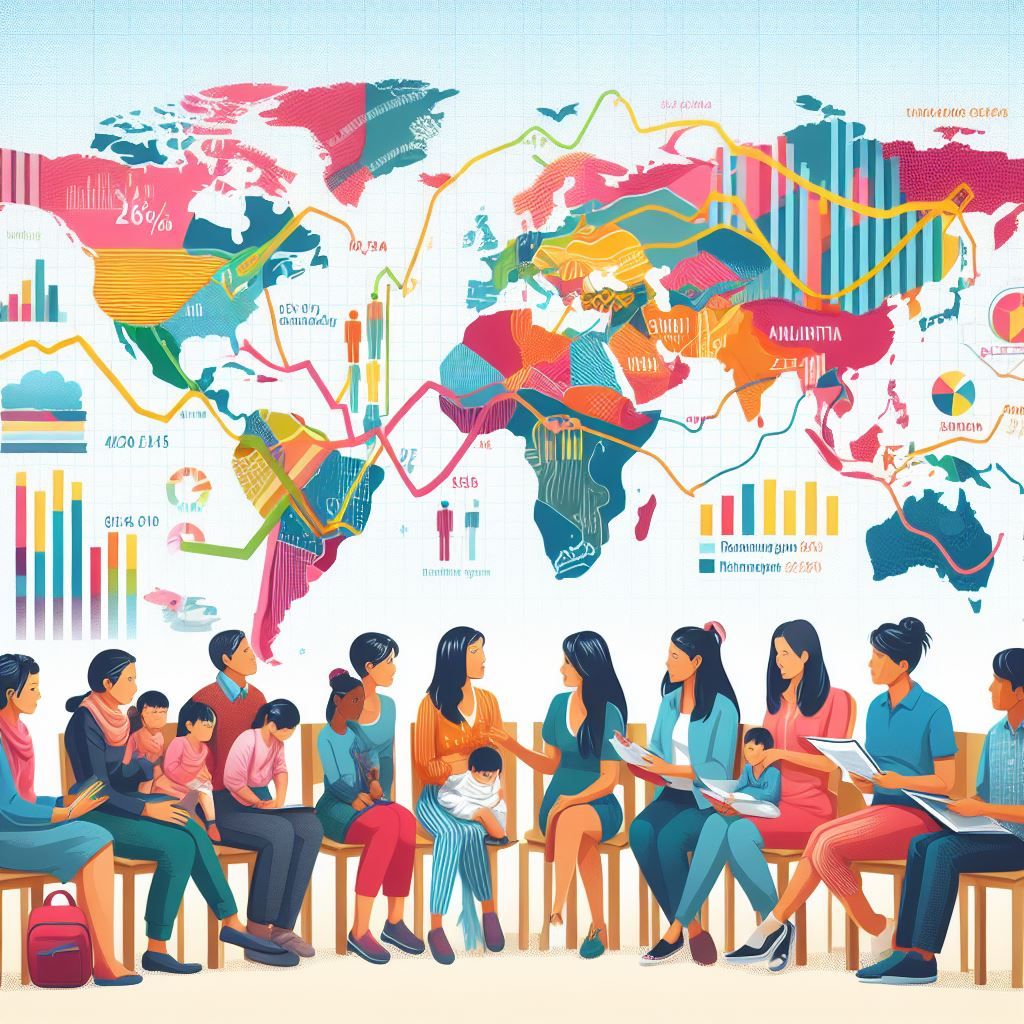
The world is on the brink of a transformative demographic shift, as falling fertility rates bring forth significant implications for the global economy. According to a recent study, by 2050, approximately three-quarters of countries are projected to fall below the population replacement birth rate of 2.1 babies per female. This means that the number of births will no longer be sufficient to replace the existing population in most nations. Looking even further ahead, by 2100, only six countries are expected to maintain population-replacing birth rates. This demographic shift raises critical concerns and presents various challenges that must be addressed by policymakers, businesses, and individuals alike.
One of the key implications of falling fertility rates is the challenge it poses to the workforce. As fertility rates decline, the working-age population in advanced economies will decrease. This translates to fewer workers, leading to reduced productivity and economic growth. Policymakers will need to intervene politically and fiscally to address these challenges by implementing strategies such as encouraging immigration, investing in education and training, and adapting social security systems.
The economic impact of falling fertility rates is significant. Even if output per worker remains constant, a declining workforce will result in a smaller overall economy. Sectors heavily reliant on labor, such as housing, will be particularly affected. While advances in technology, such as artificial intelligence and robotics, may mitigate the economic impact to some extent, certain sectors will still face challenges.
The demographic shifts resulting from falling fertility rates will also give rise to geopolitical changes. Migration patterns will likely shift as countries experience changes in population dynamics. Aid networks will need to adapt to address the new demographic realities. These changes will inevitably influence international relations and have far-reaching implications.
Environmental considerations cannot be overlooked either. A smaller population may alleviate some environmental pressures, but it will also affect resource consumption patterns. As populations decline, resource demands may decrease, leading to significant changes in resource allocation and management.
Furthermore, falling fertility rates will result in aging populations in countries with declining birth rates. This has implications for healthcare, pensions, and intergenerational dynamics. Societal norms around family size and childbearing will also evolve, impacting family structures and gender roles. These social and cultural transformations will shape the fabric of societies and have profound and lasting effects.
The convergence of falling fertility rates, technological advancements, and changing demographics will reshape the global economy in profound ways. Policymakers, businesses, and individuals must prepare for this transformative journey into the future. Addressing the challenges posed by falling fertility rates requires creative and intelligent solutions that consider the multifaceted aspects of the global economy and society at large.
Falling fertility rates pose a significant challenge to the global economy. The implications span across workforce challenges, economic impact, geopolitical shifts, environmental considerations, and social and cultural transformations. As the world grapples with this demographic shift, proactive measures must be taken to adapt and address the challenges that lie ahead. Only through thoughtful examination and implementation of innovative solutions can we navigate the changing landscape and ensure a prosperous future for all.
References
(1) Falling fertility rates pose major challenges for the global economy – CNBC. https://www.cnbc.com/2024/03/22/falling-fertility-rates-pose-major-challenges-for-the-global-economy.html.
(2) Declining fertility rates will transform global economy, report says. https://www.ft.com/content/318ff981-d189-4bd6-b608-a9709097eedc.
(3) How Falling Fertility Threatens the Global Economy – Bloomberg. https://www.bloomberg.com/news/articles/2018-06-28/how-falling-fertility-threatens-the-global-economy.
(4) How much has the global fertility rate decreased over the years …. https://www.weforum.org/agenda/2022/06/global-decline-of-fertility-rates-visualised/.
(5) Global Economy Faces Challenges as Fertility Rates Decline: What You …. https://usnewsper.com/2024/03/global-economy-faces-challenges-as-fertility-rates-decline-what-you-need-to-know/.
 "Connecting communities, empowering nations: Unifying the Regional and Global Economy ."
Leave a comment