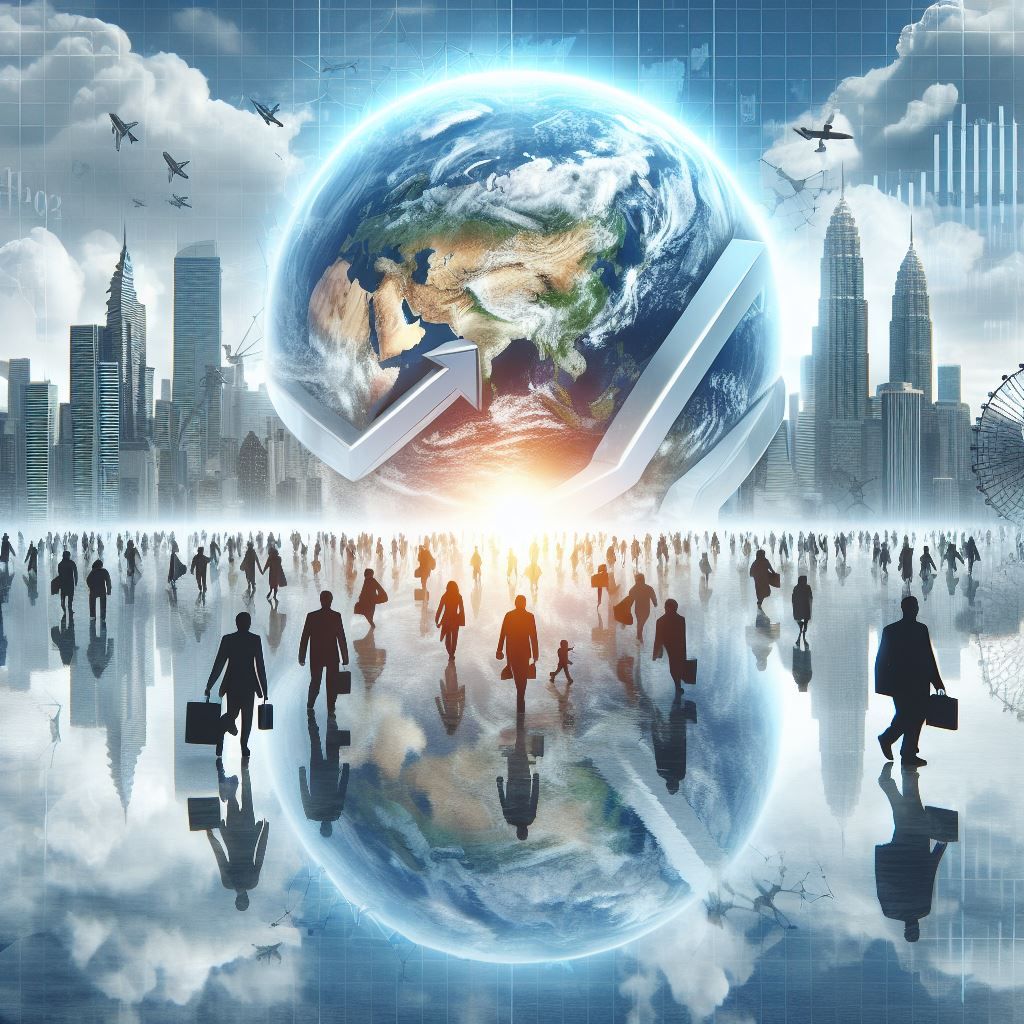
Demographic Transition
Demographic transition encompasses shifts in population size, age structure, and fertility rates as countries develop. By 2100, the world population is projected to peak at 9.7 billion, followed by a decline to 8.8 billion. However, these changes will not be uniform across regions. While some countries in Africa and Asia will experience rapid population growth, others, particularly in Europe and East Asia, will face aging and shrinking populations.
The implications of this demographic shift are profound. Labor markets will undergo fundamental changes as workforce dynamics evolve. Social security systems will require restructuring to address the increasing burden of an aging population. Migration patterns may shift, as individuals seek opportunities in regions with growing populations. Additionally, consumption patterns will change as countries with expanding middle classes become key drivers of global demand.
Climate Change
Climate change refers to the long-term alterations in the Earth’s climate system resulting from human activities that emit greenhouse gases. The far-reaching effects of climate change – from rising temperatures and sea levels to extreme weather events and biodiversity loss – are already being witnessed. These consequences will intensify if global warming exceeds the target of 1.5°C above pre-industrial levels set by the Paris Agreement.
The economic implications of climate change are wide-ranging and urgent. Agricultural productivity will be severely impacted, leading to food insecurity and regional disparities. Healthcare systems will face increased strain as the incidence of climate-related health risks rises. Infrastructure will be at risk from rising sea levels and extreme weather events, requiring substantial investments in adaptation and resilience. Climate-induced migration will also emerge as a significant challenge, necessitating coordinated international responses.
The Rise of a Global Middle Classa
The expansion of the global middle class, representing those with sufficient income to enjoy a decent standard of living, marks a fundamental shift. By 2030, the global middle class is projected to grow to 5.3 billion, with the majority of this growth driven by Asia, particularly China and India.
This rise presents immense opportunities for the global economy. Increased demand for goods and services will stimulate economic growth and foster market innovation. It also has the potential to nurture entrepreneurship and social mobility, contributing to enhanced social and political stability. However, ensuring the sustainable growth of the middle class will require addressing inequality, sustainable consumption, and resource management.
Interactions and Challenges
These factors – demographic transition, climate change, and the rise of a global middle class – do not exist in isolation. They interconnect and influence one another, amplifying the complexity of their impact on the global economy.
Demographic shifts will inform migration patterns that could be exacerbated by climate change-induced displacement, leading to demographic changes in host countries. At the same time, climate change impacts will disproportionately affect vulnerable populations, further straining social systems already grappling with demographic transitions.
Climate change may also intersect with the growth of the middle class, heightening demand for consumer goods, energy, and resources. Meeting this demand sustainably poses both environmental and economic challenges, necessitating a transition to low-carbon and resource-efficient economies.
Pathways to Adaptation and Resilience
To navigate these transformative forces, decisive action is needed. The global economy must adapt and foster inclusive, sustainable, and resilient growth. Several key actions can be undertaken:
1. Investing in human capital: Prioritizing education, health, and skills development will enable individuals to participate in emerging sectors and benefit from the changing economy. Equitable access to quality education and healthcare should be ensured, tackling both regional and social disparities.
2. Promoting green and digital transitions: Accelerating the transition to a low-carbon economy is crucial. Governments, businesses, and individuals must embrace renewable energy sources, energy efficiency, and sustainable practices. Simultaneously, investing in digital infrastructure and expanding digital services will foster innovation, connectivity, and economic productivity.
3. Strengthening global cooperation: Collaboration among nations is key to addressing the interconnected challenges. Enhanced multilateral institutions should facilitate cooperation on trade, investment, development assistance, and climate action. Solidifying international commitments, such as the Paris Agreement, will yield collective benefits.
The global economy stands at the threshold of profound change driven by demographic transition, climate change, and the rise of a global middle class. Embracing the challenges and opportunities presented by these transformative forces demands a collective response. By investing in human capital, prioritizing sustainable practices, and fostering global cooperation, we can shape a future that is prosperous, equitable, and sustainable for generations to come. The time to act is now.
References
1. India could become the world’s 3rd largest economy in the next 5 years …. https://www.weforum.org/agenda/2024/01/how-india-can-seize-its-moment-to-become-the-world-s-third-largest-economy/.
(2) This is how climate change could impact the global economy. https://www.weforum.org/agenda/2021/06/impact-climate-change-global-gdp/.
(3) The four global forces breaking all the trends | McKinsey. https://www.mckinsey.com/capabilities/strategy-and-corporate-finance/our-insights/the-four-global-forces-breaking-all-the-trends.
(4) Factors Driving Global Economic Integration — by Michael Mussa … – IMF. https://www.imf.org/en/News/Articles/2015/09/28/04/53/sp082500.
(5) Global Migration in the 21st Century: Navigating the Impact of Climate …. https://www.worldbank.org/en/news/feature/2023/12/11/global-migration-in-the-21st-century-navigating-the-impact-of-climate-change-conflict-and-demographic-shifts.
 "Connecting communities, empowering nations: Unifying the Regional and Global Economy ."
Leave a comment