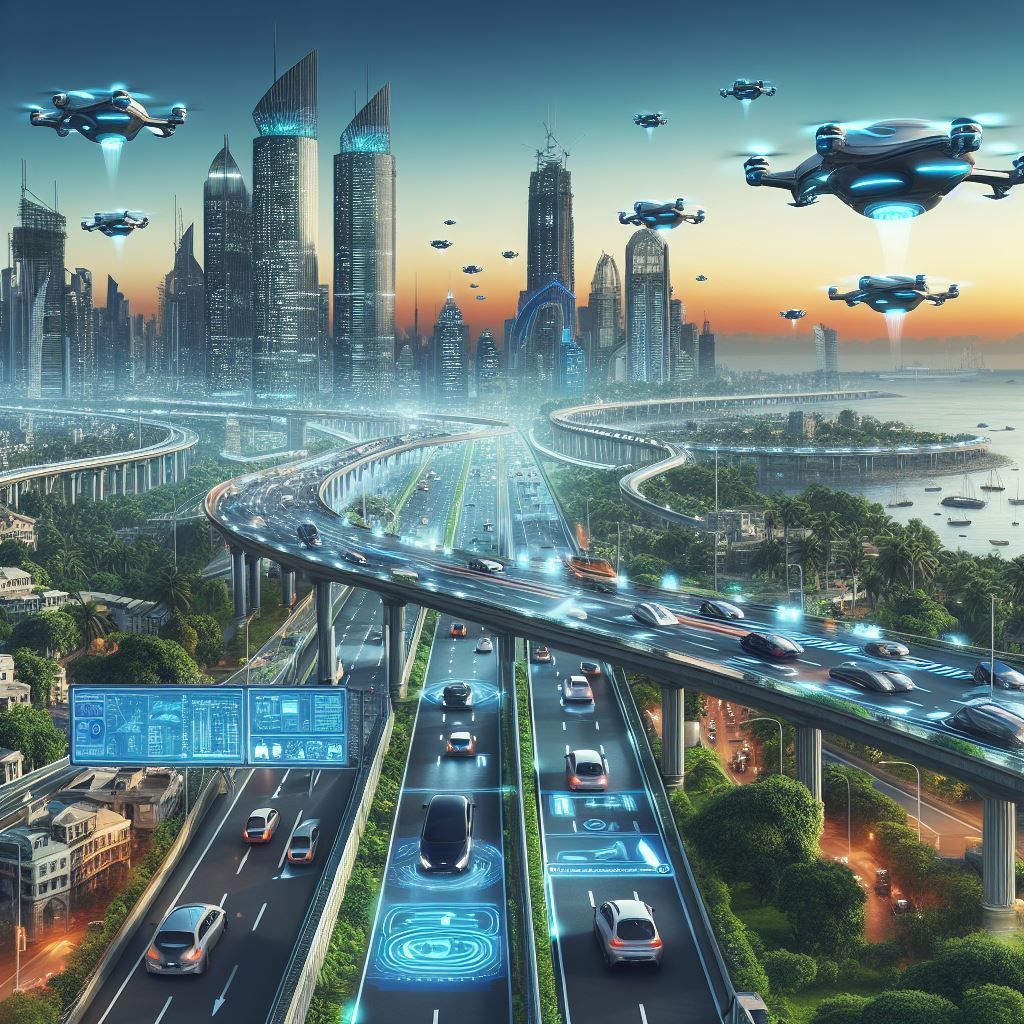
Introduction:
India’s road transport sector has long been a vital component in the country’s economic growth and development. Over the years, it has faced numerous challenges, ranging from congestion and safety concerns to environmental impact. However, with the advent of new technologies, shifting customer preferences, and environmental regulations, the sector is on the brink of transformative change.
Shift to Electric Mobility: A Disruptive Transition
One of the most significant changes revolutionizing the automobile industry is the shift from internal combustion engines (ICE) to electric motors. The rise of electric vehicles (EVs) promises to reduce carbon emissions and enhance energy efficiency. However, this transition poses significant challenges for original equipment manufacturers (OEMs), suppliers, and value chains. They must adapt to supplying demand for both ICE and EV technologies, be more flexible and agile, and focus on system integration, software tuning, and design-relevant body structures.
To address these challenges, a report by Roland Berger suggests a roadmap for changes in manufacturing, including modularization, standardization, and digitalization. These innovations will enable manufacturers to streamline production processes, optimize resource allocation, and meet the growing demand for electric mobility.
Alternative Energy Sources: Powering the Future
In addition to electric mobility, the emergence of alternative energy sources presents new opportunities in reducing the carbon footprint and improving energy efficiency in the transport sector. Liquefied natural gas (LNG), hydrogen, and biofuels show immense potential in transforming the road transport sector.
According to a report by NITI Aayog and the Embassy of the Netherlands, India has the potential to become a global leader in LNG as a transportation fuel, particularly for medium and heavy commercial vehicles. The report identifies the benefits, challenges, and policy recommendations for LNG adoption in India.
Similarly, a report by the Council on Energy, Environment, and Water (CEEW) explores the role of hydrogen and biofuels in decarbonizing India’s transport sector. These alternative energy sources can help reduce carbon emissions while providing sustainable and efficient fuel options.
Infrastructure and Logistics
To support the evolving road transport sector, the development of new infrastructure and logistics solutions is imperative. The construction of expressways and multimodal logistics parks (MMLPs), along with the expansion of warehousing and storage areas (WSAs), have the potential to enhance connectivity, improve efficiency, and boost economic growth.
According to a report by FICCI and CRISIL, India plans to construct 34,800 km of expressways by 2025. The creation of a comprehensive highway network will not only improve connectivity but also reduce transportation costs and optimize logistics performance.
The report also explores the opportunities and challenges of MMLPs and WSAs. These logistics hubs can act as catalysts for efficient and synchronized freight movement, unifying various modes of transportation, and reducing cargo handling and delivery time.
Technological Innovations: Transforming the Road Logistics Ecosystem
The adoption of new technologies and innovations is transforming the road logistics ecosystem in India. Digital freight-matching platforms, value-added services, and smart highway operations are creating new business models and opportunities.
According to a report by Deloitte, India’s road logistics industry is on the cusp of consolidation and digital transformation. Startups are leveraging technology and data to address inefficiencies and build trust within the sector.
The report highlights emerging trends and technologies in design and implementation, as well as highway operations. It explores their implications for incumbents and disruptors alike, emphasizing the need for collaboration and innovative approaches to effectively navigate the changing landscape.
Impact and Challenges: Navigating a New Era
The structural changes occurring in India’s road transport sector offer numerous benefits such as improved safety, sustainability, and market opportunities. However, they also present challenges and risks, including regulatory uncertainty, market competition, skill gaps, and cyber threats.
To address these issues, a proactive and holistic approach is required. Stakeholders in the road transport sector must collaborate to establish clear regulations, foster innovation, and develop the necessary skills for the workforce of the future. Embracing emerging technologies, investing in research and development, and promoting a culture of sustainability and safety are key steps towards unleashing the full potential of India’s road transport sector.
A Future of Innovation and Collaboration
The road transport sector in India is at a critical juncture. The convergence of new technologies, changing customer preferences, and environmental regulations is reshaping the landscape. By embracing electric mobility, alternative energy sources, innovative infrastructure, and technological advancements, India has the potential to revolutionize its road transport sector.
However, overcoming the associated challenges and risks requires a proactive and collaborative approach. Key stakeholders, including OEMs, government bodies, academia, and society as a whole, must work together to ensure a seamless transition towards a sustainable and efficient future for India’s road transport sector.
References
– (1) Automotive production transformation | Roland Berger. https://www.rolandberger.com/en/Insights/Publications/Transforming-production-structures-in-the-automotive-industry.html.
– (2) Executive summary – Transitioning India’s Road Transport Sector …. https://www.iea.org/reports/transitioning-indias-road-transport-sector/executive-summary.
– (3) India Transport Energy Outlook: Co2 Emissions & Decarbonisation – CEEW. https://www.ceew.in/publications/india-transport-energy-use-carbon-emissions-and-decarbonisation.
– (4) India Transport Energy Outlook – Council On Energy, Environment and Water. https://www.ceew.in/sites/default/files/ceew-research-transport-energy-use-carbon-emissions-decarbonisation.pdf.
– (5) Emerging trends and opportunities in roads and highways sector. https://static.investindia.gov.in/s3fs-public/2021-06/FICCI-CRISIL_REPORT.pdf.
– (6) The road logistics industry in India | Deloitte Insights. https://www2.deloitte.com/us/en/insights/focus/future-of-mobility/road-logistics-industry-india-value-ecosystems.html.
– (7) The road logistics industry in India – Deloitte. https://www.deloitte.com/global/en/our-thinking/insights/topics/future-of-mobility/road-logistics-industry-india-value-ecosystems.html.
– (8) India’s Road Construction Sector Needs an Ecosystem of Safety. https://www.nbmcw.com/article-report/infrastructure-construction/roads-and-pavements/indias-road-construction-sector-needs-an-ecosystem-of-safety.html.
– (9) LNG as future transport fuel: India-Netherlands report highlights …. https://energy.economictimes.indiatimes.com/news/oil-and-gas/lng-as-future-transport-fuel-india-netherlands-report-highlights-roadmap/107508251.
– (10) India’s FY2021-2022 transport fuel consumption to remain expansionary …. https://www.spglobal.com/commodityinsights/en/market-insights/latest-news/oil/031021-indias-fy2021-2022-transport-fuel-consumption-to-remain-expansionary-as-covid-19-fears-ease.
– (11) A new era Accelerating toward 2020 — An automotive industry transformed. https://www2.deloitte.com/content/dam/Deloitte/in/Documents/manufacturing/a-new-era-auto-transformation-report-online.pdf.
– (12) Five ways 2021 may have forever changed the auto industry – CNBC. https://www.cnbc.com/2021/12/31/five-ways-2021-may-have-forever-changed-the-auto-industry.html.
 "Connecting communities, empowering nations: Unifying the Regional and Global Economy ."
Leave a comment