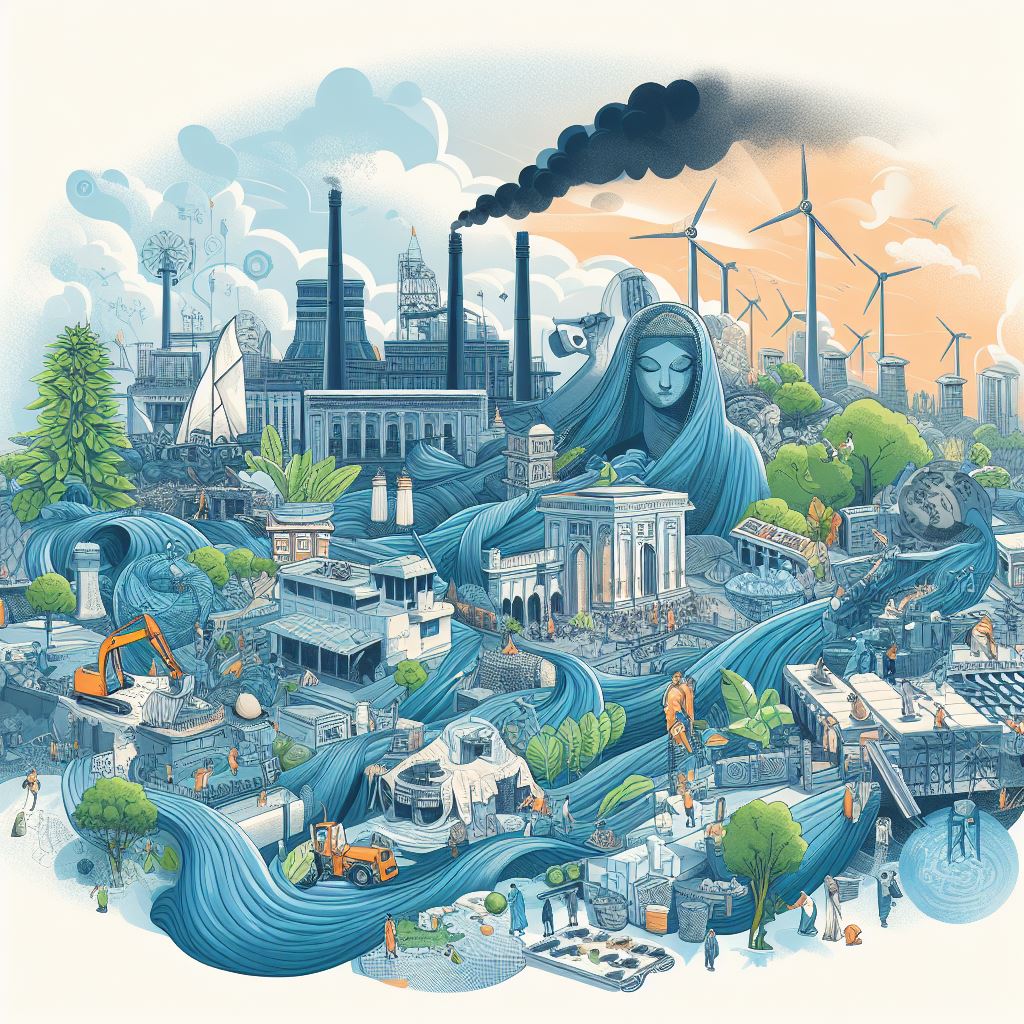
While it is important for Indian businesses to embrace sustainability practices, there are several challenges that need to be addressed.
One of the key challenges is business sustainability. India’s textile industry, which encompasses the entire value chain, faces the task of balancing business growth with environmental and social responsibility. The industry relies heavily on small and medium-sized enterprises (SMEs) and has a complex network of farmers and suppliers. This raises questions about traceability, material management, and ownership, which may pose difficulties in meeting global sustainability standards.
However, the conversation around sustainability in the industry has been positively influenced by initiatives. This has brought attention to the need for technology-driven and capacity-building approaches that are not detrimental to the environment. India has the opportunity to lead this discussion due to its unique farmer network and dependence on the MSE sector. But there is a concern about a level playing field when engaging with countries that may not face the same parameters and challenges.
Policy dialogues are crucial in addressing these challenges and ensuring uniformity in market access requirements, financing, and integration into global value chains. This will not only create a better market for Indian businesses but also incentivize sustainable practices. It is essential to provide better visibility and platforms for Indian businesses to showcase their efforts in sustainability, similar to promotion policies in other countries. Market linkage and scaling up relationships with international buyers will drive the business case for sustainability in the Indian textile industry.
While it is evident that sustainability should be a business strategy, the focus now shifts towards demonstrating sustainable practices. India has a vibrant democratic system that enables swift adaptation to positive stories. Associations and industry bodies play a crucial role in encouraging businesses to share their sustainability initiatives publicly. This helps build a global recognition that Indian enterprises, especially SMEs, have been practicing fashionable sustainability for the past decade. However, aligning with the growing demands of the restaurant industry has led to some unsustainability creeping into the industry. This recognition highlights the need for more structured platforms, such as the CHG series, that guide businesses on sustainability requirements and foster dialogue among stakeholders.
Valuation of sustainability practices is a relatively new concept for the Indian textile industry. While social requirements have been known for years, getting the value proposition right and addressing technology and capacity challenges is crucial. Clarity on policy requirements, such as restrictions on fiber use, is essential for businesses to adapt their value chains and adopt new technologies. This process will take time and require collaboration with buyers and brands. Their buy-in is crucial for implementing sustainable practices effectively. Collaborative efforts, through dialogue and partnership, will help initiate and sustain the process.
The Ministry of Exile has played a significant role in facilitating discussions among various stakeholders involved in the textile industry. These dialogues are interdepartmental and cover areas such as agriculture, chemicals, and fashion. Comprehensive policy discussions are essential to address the unique value chain of the Indian textile industry, particularly its heavy reliance on SMEs. While these dialogues are a positive step, India must navigate the sustainability journey with caution, considering its unique challenges and characteristics.
In conclusion, sustainability is no longer a question but a necessity for businesses in the Indian textile industry. Balancing business growth with environmental and social responsibility is a challenge, given the dependence on SMEs and the complex value chain. Policy dialogues, better market access, and collaboration with international buyers will drive the adoption of sustainable practices. India must leverage its unique value chain and engage all stakeholders to address challenges and build a comprehensive and sustainable future for the textile industry.
 "Connecting communities, empowering nations: Unifying the Regional and Global Economy ."
Leave a comment