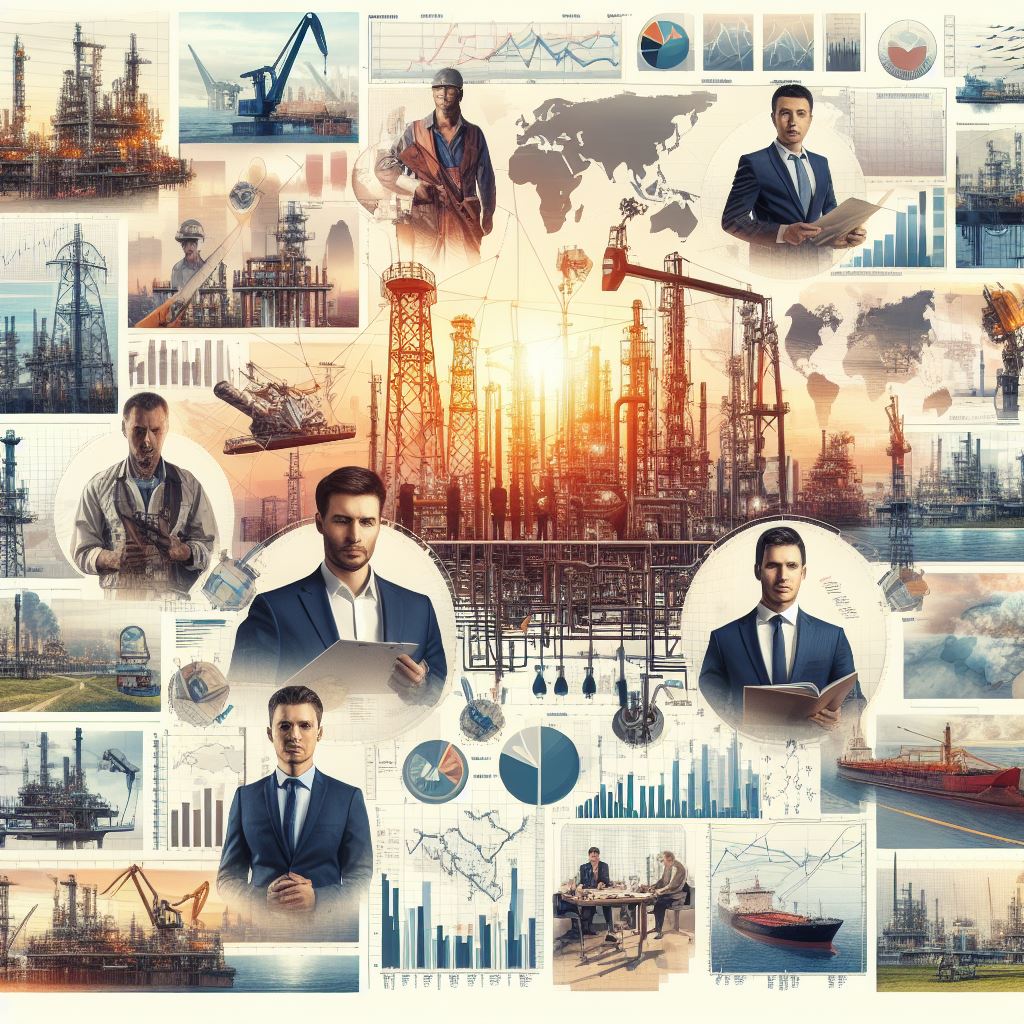
Introduction:
The COVID-19 pandemic hit the global economy with unparalleled force, reverberating across various sectors and geographic regions. Among those most affected are oil-based economies, which heavily rely on oil exports and revenues. This article explores the profound impact of COVID-19 on these economies, with specific emphasis on the Middle East and Saudi Arabia. It examines the challenges faced, the measures taken to address them, and the prospects for economic recovery and diversification.
- The Precarious Balance of Oil-Based Economies:
Oil-based economies have long grappled with the inherent risks associated with the volatility of oil prices and market demand fluctuations. These countries depend heavily on oil exports for revenue generation, fiscal stability, and socio-economic development. The advent of the COVID-19 pandemic, however, disrupted this delicate equilibrium in unprecedented ways. - The Decimation of Oil Demand and Prices:
The pandemic triggered a drastic decline in global oil demand as economic activities ground to a halt due to lockdown measures. Travel restrictions, reduced industrial output, and weakened consumer spending resulted in a sharp decline in oil consumption. Consequently, oil prices plummeted, reaching historic lows and severely impacting the economies of oil-exporting countries. - The Case of Saudi Arabia:
Saudi Arabia, as the largest oil exporter in the Middle East, faced significant economic repercussions. With the intention of stabilizing global oil prices, the Kingdom made a strategic decision to cut oil production. While this move aimed at supporting oil prices, it resulted in a contraction of Saudi Arabia’s economy during the third quarter of 2023.. Furthermore, the non-oil sector, a pivotal engine of employment and economic diversification, also experienced a slowdown in growth]. - The Road to Recovery:
Despite the immediate challenges posed by the pandemic, there are signs of optimism for Saudi Arabia’s economy. Analysts anticipate that recovery will take place as oil demand and prices rebound, and the government pushes forth with its Vision 2030 plan. This visionary framework seeks to modernize and diversify the Kingdom’s economy, lessening its dependence on oil revenues[6]. The World Bank estimates a remarkable growth rate of 7.6% for Saudi Arabia in 2024, making it the fastest-growing major economy in the world - Resilience and Adaptability:
The impact of COVID-19 on oil-based economies necessitates an examination of their resilience and adaptability. Despite the challenges posed by the pandemic, countries like Saudi Arabia have recognized the urgency to diversify their economies to mitigate future global shocks. Efforts are underway to promote sectors such as renewable energy, tourism, and technology, thus reducing reliance on oil revenues and insulating the economy from future oil market fluctuations. - Lessons for the Future:
COVID-19 has been a wake-up call for oil-based economies, especially those in the Middle East. The pandemic has emphasized the risks of overreliance on a single commodity and the need for economic diversification. Governments and policymakers must seize this opportunity to embrace sustainable development, foster innovation, and invest in human capital. By charting a path towards a diversified and inclusive economy, they can mitigate future vulnerabilities and build resilience to external shocks.
Conclusion:
The COVID-19 pandemic has presented unprecedented challenges to oil-based economies, particularly those in the Middle East and Saudi Arabia. As global oil demand and prices plummeted, these economies experienced severe contractions and disruptions. However, through resilience and adaptation, there is hope for recovery and long-term growth. By embracing economic diversification, investing in renewable sectors, and implementing forward-thinking strategies, oil-based economies can weather the storm and emerge stronger, more sustainable, and better prepared for future global challenges.
References:
1. “Oil and gas after COVID-19: The day of reckoning or a new age of opportunity?” McKinsey.com. [Link](https://www.mckinsey.com/industries/oil-and-gas/our-insights/oil-and-gas-after-covid-19-the-day-of-reckoning-or-a-new-age-of-opportunity)
2. “How Has COVID-19 Impacted Oil Supply and Demand?” Investingnews.com. [Link](https://investingnews.com/daily/resource-investing/energy-investing/oil-and-gas-investing/covid-oil-supply-demand)
3. “Saudi Arabia Economy: GDP Fell 4.5% in Third Quarter Amid Oil-Supply Cuts.” Bloomberg.com. [Link](https://www.bloomberg.com/news/articles/2023-10-31/saudi-arabian-economy-fell-in-third-quarter-amid-oil-supply-cuts)
4. “Impact of the twin pandemics: COVID-19 and oil crash on Saudi exchange index.” PMC. [Link](https://www.ncbi.nlm.nih.gov/pmc/articles/PMC9122232/)
5. “Recovering from the dual shock of COVID-19 and the oil price drop.” PwC Strategy. [Link](https://www.strategyand.pwc.com/m1/en/covid-19-oil-price-drop-gcc.html)
6. “COVID-19 Deaths Cases Impact on Oil Prices: Probable Scenarios on Saudi Arabia Economy.” Frontiers. [Link](https://www.frontiersin.org/articles/10.3389/fpubh.2021.620875)
7. “The Global Economic Outlook During the COVID-19 Pandemic: A Changed World.” World Bank. [Link](https://www.worldbank.org/en/news/feature/2020/06/08/the-global-economic-outlook-during-the-covid-19-pandemic-a-changed-world)
8. “Saudi Arabia – Economy.” Wikipedia. [Link](https://en.wikipedia.org/wiki/Economy_of_Saudi_Arabia)
 "Connecting communities, empowering nations: Unifying the Regional and Global Economy ."
Leave a comment