Introduction
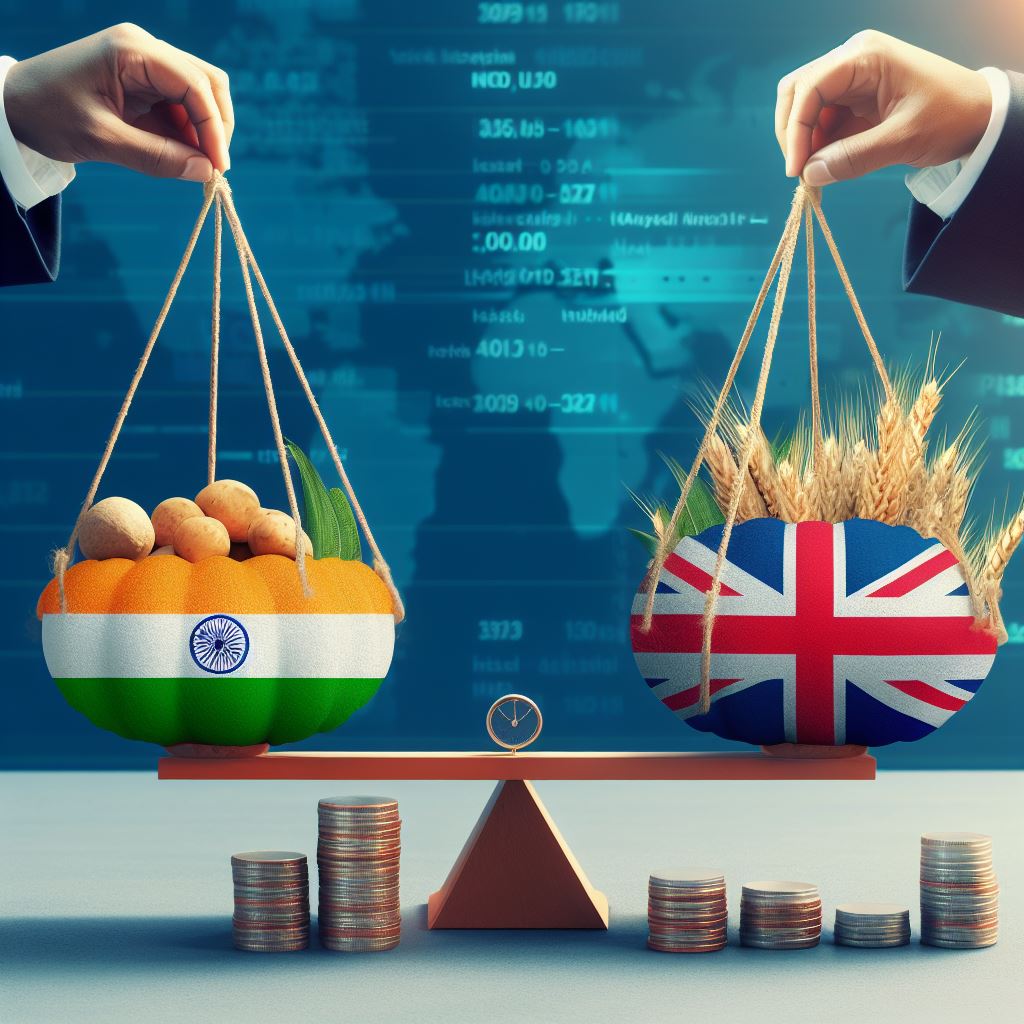
The ongoing negotiations between the United Kingdom and India for a free trade agreement (FTA) have highlighted concerns regarding their potential impact on the agricultural sector. With an estimated worth of £34 billion in trade between the two countries in 2022, the FTA holds the promise of boosting economic ties. However, questions have arisen regarding the implications for food safety standards, animal welfare, consumer prices, and the livelihoods of British farmers.
Increased Imports and Competitive Challenges
One of the key consequences of the Indo-UK FTA is the expected increase in imports of agricultural products from India. As the FTA likely prompts a reduction in tariffs on Indian agricultural goods, it will enhance their competitiveness, potentially leading to an influx of imports into the UK market. This could, in turn, result in lower prices for consumers, increasing affordability. However, the prospect also raises concerns for British farmers, who may face intensified competition against lower-cost imports.
Impact on UK Farmers
The entry of an increased volume of Indian agricultural products could adversely affect the livelihoods of UK farmers. The competition with lower-cost imports from India might lead to reduced demand for British produce, lower incomes for farmers, and potentially force some farms out of business. As a result, safeguarding the interests of British farmers becomes a crucial aspect of the FTA negotiations. The UK government’s commitment to protecting these interests should be ensured, considering the significant contribution of the agricultural sector to the overall economy and the preservation of rural livelihoods.
Food Safety and Animal Welfare Concerns
Undoubtedly, securing an FTA necessitates addressing concerns regarding food safety and animal welfare standards. India’s standards in these areas are currently different from those of the UK. As the FTA facilitates increased imports of agricultural products from India, there is a potential risk of compromised food safety and animal welfare standards in the UK. Therefore, it becomes imperative for both nations to establish mechanisms that ensure the maintenance of food safety and animal welfare standards upheld by each party.
The UK government and the Indian government have both expressed their commitment to maintaining these standards. However, the challenge lies in effectively implementing and monitoring these commitments. Collaborative efforts such as increased information sharing, capacity building, and inspection mechanisms could help bridge the gap between the standards of the two countries.
Balancing Opportunities and Risks
The Indo-UK FTA’s impact on agriculture is likely to be a mixture of opportunities and risks. On one hand, the increased imports of Indian agricultural products have the potential to lower prices for consumers, enhancing affordability and promoting choice. On the other hand, these imports may pose significant challenges to the livelihoods of UK farmers, potentially impacting the rural economy.
To mitigate these challenges, it is crucial for negotiators to strike a balance between the interests of consumers and farmers. This could involve implementing measures such as safeguard mechanisms, investment in innovation and technology, and targeted support for farmers to enhance their competitiveness.
Conclusion
As negotiations continue, the Indo-UK FTA’s specific impact on agriculture remains uncertain. It is essential for both governments to consider the potentially far-reaching consequences on food safety, animal welfare, and the agricultural industry. Striking a balance that protects domestic farmers’ interests, ensures food safety standards, maintains animal welfare, and promotes fair competition will be crucial in creating an intelligent and effective trade agreement.
The forthcoming FTA must encompass comprehensive provisions that address concerns and fortify commitments to sustainable agricultural practices and socially responsible trade. By finding common ground and employing sound strategies, the Indo-UK FTA has the potential to usher in opportunities for growth, collaboration, and the long-term prosperity of the agricultural sectors in both nations.
Citations
- UK Government. “Prime Minister sets out trade ambitions for India trip.” (https://www.gov.uk/government/news/prime-minister-sets-out-trade-ambitions-for-india-trip)
- BBC News. “UK-India trade deal: What are the sticking points?” (https://www.bbc.com/news/business-56918186)
- The Telegraph. “UK and India aim to conclude trade deal by end of 2023, Liz Truss says.” (https://www.telegraph.co.uk/business/2022/03/28/uk-india-aim-conclude-trade-deal-end-2023-liz-truss-says/)
- The Guardian. “UK-India trade deal threatens push for higher food standards, warn farmers.” (https://www.theguardian.com/business/2022/mar/30/uk-india-trade-deal-threatens-push-for-higher-food-standards-warn-farmers)
- Financial Times. “UK is set to negotiate a free-trade deal with India.” (https://www.ft.com/content/df979594-30a7-11e8-b5bf-23cb17fd1498)
Please note that all information provided in the article is based on the current state of negotiations and discussions surrounding the Indo-UK FTA. The final outcome may differ from the information presented.
 "Connecting communities, empowering nations: Unifying the Regional and Global Economy ."
Leave a comment