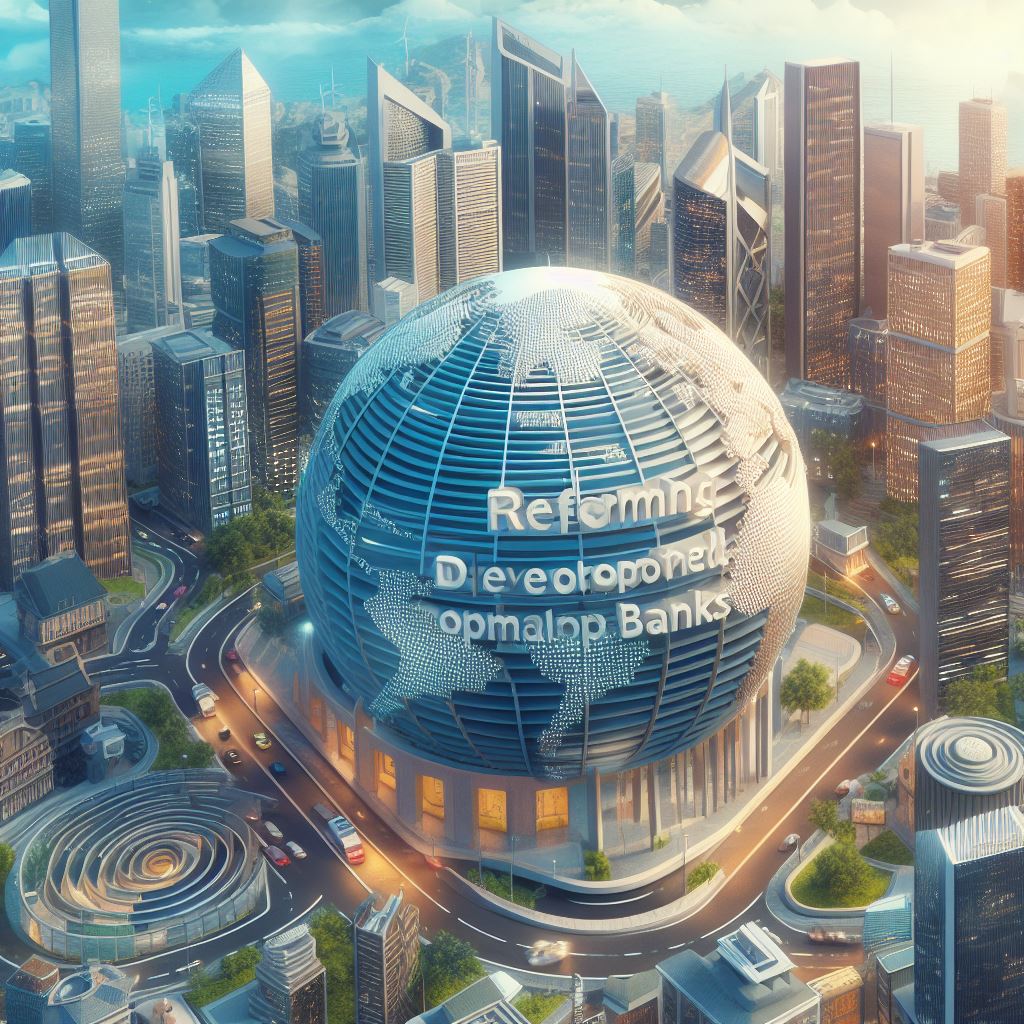
In recent years, reforms have been proposed for the World Bank and other Multilateral Development Banks (MDBs) in response to various global challenges and the slow progress towards the Sustainable Development Goals (SDGs). These reforms aim to address issues such as the global “polycrisis,” the climate emergency, increasing debt levels, differential financing terms, and the need for a new funding mechanism to achieve the SDGs and combat climate change.
The world is currently facing a global crisis that is impacting human and economic development on an unprecedented scale. Despite the establishment of the SDGs, progress towards their achievement has been slow. To effectively eradicate poverty, accelerate inclusive socioeconomic development, and tackle transboundary challenges, a much-scaled-up global effort is required. The World Bank and other MDBs play a crucial role in mobilizing resources and implementing development projects, making their reform vital in addressing these global crises.
One of the pressing global challenges is the climate emergency, which is intensifying worldwide and disproportionately affecting the most vulnerable populations. MDBs can play a major role in addressing this crisis by incentivizing private capital, de-risking instruments, and providing concessional finance for climate-related projects. By prioritizing climate financing, MDBs can contribute significantly to global efforts to mitigate and adapt to climate change.
Another key reason for the proposed reforms is the increasing debt levels and strained government budgets in many countries. Despite the urgent need for more development finance, governments are finding it challenging to allocate sufficient resources. MDBs understand the collective role they need to play in response to these global challenges and are committed to supporting efforts that contribute to achieving the SDGs. Reforms would enable MDBs to effectively identify financing gaps, provide support to countries in need, and enhance coordination among various stakeholders involved in development finance.
Additionally, there is a demand for differential financing terms for least developed and developing countries. The democratisation of MDBs has long been pursued by India and other nations, recognizing the importance of ensuring fair access to financing for all countries. Reforms would aim to create a more equitable and inclusive approach to development finance, reflecting the diverse needs and capacities of different countries.
Furthermore, there is a need for a new funding mechanism and triple sustainable lending by 2030 to eliminate poverty and achieve climate goals. MDBs must adapt their financing strategies to align with the SDGs and climate targets. The international development finance system should be designed to support this spending by providing an additional $500 billion in annual official external financing by 2030. This financing should be distributed in a balanced manner, with one-third in concessional and non-debt creating financing and two-thirds in non-concessional official lending. Reforms would enable MDBs to achieve this ambitious target and mobilize the necessary resources for sustainable development.
The proposed reforms have gained significant attention from various stakeholders, including India, which has actively advocated for the reform of MDBs. India is likely to propose an expert G20 group for World Bank reforms, highlighting the importance of addressing these issues at the global level. The collaboration between MDBs is also recognized as a historic development that can enhance their collective impact and contribute to achieving the SDGs. The heads of MDBs have endorsed the need for strengthening collaboration to address global challenges effectively.
In conclusion, the proposed reforms for the World Bank and other Multilateral Development Banks are driven by the need to address the global “polycrisis,” combat the climate emergency, address increasing debt levels, ensure differential financing terms, and establish a new funding mechanism to achieve the SDGs. These reforms are essential to mobilize resources, promote sustainable development, and enhance the role of MDBs in tackling global challenges. By implementing these reforms, MDBs can play a crucial role in eradicating poverty, promoting inclusive socioeconomic development, and effectively addressing transboundary challenges. The collaboration and support of various stakeholders are vital for the successful implementation of these reforms and the achievement of sustainable development.
Citations
[1] Why reforms have been proposed for World Bank, other Multilateral Development Banks; what they say | Explained News – The Indian Express https://indianexpress.com/article/explained/explained-economics/reforms-proposed-world-bank-multilateral-development-8990139/
[2] Why India is right to push for reforms of multilateral development banks – Firstpost https://www.firstpost.com/opinion/why-india-is-right-to-push-for-reforms-of-multilateral-development-banks-13265312.html
[3] STATEMENT OF THE HEADS OF MULTILATERAL DEVELOPMENT BANKS GROUP: Strengthening Our Collaboration for Greater Impact https://www.worldbank.org/en/news/statement/2023/10/13/statement-of-the-heads-of-multilateral-development-banks-group-strengthening-our-collaboration-for-greater-impact
[4] India likely to propose expert G20 group for World Bank reforms – sources – Reuters https://www.reuters.com/world/india/india-likely-propose-expert-g20-group-world-bank-reforms-sources-2023-02-22/
[5] World Bank Announces Historic Collaboration Between Multilateral Development Banks https://www.worldbank.org/en/news/press-release/2023/10/13/world-bank-announces-historic-collaboration-between-multilateral-development-banks
[6] Multilateral lenders need reform to meet poverty, climate change challenges – G20 panel https://www.reuters.com/world/multilateral-banks-need-major-changes-boost-lending-g20-panel-2023-07-18/
 "Connecting communities, empowering nations: Unifying the Regional and Global Economy ."
Leave a comment