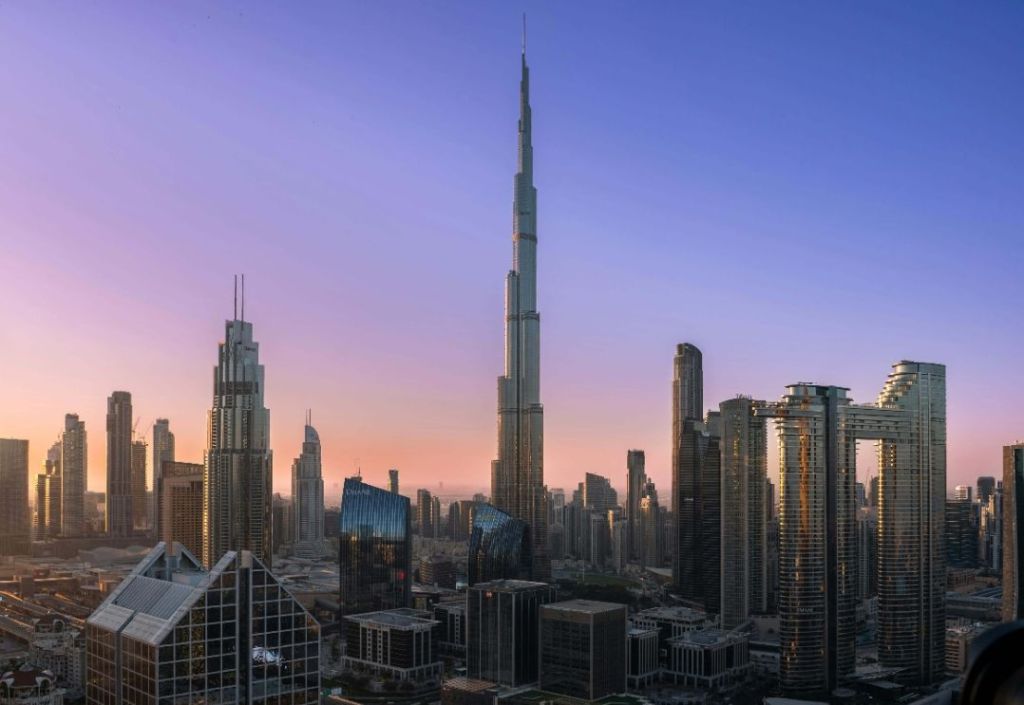
The Safe-Haven Narrative Under Stress
Dubai’s economic rise has long been anchored in its carefully cultivated image as a neutral, stable, and globally connected safe haven in a turbulent region. Historically, from the Gulf Wars of the 1990s to the post-2008 financial crisis recovery, Dubai positioned itself as a refuge for capital, talent, and trade flows escaping uncertainty elsewhere in the Middle East. However, the current phase of geopolitical instability—marked by Gulf tensions, Iranian strategic signaling, and episodic disruptions in maritime and air routes—has begun to test this foundational narrative. Aviation, which is the lifeline of Dubai’s service-led economy, becomes the first transmission channel of uncertainty. Even minor disruptions in flight corridors or insurance premiums can cascade into higher costs, reduced tourist confidence, and volatile passenger flows. Tourism, a sector deeply sensitive to perception rather than just reality, responds almost instantly to geopolitical signals, leading to fluctuations in bookings that ripple across hospitality, retail, and entertainment sectors.
Markets, Mobility, and the Fragility of Confidence
Dubai’s financial markets and business ecosystem thrive not merely on fundamentals but on the psychology of certainty. In a world where capital is increasingly mobile, Dubai competes not just with regional peers but with global hubs like Singapore, London, and emerging Gulf competitors such as Riyadh. Geopolitical shocks introduce a layer of “risk premium” that subtly alters investor calculus. Historically, Dubai has demonstrated resilience—recovering quickly from shocks through policy agility and global integration. Yet, the current environment is different: it is not a one-off crisis but a prolonged period of geopolitical fluidity. This transforms uncertainty from a temporary disturbance into a structural variable. As a result, sectors like aviation leasing, logistics, and financial services face recalibrations in cost structures and risk assessments, potentially eroding Dubai’s traditional competitive edge.
Real Estate Cycles: Between Momentum and Correction
Dubai’s real estate market has always mirrored its broader economic cycles—rapid expansion during global liquidity surges followed by corrections when speculative demand outpaces fundamentals. The current phase shows signs of a familiar pattern: strong demand driven by expatriate inflows, wealth migration, and investor optimism, juxtaposed with aggressive supply pipelines and rising construction costs. Historically, the city has experienced sharp corrections, notably post-2008 and during the mid-2010s slowdown. Today’s imbalance is more nuanced. While demand remains robust in premium and branded segments, mid-tier markets face affordability pressures. Rising input costs—linked to global supply chain disruptions and energy price volatility—are pushing developers toward higher pricing, which may not be fully absorbed by end-users. This creates a divergence between “investor-driven demand” and “end-user sustainability,” a classic precursor to price corrections. The risk is not a collapse but a gradual normalization that could test leveraged investors and overextended developers.
Diversification: From Ambition to Necessity
Dubai’s long-term success has always depended on its ability to reinvent itself—from a trading port to a logistics hub, from a tourism destination to a global financial center. However, the current geopolitical and economic environment transforms diversification from a strategic choice into an existential necessity. The next phase of Dubai’s evolution will likely hinge on deepening its capabilities in knowledge-driven sectors—technology, artificial intelligence, green finance, and advanced logistics. Unlike earlier diversification waves, which were largely infrastructure-led, the future requires institutional depth, regulatory sophistication, and human capital development. Competing globally in these sectors demands not just investment but sustained innovation ecosystems, something that traditional real estate-led growth models cannot deliver alone.
Leadership and the Politics of Stability
One of Dubai’s enduring strengths has been its decisive and forward-looking leadership, which has consistently responded to crises with speed and clarity. From restructuring debt during financial downturns to rapidly reopening post-pandemic, governance has been a critical differentiator. In an era of prolonged geopolitical uncertainty, leadership will play an even more central role—not just in crisis management but in narrative building. Maintaining investor confidence requires a delicate balance between transparency and assurance, between acknowledging risks and reinforcing stability. The ability to project continuity amid uncertainty will determine whether Dubai retains its safe-haven premium or gradually converges with other regional markets.
The Future Outlook: Between Resilience and Reinvention
Looking ahead, Dubai’s trajectory will likely be defined by how effectively it navigates three interconnected transitions: from perception-based safety to structural resilience, from real estate-driven growth to innovation-led expansion, and from regional hub status to global competitiveness in a fragmented world. The city’s past demonstrates an extraordinary capacity for adaptation, but the future demands a deeper transformation. Geopolitical instability is no longer an external shock—it is a persistent backdrop against which economic strategies must be designed. In this context, Dubai’s success will not be judged by its ability to avoid turbulence, but by how it converts uncertainty into a catalyst for reinvention.
#DubaiEconomy #Geopolitics #RealEstateCycles #GlobalHubs #EconomicResilience #MiddleEastRisk #TourismEconomics #AviationSector #UrbanTransformation #FutureCities
 "Connecting communities, empowering nations: Unifying the Regional and Global Economy ."
Leave a comment