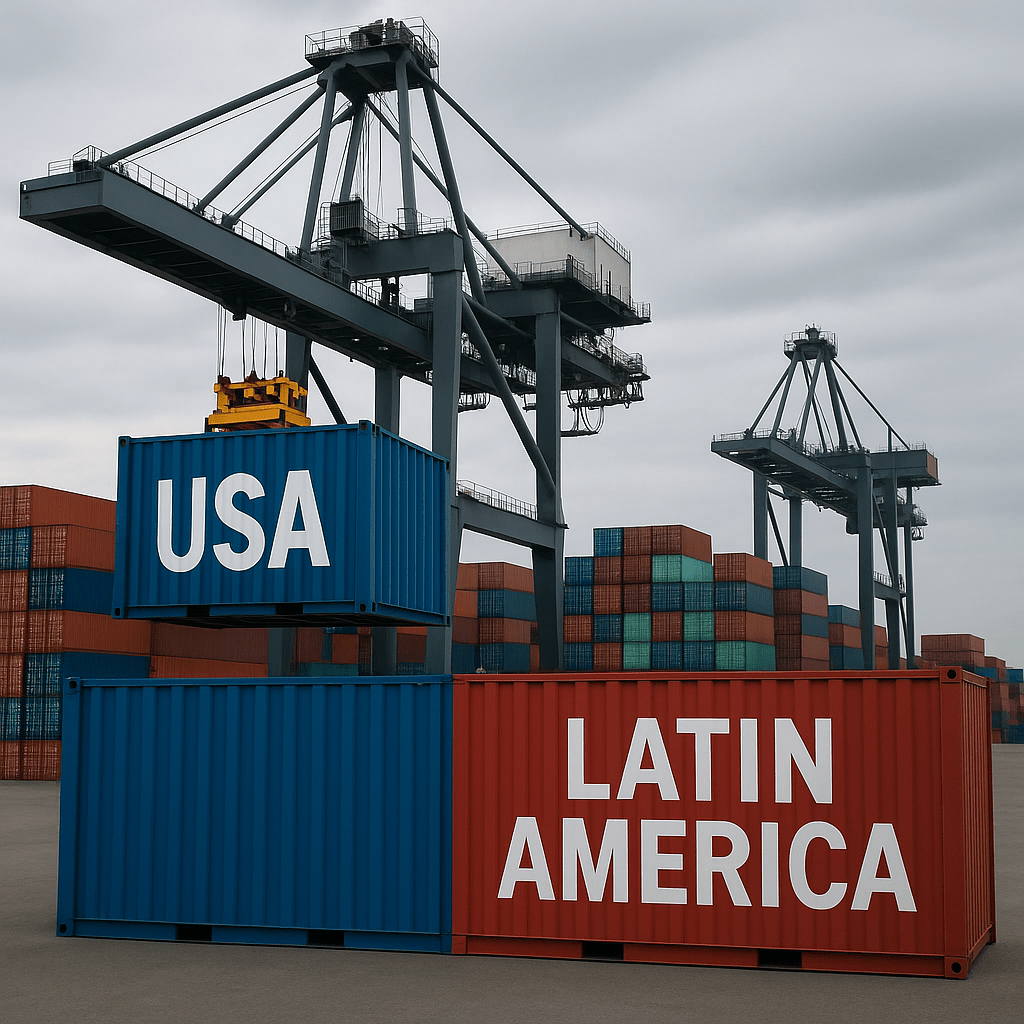
For much of modern history, Latin America’s economic fortunes have been tied to global demand for its commodities—coffee, copper, soybeans, oil, and more recently, lithium. The region’s trade models were built around exporting primary goods and importing higher-value industrial products. This dependency makes Latin America acutely sensitive to tariff policies set by major economies, particularly the United States, its largest trading partner.
Historical Dependence on Commodity Exports
The roots of this dependency go back to colonial mercantile systems, when the region was positioned as a supplier of raw materials to Europe and later North America. Even after waves of industrialization and diversification, structural reliance on resource exports persisted. Episodes such as the U.S. Smoot-Hawley Tariff Act of the 1930s and Washington’s later agricultural subsidies illustrate how Latin American economies have repeatedly had their trade trajectories disrupted by U.S. protectionist measures.
In the late 20th century, NAFTA (1994) and Mercosur’s outward push briefly promised a path to diversification. However, most firms in Brazil, Mexico, Chile, and Argentina continued to rely heavily on commodity and intermediate goods exports, leaving them vulnerable when the U.S. adjusted tariff walls.
Present Tensions and Uncertainty
Today, many Latin American firms are again watching U.S. tariff policies closely. The resurgence of tariff use in the 2020s—targeting China, Europe, and occasionally Latin America itself—creates a fragile environment for countries dependent on exporting soymeal, copper concentrates, crude oil, or semi-processed steel.
For example, a tariff shift of even 10–15% on intermediate goods like aluminum or steel can erode Latin America’s price advantage, given the thin profit margins in global commodities. U.S. tariffs on Chinese goods have had spillover effects: Latin American exporters sometimes benefit (e.g., soybean sales to China surged when Beijing retaliated against Washington), but just as often they face oversupply shocks as trade routes are diverted.
The Future Risk Landscape
The real concern is not just short-term tariff changes but the longer-term trajectory of global trade. Three critical risks stand out:
1. De-globalization pressures – If the U.S. pursues “nearshoring” and “friend-shoring” policies aggressively, Latin American suppliers may be included selectively, but others could be marginalized.
2. Commodity volatility – Reliance on exports like copper (Chile, Peru) or soy (Brazil, Argentina) ties firms to cycles of global demand, magnified by tariffs. Any U.S. move to subsidize domestic alternatives, such as electric-vehicle minerals, threatens to undercut Latin American producers.
3. Fragmented supply chains – The more the U.S. and China decouple, the more Latin America risks being caught in the middle. Without diversified trade ties, firms face higher uncertainty and squeezed bargaining power.
Opportunities in Transformation
Yet history also shows that tariff shocks can catalyze change. The import substitution era of the mid-20th century was born out of frustration with trade barriers. Similarly, today’s uncertainties could encourage Latin American firms to:
Diversify markets: Strengthen ties with Asia (China, India, ASEAN) and intra-regional trade under Mercosur and Pacific Alliance.
Move up the value chain: Instead of exporting raw lithium, for instance, Bolivia, Chile, and Argentina could push for domestic battery-component manufacturing.
Build resilience through innovation: Smart farming, green steel, and renewable energy exports are sectors less vulnerable to tariff politics.
Outlook
The historical pattern is clear: Latin America’s commodity-centric trade model leaves it vulnerable whenever the U.S. flexes tariff tools. If firms and governments continue to rely primarily on raw material exports, the next wave of tariff escalation could once again trap the region in cycles of boom and bust.
But the future need not repeat the past. By re-imagining trade strategies—investing in technology, regional value chains, and diversified markets—Latin America can shift from being a passive “price taker” shaped by U.S. tariff cycles to an active player in the reconfiguration of global supply chains. The coming decade will decide whether this historical inflection point leads to renewed dependency or genuine transformation.#LatinAmericaTrade
#USTariffs
#CommodityExports
#GlobalSupplyChains
#TradeDependency
#EconomicDiversification
#TariffRisks
#ValueAddition
#RegionalIntegration
#FutureOutlook
 "Connecting communities, empowering nations: Unifying the Regional and Global Economy ."
Leave a comment