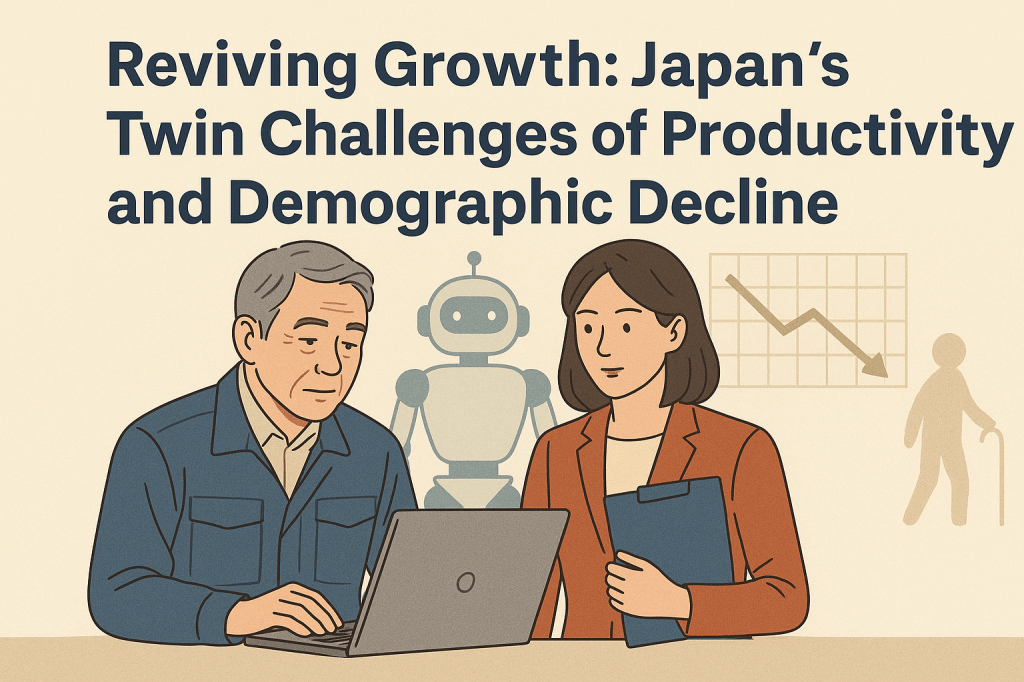
Japan stands at a pivotal juncture where the interplay between its declining population and stagnating productivity could define its economic future. As the nation grapples with one of the world’s most rapidly aging societies, the question is not just about reversing population decline, but about reimagining the entire structure of labor, innovation, and societal norms to sustain growth. The urgency is clear—by 2050, Japan’s population could shrink by nearly 20%, with nearly 40% of people aged 65 and above. This demographic trajectory threatens not only labor supply but also public finances and long-term competitiveness. However, with well-calibrated policy measures, Japan can navigate these headwinds and secure sustainable growth.
Unleashing Untapped Labor: Women and Older Workers
One of Japan’s biggest underutilized assets is its own people—particularly women and older adults. Unlocking their full economic potential could provide a substantial boost to productivity and help counteract labor shortages. Legal reforms are essential, beginning with the removal of structural barriers that limit participation. This includes abolishing mandatory retirement ages and adjusting pension eligibility to encourage older individuals to remain active in the workforce.
At the same time, enabling women—especially mothers—to balance work and family is crucial. Policies such as flexible work arrangements, quality childcare services, and workplace culture shifts are not mere social welfare—they are economic imperatives. Deep-rooted gender norms and labor market dualism, which confine many women and younger workers to unstable, part-time roles, must be dismantled through labor reforms and equal opportunity legislation. Moreover, enhancing maternity and paternity leave while reducing the financial burden of raising children could help address Japan’s low fertility rate, currently hovering around 1.3—far below the replacement level
Immigration as a Strategic Necessity
Traditionally cautious about immigration, Japan must now reframe foreign labor not as a compromise, but as a strategic necessity. Loosening immigration restrictions and actively recruiting high-skilled professionals and essential sector workers can offset labor shortages and revitalize industries. Creating clear pathways to permanent residency would not only attract global talent but also ensure long-term integration and productivity.
However, openness alone isn’t enough. Japan must also invest in integration infrastructure: language training, workplace orientation programs, and social inclusion policies. These efforts are critical for maximizing the contribution of foreign workers and maintaining social cohesion amid growing demographic stress
Leveraging Innovation and Automation to Raise Productivity
With fewer people available to work, Japan’s future hinges on doing more with less. Automation, artificial intelligence (AI), and digitalization hold the key to increasing productivity per worker. While Japan is already a global leader in robotics, especially in manufacturing, this edge must now extend to sectors like healthcare, logistics, and services—areas particularly strained by labor shortages.
Government policies that support R&D investment, ease technology adoption, and deregulate lagging sectors will be critical. Promoting digital transformation in small and medium-sized enterprises (SMEs) can further enhance productivity and innovation at the grassroots level. It is also essential to foster private-sector dynamism by removing outdated barriers to competition, thus allowing new business models to flourish
Structural Reforms to Spur Competition and Growth
Many of Japan’s industries remain shielded by regulatory protections and status quo policies. These barriers suppress competition, discourage innovation, and limit the emergence of dynamic enterprises. Dismantling such protections—especially in services, agriculture, and finance—can unleash a wave of new productivity gains.
Moreover, reforming corporate governance can accelerate technology adoption and managerial innovation. By shifting incentives toward long-term investment and risk-taking, companies can move away from conservative business practices and embrace a culture of transformation—one that aligns with the evolving needs of Japan’s economy
Family-Centric Social Policies: Building for the Future
While short-term fixes are essential, Japan must not lose sight of the long game—rebuilding its population base. Policies that lower the cost of raising children, such as affordable childcare, housing support, and accessible education, are essential in encouraging young families to grow. But policy alone won’t suffice; societal norms also need to shift.
Cultural expectations that pigeonhole women into caregiver roles must evolve to support more balanced gender participation in both the home and the workplace. This will involve education reform, workplace training, and national campaigns to promote gender equality and shared parenting responsibilities. Such social changes are slow but vital to reinvigorating both population growth and economic resilience.
An Integrated Approach for a Complex Problem
Japan’s demographic and productivity crises are deeply intertwined. Addressing them requires a comprehensive, coordinated strategy that extends beyond economic fixes. It must include bold labor reforms, openness to immigration, aggressive support for innovation, and a rethinking of family and societal norms.
The scale of the challenge is significant, but Japan also possesses unique advantages—technological leadership, institutional stability, and a highly educated workforce—that can be harnessed to craft a new growth model. If pursued decisively, these reforms could not only counteract demographic decline but also position Japan as a global blueprint for managing aging societies.
In a world where many developed economies are headed down a similar path, Japan’s success—or failure—will offer valuable lessons for the future of aging nations everywhere.
#JapanProductivity #DemographicCrisis #AgingPopulation #WomenInWorkforce #ForeignLabor #InnovationInJapan #LaborMarketReform #FamilyPoliciesJapan #DigitalTransformation #StructuralReforms
 "Connecting communities, empowering nations: Unifying the Regional and Global Economy ."
Leave a comment