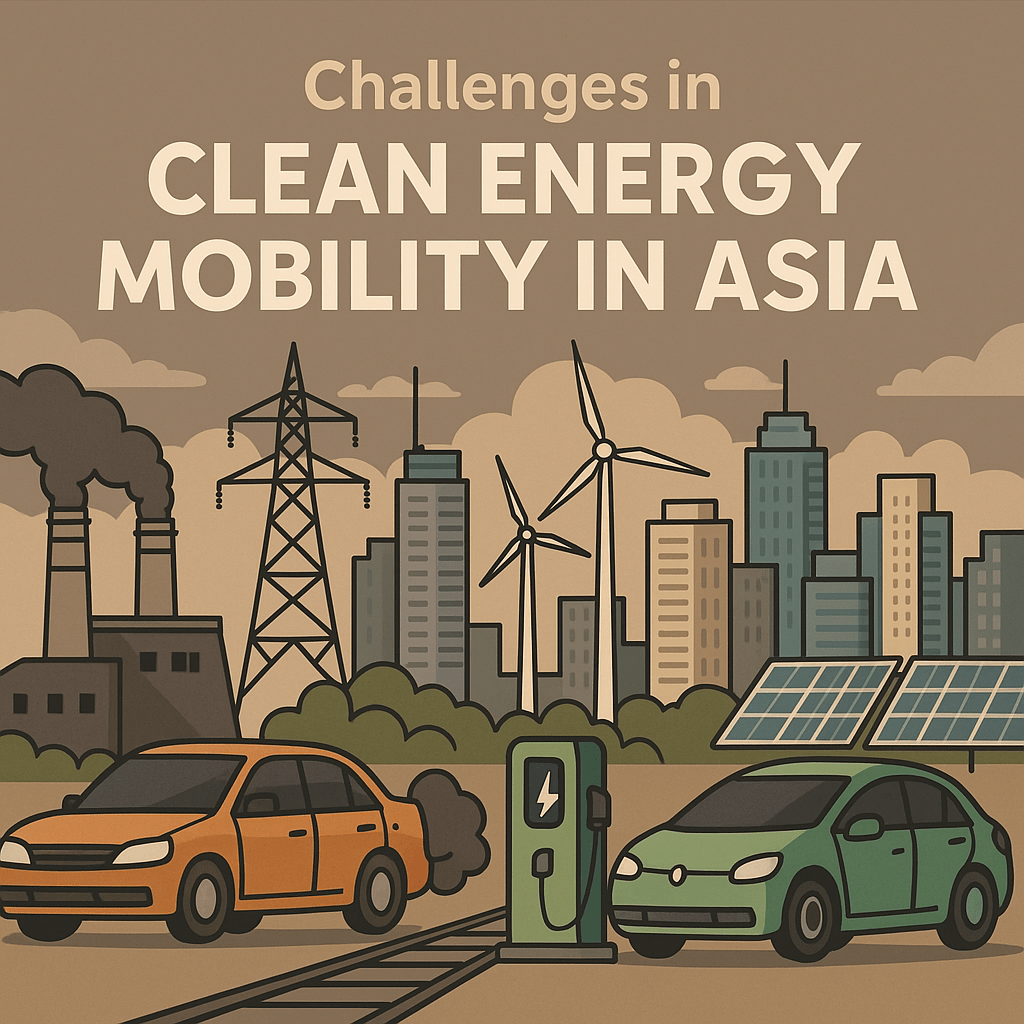
Asia stands at a crucial crossroads in its journey toward clean energy mobility. Home to more than half the world’s population and some of its fastest-growing economies, the region’s energy and transportation choices will profoundly influence global climate outcomes. However, the transition to cleaner mobility in Asia is anything but straightforward. A combination of economic dependencies, infrastructural deficits, and policy gaps complicate what should ideally be a swift pivot away from fossil fuels and toward sustainability.
One of the most significant roadblocks is Asia’s deep-rooted reliance on fossil fuels. From India to Indonesia, oil, coal, and natural gas remain the backbone of transportation and energy infrastructure. This dependence is not merely historical; it is actively supported by subsidies, entrenched business interests, and established logistics systems. As a result, phasing out fossil fuel usage in favor of cleaner alternatives involves dismantling vast networks that have been decades in the making. The political and economic inertia this creates cannot be underestimated.
Compounding this challenge is the underdevelopment of essential infrastructure for clean mobility. Many parts of Asia still lack the robust charging networks required to support large-scale electric vehicle (EV) deployment. Urban centers are often congested, with outdated power grids unable to accommodate the surges in demand that clean transport solutions can bring. Public transit systems—where they exist—are frequently insufficient, underfunded, or technologically obsolete. These infrastructural gaps leave little room for scalable, inclusive clean energy mobility.
Financial barriers further slow down progress. Transitioning to clean mobility requires massive investment—not just in EVs, but also in supporting infrastructure, renewable power generation, and battery manufacturing. According to estimates, ASEAN alone requires $150 billion annually to meet its clean transition targets aligned with the Paris Agreement. Yet in 2021, the region attracted only $30 billion. The shortfall is stark, and it reflects both risk aversion among investors and a lack of strong, region-wide financial incentives or guarantees.
Regulatory and policy inconsistencies also hamper momentum. While some countries have introduced supportive policies—such as EV subsidies or fuel economy standards—many still lack comprehensive, enforceable frameworks. In places where such regulations exist, enforcement is often weak, and reforms are slow to materialize. This fragmented regulatory landscape creates uncertainty for investors and manufacturers, who may be hesitant to commit to long-term clean energy projects.
Energy security is another pressing concern. With rising energy demands and intermittent renewable energy sources like solar and wind, many countries are reluctant to retire coal and gas plants. They remain wary of grid instability and power shortages, which could undermine economic growth or cause public discontent. This reluctance to fully embrace clean alternatives means fossil fuels remain a security blanket—even as they contradict decarbonization commitments.
Technological and human capital limitations present additional hurdles. Clean energy mobility involves high-tech solutions—from lithium-ion batteries to AI-driven traffic systems—but not all countries have the capacity to innovate or produce these domestically. Technology transfer remains limited, and there is often a skills gap in the workforce, which slows down adoption and deployment. Without targeted training and education initiatives, Asia risks lagging behind in clean tech competitiveness.
Perhaps one of the most under-discussed yet critical challenges is equity. Over 150 million people across Asia still lack access to electricity, and many more experience frequent outages. Introducing electric mobility into such environments is not just difficult—it may be socially unjust. Without reliable power, EVs and e-mobility solutions become inaccessible luxuries rather than inclusive alternatives. For the clean energy transition to be equitable, it must address the foundational issue of universal, reliable, and clean energy access.
Finally, the region faces a philosophical and developmental dilemma: how to reconcile economic growth with sustainability. Asia’s rapid urbanization and industrialization are energy-intensive, and the temptation to prioritize short-term gains over long-term sustainability is strong. Countries must strike a delicate balance—fostering development while curbing emissions and environmental degradation. This tension plays out in policy decisions, public discourse, and international negotiations, making unified action difficult.
Asia’s transition to clean energy mobility is a high-stakes endeavor fraught with challenges. From entrenched fossil fuel reliance and infrastructural weaknesses to financial gaps and energy security concerns, the region must overcome formidable obstacles. But these challenges are not insurmountable. With coordinated policies, targeted investments, regional cooperation, and a focus on inclusivity and resilience, Asia can reimagine its mobility future—not just as a decarbonization imperative, but as an opportunity for economic renewal and environmental leadership.
#CleanEnergyMobility
#AsiaEnergyTransition
#FossilFuelDependence
#ElectricVehicleInfrastructure
#EnergySecurity
#GreenInvestmentGap
#SustainableTransport
#PolicyReform
#TechnologyTransfer
#InclusiveMobility
 "Connecting communities, empowering nations: Unifying the Regional and Global Economy ."
Leave a comment