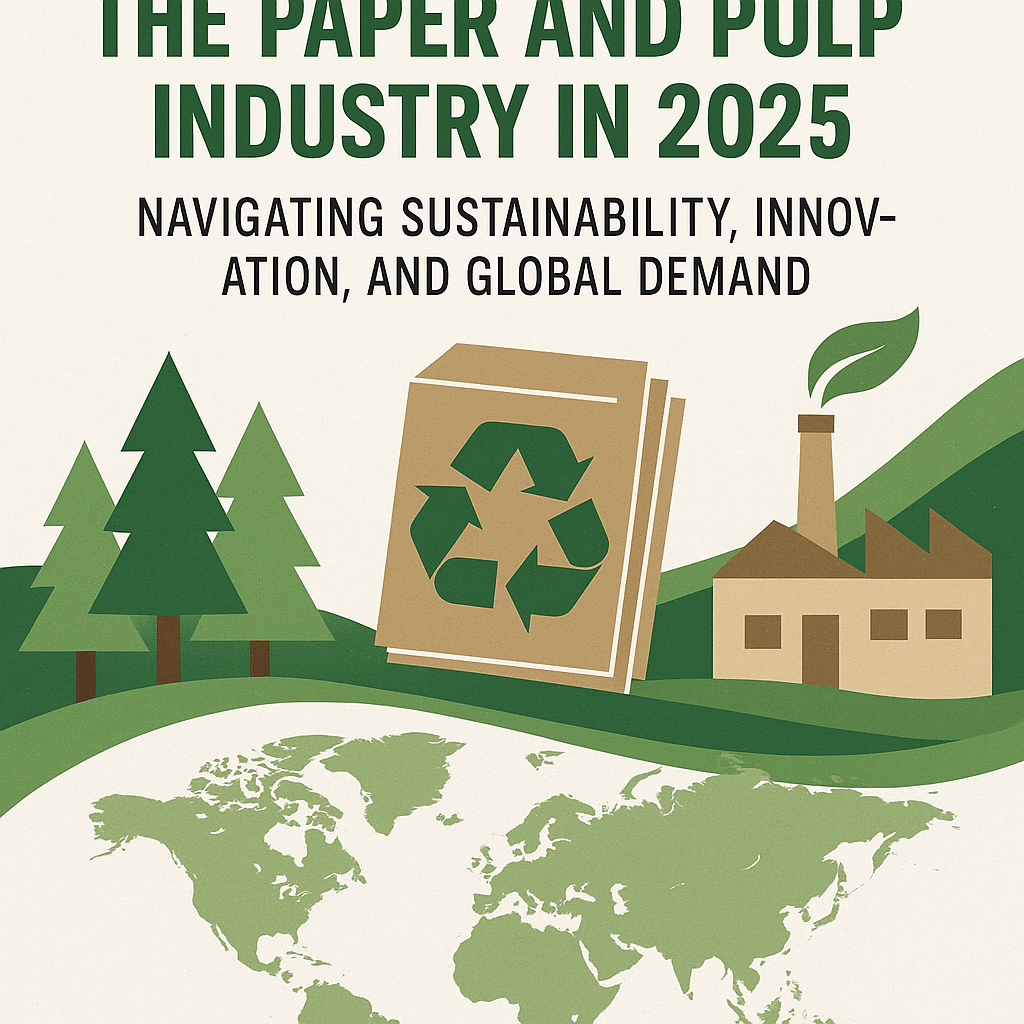
The global paper and pulp industry, valued at around USD 340 billion in 2024, is entering a phase of measured yet meaningful transformation. As the market moves toward an estimated USD 343 billion in 2025, with projections reaching USD 391 billion by 2032, the sector reflects a compound annual growth rate (CAGR) ranging between 1.0% to 4%, depending on the specific segment and region. These modest figures hide a story of innovation, sustainability challenges, and shifting consumption patterns that are reshaping this traditionally resource-intensive industry.
Regional Leadership: Asia Pacific Takes the Lead
Asia Pacific holds more than 50% of the global market share, making it the undisputed leader in the paper and pulp space. Two giants—China and India—are spearheading this dominance, propelled by rapid industrialization, a booming e-commerce sector, and the rising demand for biodegradable and sustainable packaging. Additionally, the growing middle class and increasing hygiene awareness are fueling demand for tissue and personal care products.
In contrast, North America and Europe, although mature markets, are witnessing a revival of interest in recyclable paper products and green manufacturing technologies, due to stringent environmental regulations and a conscious push toward circular economies.
Key Market Drivers: From Education to E-Commerce
The industry’s growth is largely supported by several long-term structural factors:
Eco-conscious Consumption: A global shift toward sustainable lifestyles has created robust demand for eco-friendly paper packaging, wrapping paper, tissue, and specialty papers.
E-Commerce Expansion: Online retail continues to disrupt packaging supply chains, creating massive demand for corrugated boxes, kraft paper, and void-fill materials.
Literacy and Education: Rising literacy rates in emerging economies and growing investment in education infrastructure are contributing to higher consumption of notebooks, textbooks, and office paper.
Policy Support: Governments and businesses alike are promoting sustainable practices, from banning single-use plastics to subsidizing biodegradable paper-based alternatives.
Industry Characteristics: Innovation in Tradition
Despite being seen as a mature and labor-intensive sector, the paper and pulp industry is embracing new technologies to address challenges related to resource efficiency and sustainability. Notable developments include:
Raw Material Diversification: Pulp production has expanded beyond traditional wood sources to include fiber crops, agricultural residues like wheat straw and rice husk, and waste paper.
Enzyme-assisted Pulping: Innovations such as bio-based pulping techniques reduce chemical usage and water consumption.
AI-driven Quality Control: Artificial intelligence is enhancing real-time quality monitoring, predictive maintenance, and energy efficiency in production lines.
These innovations are essential not only for improving operational efficiency but also for aligning with sustainability goals across the value chain.
Pressing Challenges: Digital Disruption and Cost Pressures
While growth prospects are stable, the industry is not without hurdles:
Raw Material Volatility: Supply chain disruptions and rising input costs pose a persistent threat to profitability, especially in regions heavily reliant on wood pulp imports.
Digital Substitution: As more consumers and institutions shift to digital formats, the demand for printing and writing paper continues to decline.
Environmental Impact: The industry faces ongoing scrutiny over its carbon footprint, deforestation impact, and water usage, prompting the need for more robust recycling infrastructure and green certifications.
Competitive Landscape: Global Giants and Emerging Players
Major players in the global pulp and paper landscape include:
International Paper (USA)
Nine Dragons Paper (China)
Stora Enso (Finland)
UPM-Kymmene (Finland)
Kimberly-Clark (USA)
WestRock (USA)
Nippon Paper Industries (Japan)
These companies are aggressively investing in R&D, green operations, and emerging markets to remain competitive in an evolving ecosystem.
A Sustainable Future on Paper
Despite its classification as a traditional sector, the paper and pulp industry in 2025 stands at the crossroads of eco-conscious innovation, technological advancement, and regional realignment. With Asia Pacific leading the charge, and global players realigning their operations to prioritize green and efficient models, the industry is showing resilience in the face of digital disruption and environmental scrutiny.
As the world leans into bio-based materials and circular economy principles, the industry’s relevance is being redefined—not just as a producer of paper, but as a key contributor to a more sustainable global economy.
Key Sources Referenced
Fortune Business Insights, Statista, PR Newswire, IBISWorld, DataIntelo, Stellar Market Research, The Business Research Company, Technavio
#SustainablePackaging
#AsiaPacificMarket
#EcoFriendlyPaper
#PulpInnovation
#CircularEconomy
#GreenManufacturing
#PaperIndustry2025
#DigitalDisruption
#AgriResiduePulp
#EcommercePackaging
 "Connecting communities, empowering nations: Unifying the Regional and Global Economy ."
Leave a comment