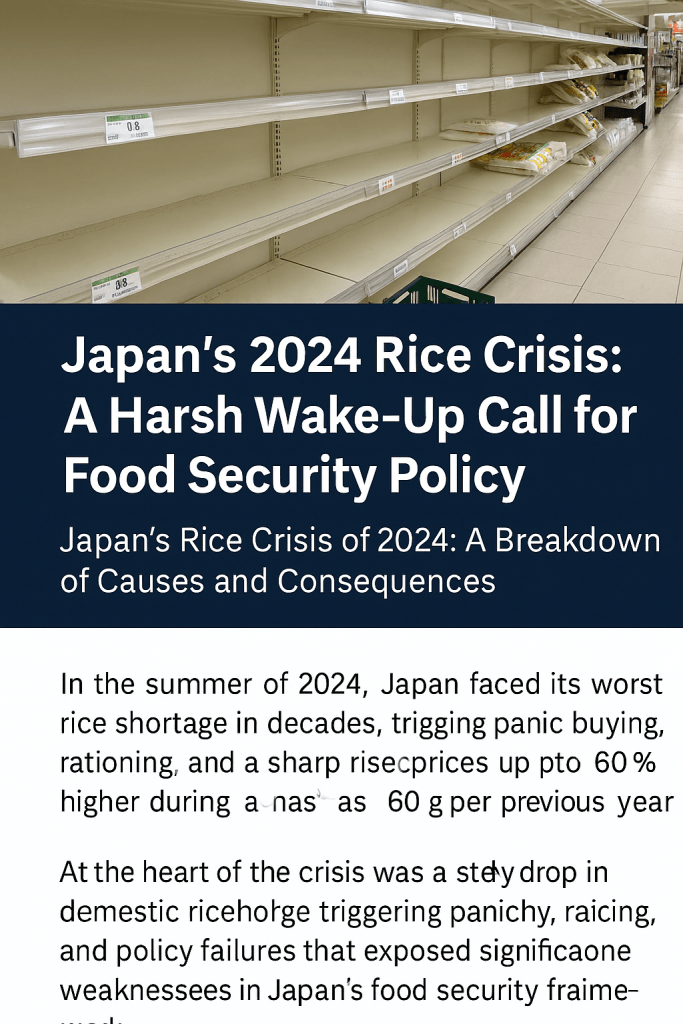
In the summer of 2024, Japan faced its most severe rice shortage in decades, triggering panic buying, rationing, and a sharp rise in prices. Supermarkets across the country began limiting customers to a single bag of rice per purchase as prices soared by as much as 60% compared to the previous year. This dramatic shortage wasn’t the result of a single event, but rather the outcome of a complex mix of climatic disruptions, production declines, and policy failures that exposed significant weaknesses in Japan’s food security framework.
At the heart of the crisis was a steady drop in domestic rice production for three consecutive years. Unpredictable weather, including excessive rainfall and prolonged heatwaves, contributed to poor harvests. This continuous decline in output led to Japan’s rice stockpiles plunging to their lowest levels in over 20 years. The situation was made worse by sudden earthquake warnings and natural disasters, which triggered widespread panic buying. In cities like Osaka, nearly 80% of retailers reported running out of rice by August 2024, a development that shocked a country where rice is not just a staple food, but a cultural cornerstone.
While the public scrambled to secure basic supplies, the government response appeared slow and insufficient. Agriculture Minister Tetsushi Sakamoto appealed to citizens to avoid panic buying, assuring them that the upcoming September harvest would restore balance. Yet, public anxiety persisted, and rice prices remained stubbornly high. Calls to release emergency rice reserves were initially resisted by the government, intensifying criticism of its crisis management. The delay in deploying these reserves revealed a deep rigidity in policy response, especially considering the government’s own data showed clearly declining inventories.
Adding to the frustration was the revelation that Japan had about 1.3 million tons of rice designated for non-edible uses—primarily for industrial processing and animal feed. This rice could have been diverted to meet table consumption needs, but was locked behind subsidy programs that discouraged such reallocation. These programs, originally intended to balance supply and avoid overproduction, backfired in the face of genuine consumer shortages.
As the crisis escalated, some pointed fingers at Japan’s booming tourism sector, suggesting that the influx of foreign visitors was putting pressure on rice supplies. However, this narrative was quickly debunked by official data: tourists account for only about 0.5% of Japan’s total rice consumption—far too insignificant to explain a nationwide crisis. The real issues lay within the country’s own agricultural structure and policy constraints.
The rice shortage brought to light broader vulnerabilities in Japan’s food system. Centralized grain distribution policies left little room for local adaptability or rapid supply chain responses. The crisis also exposed the growing fragility of Japan’s agricultural sector, where the aging farming population and decreasing rural labor force have already made production more vulnerable. Moreover, climate change has begun to alter growing conditions in ways that traditional agricultural practices are ill-prepared to handle.
As the government eventually moved to release emergency reserves and increase rice imports, experts and industry stakeholders called for more than just reactive measures. The crisis highlighted the need for structural reforms: revisiting agricultural subsidies to favor food security over industrial uses, developing climate-resilient farming techniques, and decentralizing food reserves to ensure quicker regional responses during shortages. There is also a growing demand to digitize and modernize Japan’s agri-food logistics to improve supply chain agility and transparency.
Japan’s 2024 rice crisis stands as a critical lesson for other countries. In an increasingly unpredictable climate era, food systems anchored on a few staples—and governed by rigid, outdated policies—are ill-equipped to respond to shocks. The events in Japan underscore the importance of building flexible, diversified, and resilient food systems that can withstand both environmental and economic stressors.
As Japan moves forward, the challenge will not only be in rebuilding trust among consumers but also in restructuring its agricultural policies to align with emerging global realities. The crisis has already prompted some reflection within the Japanese government, but unless it leads to sustained policy innovation and stronger local food systems, similar shocks could become more frequent and more severe in the years to come.
#RiceShortage #JapanFoodCrisis #ClimateImpact #FoodSecurity #PanicBuying #AgriculturalPolicy #EmergencyReserves #SupplyChainVulnerability #TableRice #SubsidyReform
 "Connecting communities, empowering nations: Unifying the Regional and Global Economy ."
Leave a comment