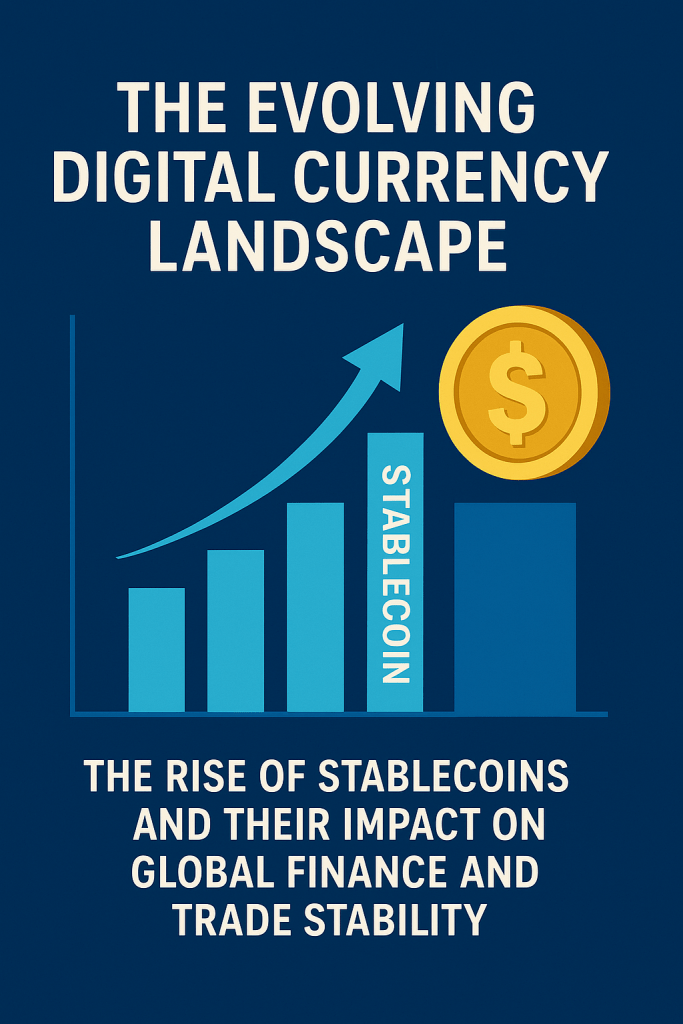
In the last decade, the financial world has undergone a seismic transformation, ushered in by the advent of digital currencies. While early headlines were dominated by the volatility of cryptocurrencies like Bitcoin and Ethereum, a quieter yet more transformative revolution has emerged: the rise of stablecoins. Designed to combine the benefits of blockchain technology with the stability of traditional fiat currencies, stablecoins are now at the heart of debates on monetary policy, cross-border trade, and the future of global finance.
What Are Stablecoins?
Stablecoins are a form of digital currency pegged to a stable reserve asset, typically a fiat currency like the US dollar, euro, or a basket of currencies. This pegging mechanism aims to reduce the price volatility associated with other cryptocurrencies, making stablecoins more suitable for everyday transactions and as a store of value.
There are three main categories:
Fiat-collateralized (e.g., USDC, USDT): Backed 1:1 by actual fiat reserves.
Crypto-collateralized (e.g., DAI): Backed by other cryptocurrencies, with smart contracts ensuring balance.
Algorithmic: Use supply and demand mechanisms to maintain price stability, though these have faced significant failures (e.g., TerraUSD crash).
The Growth Trajectory: A Data Snapshot
The rise of stablecoins has been nothing short of meteoric. According to a 2024 report by the Bank for International Settlements (BIS), the total market capitalization of stablecoins exceeded $150 billion, up from just $3 billion in 2018. Tether (USDT) and USD Coin (USDC) dominate this space, jointly accounting for more than 80% of the market.
Even central banks are taking note. The International Monetary Fund (IMF) noted in 2023 that over 60 central banks were exploring or piloting central bank digital currencies (CBDCs), many of which aim to emulate the low-friction, high-efficiency models of stablecoins.
Why Are Stablecoins Gaining Traction?
1. Efficient Cross-Border Payments: Traditional international transactions are slow and expensive, especially for developing economies. Stablecoins offer near-instant settlement and minimal fees, bypassing correspondent banking systems.
2. Financial Inclusion: In regions with unstable local currencies or underdeveloped banking infrastructure, stablecoins offer a way to store value and access global markets. For example, in parts of Sub-Saharan Africa and Latin America, USDT is widely used as a more reliable alternative to local currency.
3. Smart Contracts & Decentralized Finance (DeFi): Stablecoins serve as the backbone of DeFi ecosystems, enabling borrowing, lending, and trading without the need for traditional intermediaries.
Impact on Global Finance and Trade Stability
Stablecoins are redefining the contours of international finance in both positive and challenging ways:
Positive Disruptions
Trade Settlement: Businesses, especially in emerging markets, can settle international trade in stablecoins, reducing forex risk and banking delays. For instance, stablecoins were used in trade deals between companies in Argentina and China amid currency devaluation.
Dollarization 2.0: Many stablecoins are pegged to the US dollar, amplifying its dominance. This has geopolitical implications, as nations increasingly rely on dollar-backed digital assets in absence of trust in their own currencies.
Programmable Money: Conditional payments and automated escrow services enabled by smart contracts reduce transaction risks and increase trade transparency.
Challenges and Risks
Regulatory Uncertainty: The lack of global consensus on stablecoin regulation creates risk. Inconsistent treatment across jurisdictions hinders cross-border interoperability and may lead to arbitrage or illicit use.
Financial Stability Risks: As stablecoins become more embedded in financial systems, a sudden loss of trust (e.g., if reserves are mismanaged) could trigger panic akin to a bank run—only faster and borderless.
Monetary Sovereignty Concerns: Widespread use of foreign-backed stablecoins can erode the monetary policy effectiveness of smaller nations, who may find their central banks losing relevance.
Need for Guardrails
Recognizing both the promise and perils of stablecoins, regulators around the world are stepping up. The EU’s Markets in Crypto-Assets Regulation (MiCA) and the U.S. Stablecoin Transparency Act are early efforts to ensure reserve transparency, audit mechanisms, and issuer accountability.
Simultaneously, the rise of CBDCs, particularly China’s digital yuan and India’s e₹, indicates that sovereign states want to reclaim control of digital money flows while offering some benefits of stablecoins. The coexistence—or competition—between CBDCs and private stablecoins will shape the future of finance.
A Tectonic Shift in Progress
The evolving landscape of digital currency is not just a fintech trend—it is a structural shift in global economic infrastructure. Stablecoins have bridged the divide between the decentralized innovation of cryptocurrencies and the reliability of fiat, but their long-term impact will depend on how they are integrated into the formal financial system.
Handled well, they could democratize finance, improve trade efficiencies, and reduce systemic risks. Mismanaged, they could destabilize economies, undermine monetary authorities, and create shadow financial ecosystems. As we navigate this transition, the world’s policymakers, technologists, and businesses must collaborate to strike a delicate balance between innovation and stability.
#Stablecoins
#DigitalCurrency
#GlobalFinance
#TradeStability
#CrossBorderPayments
#FinancialInclusion
#DeFi
#CBDC
#MonetaryPolicy
#RegulatoryFramework
 "Connecting communities, empowering nations: Unifying the Regional and Global Economy ."
Leave a comment