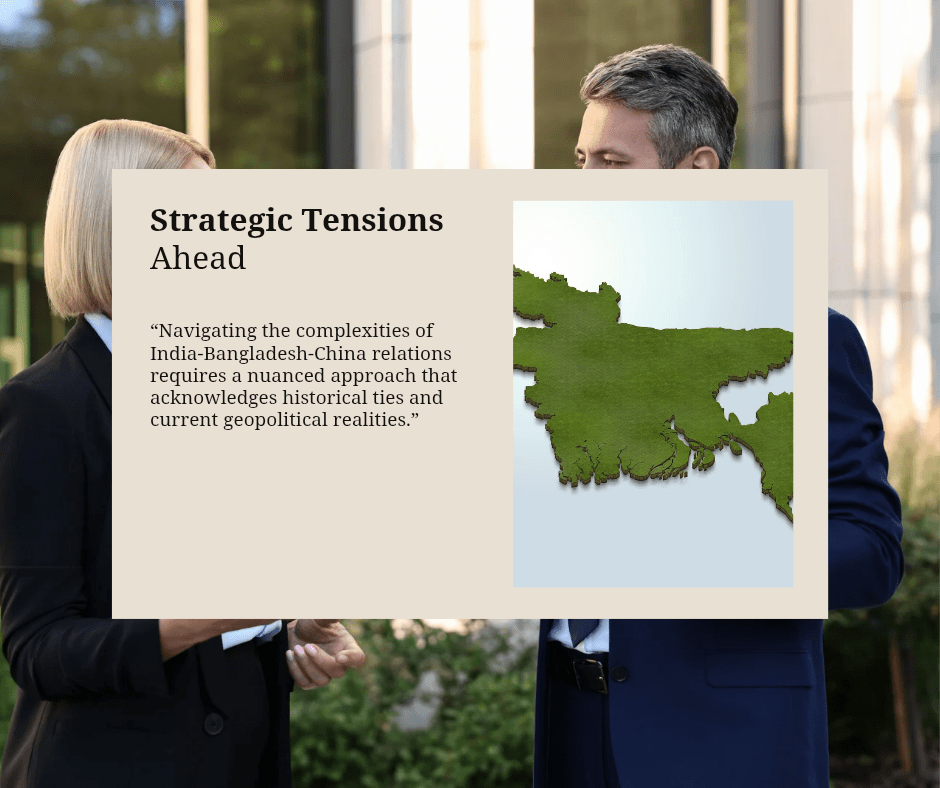
In a region as geopolitically intricate as South Asia, even the quiet shifts in logistics or diplomatic words can carry outsized consequences. A recent development in the India-Bangladesh trade corridor exemplifies this well—particularly around the transshipment of goods from Bangladesh to landlocked neighbors like Nepal, and the evolving implications of Chinese economic ambitions in the region.
Bangladesh has been increasingly relying on transshipment corridors passing through India to facilitate trade with countries such as Nepal and Bhutan. These corridors are critical for minimizing transit times and reducing transportation costs. However, their growing strategic significance is drawing international attention, especially as China’s footprint expands in South Asia under the guise of economic collaboration.
A telling moment came when Bangladeshi Nobel Laureate and key advisor Professor Muhammad Yunus visited China and made a noteworthy comment in Beijing. He emphasized that Bangladesh—particularly its access to the Bay of Bengal—should be viewed as a “guardian of the ocean” for the region. This phrasing may seem poetic, but it’s loaded with geopolitical intent. By positioning itself as a maritime gateway, Bangladesh is implicitly opening the door for deeper integration with China’s economic strategies in the Indo-Pacific, especially within the framework of the Belt and Road Initiative (BRI).
Meanwhile, India is observing these developments with increasing concern. China’s growing investments in Bangladeshi infrastructure—especially in corridors that stretch toward India’s sensitive Northeast region—are being seen as more than just trade facilitation. They represent a potential strategic foothold that could alter the power dynamics of South Asia. The Northeast, often described as connected to the rest of India via a narrow “chicken’s neck” corridor (the Siliguri Corridor), is already geopolitically vulnerable. Any external influence, particularly from China, amplifies that sensitivity.
This unease was publicly acknowledged when India’s External Affairs Minister S. Jaishankar confirmed that Prime Minister Narendra Modi had directly raised these concerns during recent diplomatic engagements. The concerns are not only about trade leverage but also about political legitimacy, given that China does not formally recognize Bangladesh’s upcoming 2025–2026 elections as a democratic process. This lack of acknowledgment is symptomatic of a broader ambiguity that surrounds China’s engagement style—prioritizing investment and infrastructure over democratic values or transparency.
For India, this isn’t just a matter of economic competition. It’s about maintaining strategic autonomy in a region that is increasingly becoming a chessboard of global influence. The presence of China, whether through port access, transshipment partnerships, or economic corridors, turns trade routes into potential pressure points. And for smaller countries like Nepal, the reliance on infrastructure running through Bangladesh and India becomes a high-stakes balancing act.
As we move closer to the scheduled elections in Bangladesh between December 2025 and June 2026, the choices made by Dhaka will carry long-term implications. Will it pivot more openly toward Chinese investments, inviting infrastructure with strings attached? Or will it balance its regional commitments by maintaining strategic trust with India?
The next chapter in India-Bangladesh relations is being written not just in diplomatic dialogues but in the design of roads, ports, and shipping lanes. And with every new consignment, every political gesture, and every foreign investment, the lines between economic opportunity and strategic vulnerability are becoming harder to separate.
Stay tuned, because the region’s future may well ride on the back of a shipping container—and who holds the key to its route.
#BangladeshIndiaRelations
#TransshipmentCorridors
#ChinaInSouthAsia
#StrategicAutonomy
#BeltAndRoadInitiative
#NortheastIndia
#TradeGeopolitics
#IndoPacificDynamics
#MaritimeStrategy
#IndiaForeignPolicy
 "Connecting communities, empowering nations: Unifying the Regional and Global Economy ."
Leave a comment