Introduction
On February 1, 2025, President Donald Trump announced significant tariffs on imports from Canada, Mexico, and China, marking a pivotal escalation in trade tensions. The U.S. imposed a 25% tariff on all goods from Canada and Mexico, with a reduced 10% tariff specifically on Canadian energy products. Additionally, a 10% tariff was levied on Chinese imports. These measures, justified by the administration as necessary to address issues like illegal immigration and fentanyl trafficking, have profound implications for international trade dynamics and domestic economies.
Rationale Behind the Tariffs
The Trump administration invoked the International Emergency Economic Powers Act (IEEPA) to implement these tariffs, citing national emergencies related to illegal immigration and the opioid crisis. The administration argues that Canada and Mexico have not sufficiently addressed the flow of illegal immigrants and fentanyl into the U.S., necessitating economic measures to compel action.
Economic Impacts
On the United States
The imposition of these tariffs is expected to lead to increased costs for American consumers and businesses. Goods such as automobiles, electronics, and agricultural products are likely to see price hikes as importers pass on the additional costs. The Peterson Institute for International Economics estimates that a sustained 25% tariff could reduce the U.S. gross domestic product by $250 billion over the next few years.
On Canada and Mexico
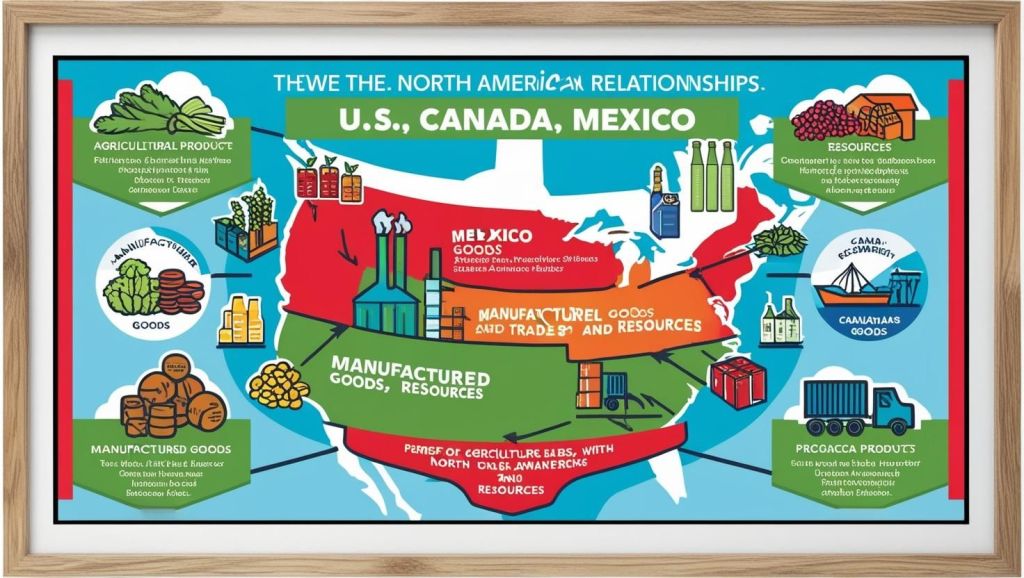
Canada and Mexico, being among the largest trading partners of the U.S., are poised to experience significant economic disruptions. The Canadian energy sector, particularly oil exports, faces challenges due to the 10% tariff, potentially affecting the integrated North American energy market. Mexico’s manufacturing sector, especially the automotive industry, may suffer from increased costs and supply chain disruptions.
Retaliatory Measures
In response to the U.S. tariffs, Canadian Prime Minister Justin Trudeau announced retaliatory tariffs on U.S. goods, aiming to exert pressure on American industries. Mexico has also signaled its intent to implement countermeasures, though specific details remain forthcoming. These retaliatory actions could further strain trade relations and impact businesses across North America.
Global Trade Implications
The escalation of tariffs among these major economies raises concerns about broader implications for global trade. Supply chains that have been optimized for efficiency across borders may need to be restructured, leading to increased costs and operational challenges. Additionally, the uncertainty stemming from these trade disputes could deter investment and slow economic growth in the affected countries.
The recent imposition of tariffs by the United States on imports from Canada, Mexico, and China marks a significant escalation in trade tensions with far-reaching economic implications. While the stated objectives address critical issues like illegal immigration and drug trafficking, the economic costs and potential disruptions to established trade relationships warrant careful consideration. As the situation evolves, it will be essential to monitor the impacts on consumers, businesses, and the broader economy, as well as the responses from the affected nations.
 "Connecting communities, empowering nations: Unifying the Regional and Global Economy ."
Leave a comment