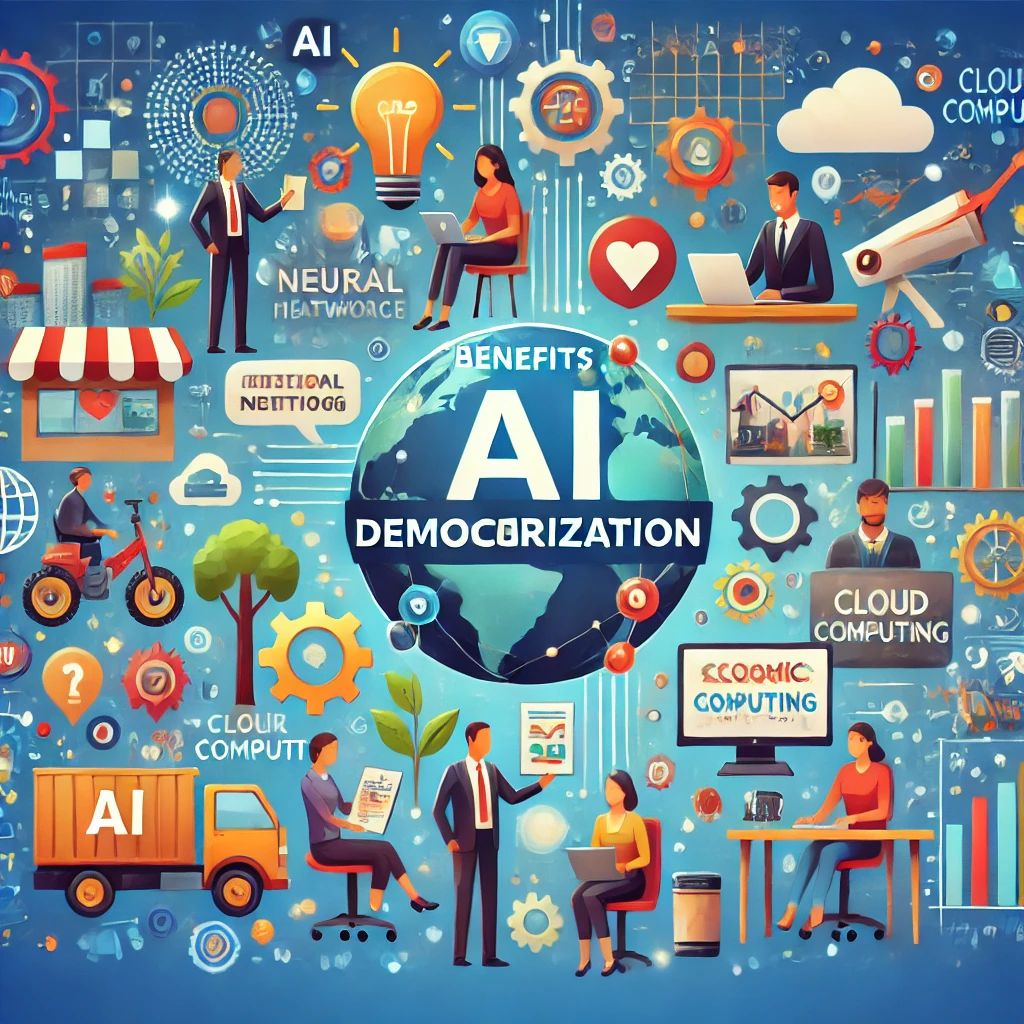
The democratization of Artificial Intelligence (AI) represents a pivotal shift in the technology landscape, offering transformative benefits across industries and communities. By making AI tools and capabilities accessible to a broader audience, this movement is reshaping how businesses, individuals, and societies interact with technology. Here, we explore the core benefits of AI democratization, backed by critical reasoning and data-driven insights.
1. Inclusivity: Bridging the Digital Divide
AI democratization fosters inclusivity by granting access to AI tools regardless of technical expertise or socio-economic status. Open-source platforms and user-friendly interfaces allow individuals from diverse backgrounds to engage with AI. This inclusivity encourages participation from underrepresented groups, fostering a more diverse tech community. For instance, low-code and no-code AI platforms enable small business owners or educators with minimal technical skills to integrate AI into their workflows, empowering them to innovate and compete in digital economies.
2. Driving Innovation Across Industries
The accessibility of AI tools fuels creativity and experimentation, allowing users from non-technical domains to ideate and implement AI-driven solutions. By lowering the entry barriers, individuals and small enterprises can leverage AI to address unique challenges. For example, in healthcare, democratized AI has enabled startups to create low-cost diagnostic tools, improving health outcomes in underserved regions. Similarly, in agriculture, AI-powered applications help small-scale farmers optimize yields through data insights, promoting sustainable practices.
3. Cost-Effectiveness for Businesses
Traditional AI implementation often requires significant investment in infrastructure and expertise, creating a barrier for many organizations. AI democratization mitigates this challenge through cloud-based services, open-source frameworks, and pre-trained models. Companies can now deploy AI capabilities without extensive technical resources, reducing operational costs. According to industry estimates, businesses adopting AI democratization tools report up to a 40% reduction in deployment costs, making advanced technologies more attainable for startups and small enterprises.
4. Enhanced Decision-Making
One of the most immediate benefits of AI democratization is its impact on decision-making processes. By embedding AI insights into daily operations, organizations can make faster, data-driven decisions. For example, predictive analytics tools accessible via democratized AI platforms enable businesses to anticipate market trends, optimize inventory, and improve customer satisfaction. Studies show that companies integrating AI into their decision-making processes achieve 25% higher operational efficiency compared to their competitors.
5. Promoting Economic Growth and Reducing Inequalities
AI democratization plays a vital role in bridging economic disparities by empowering small businesses and underprivileged communities. It equips them with tools to compete in a globalized economy, fostering job creation and economic growth. In developing regions, AI-driven microfinance solutions have emerged as a game-changer, enabling small entrepreneurs to access credit and expand their ventures. Additionally, by reducing the digital divide, democratized AI ensures that economic opportunities are more evenly distributed, promoting inclusive growth.
Challenges and Risks
While the benefits of AI democratization are substantial, it is not without challenges. Issues such as data privacy, algorithmic bias, and the potential misuse of AI by non-experts need to be addressed through robust regulatory frameworks and ethical guidelines. Moreover, as AI becomes more accessible, there is a growing need for education and training to ensure that users understand the capabilities and limitations of these tools.
AI democratization is a transformative force that holds the potential to revolutionize industries, foster inclusivity, and drive economic growth. By breaking down barriers to access, it empowers individuals and organizations to leverage AI for innovative solutions. However, its success depends on addressing the associated challenges through thoughtful policies and ethical considerations. As AI continues to evolve, its democratization will play a critical role in shaping a more equitable and innovative future.
 "Connecting communities, empowering nations: Unifying the Regional and Global Economy ."
Leave a comment