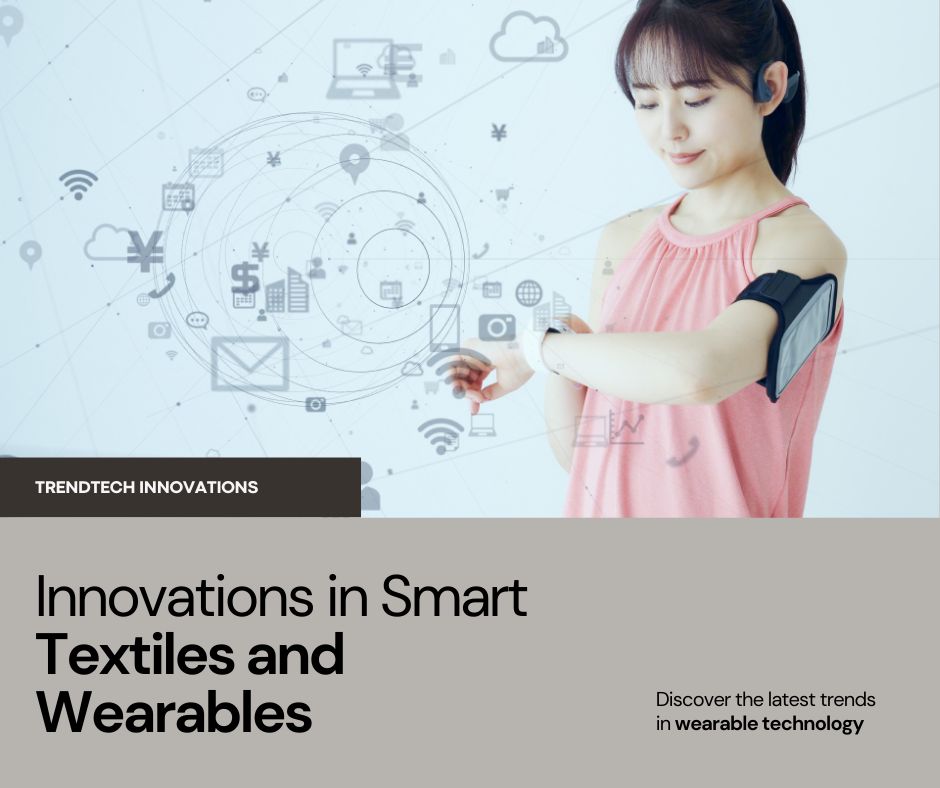
The world of textiles is experiencing a revolution, moving beyond traditional fabrics to embrace advanced functionalities through smart textiles and wearable technology. This fusion of fashion and technology is not just about aesthetics—it’s about offering innovative solutions that can monitor health, adjust to environmental changes, and even generate energy. Let’s explore the key trends shaping this emerging industry and the market potential of these innovations.
1. Temperature-Controlled Fabrics
Smart textiles have the capability to maintain optimal body temperature, offering comfort and enhanced performance. These fabrics integrate phase-change materials (PCMs) or advanced microcapsules that adjust their properties in response to body heat or external temperature changes. For instance, fabrics infused with PCMs can absorb heat when the body temperature rises and release it when it drops, ensuring a consistent level of comfort. This technology finds applications in sportswear, outdoor gear, and medical textiles, where temperature regulation is crucial.
2. Health Monitoring and Fitness Wearables
Wearable technology has already made a significant mark in the health and fitness industry, but smart textiles take it a step further. With sensors woven directly into the fabric, these textiles can monitor a range of biometric data, including heart rate, respiration, muscle activity, and even hydration levels. Unlike traditional wearable devices like wristbands, smart garments offer a more comprehensive and accurate data capture due to their proximity to the body and ability to cover larger surface areas. This makes them ideal for continuous health monitoring, particularly for athletes, elderly care, and patients with chronic conditions.
3. Energy Harvesting and Storage
A fascinating trend in smart textiles is the development of fabrics that can harvest and store energy. Researchers have been exploring ways to embed solar cells, piezoelectric fibers, or thermoelectric materials into textiles, allowing them to generate power from light, motion, or body heat. Imagine a jacket that can charge your phone while you walk or a T-shirt that powers wearable sensors through your body’s heat. These innovations hold immense potential for reducing reliance on batteries, making wearable devices more sustainable and self-sufficient.
4. Interactive and Adaptive Clothing
The rise of interactive textiles is changing how we engage with our surroundings. These fabrics are embedded with conductive threads and advanced circuitry that can respond to touch or gestures, effectively turning clothes into interfaces. For example, touch-sensitive textiles can allow users to control their smartphone directly from their sleeve or adjust the music volume with a simple swipe. This trend is driving a new wave of consumer products that blend fashion with functionality, providing a more immersive and intuitive experience.
5. Antimicrobial and Self-Cleaning Fabrics
In a post-pandemic world, hygiene has become a critical focus, driving the demand for antimicrobial and self-cleaning textiles. Integrating nanoparticles such as silver or copper into fabrics can provide long-lasting antibacterial properties, making them suitable for medical applications, sportswear, and daily use garments. Additionally, self-cleaning textiles, utilizing materials like titanium dioxide, can break down dirt and pollutants when exposed to sunlight, reducing the need for frequent washing and extending the life of garments.
6. Market Potential and Growth Opportunities
The smart textiles and wearable technology market is experiencing rapid growth, with analysts predicting significant expansion over the next decade. According to market research, the global market for smart textiles is expected to reach over $5 billion by 2028, driven by rising consumer interest, technological advancements, and increased adoption in healthcare and sports. The integration of 5G and IoT (Internet of Things) is also creating new possibilities for connected textiles that can transmit real-time data, making them attractive for industries ranging from military applications to fashion.
Moreover, sustainability is becoming a key factor in the growth of smart textiles. As consumers become more eco-conscious, the demand for energy-efficient, durable, and multifunctional fabrics is on the rise. Companies that can offer smart textiles with low environmental impact will likely gain a competitive edge in the market.
A Future Woven with Innovation
The field of smart textiles and wearable technology is opening up a world where fabrics are not just passive materials but active components of our daily lives. From enhancing comfort and performance to enabling continuous health monitoring and reducing our environmental footprint, these innovations are redefining what textiles can do. As technology continues to evolve, the line between clothing and gadgets will blur further, offering exciting possibilities for the future of fashion, healthcare, and beyond.
 "Connecting communities, empowering nations: Unifying the Regional and Global Economy ."
Leave a comment