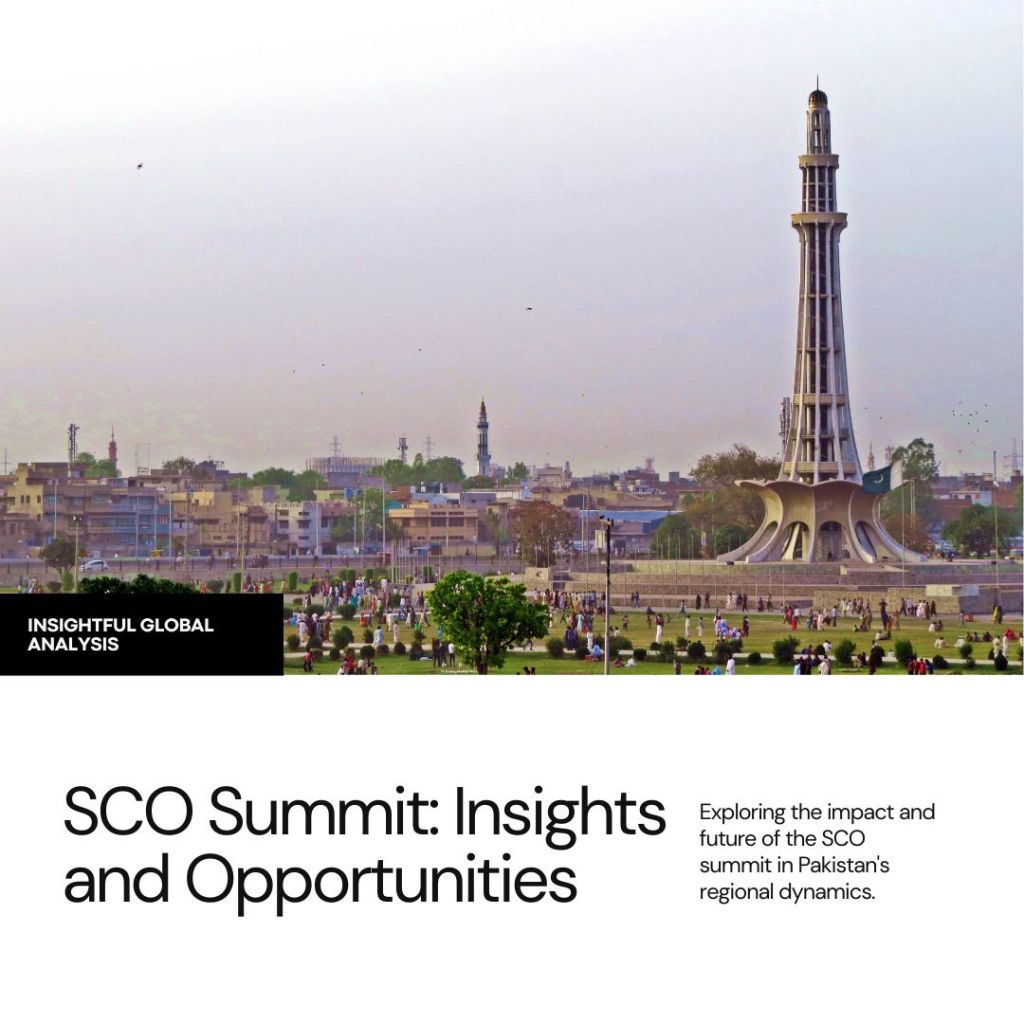
Regional cooperation has always played a pivotal role in addressing shared challenges and fostering economic growth. One such forum is the Shanghai Cooperation Organisation (SCO), which, since its establishment in 2001, has evolved into a significant regional platform for dialogue on security, economic cooperation, and political stability. The 25th SCO Summit, taking place on October 15-16, 2024, in Islamabad, Pakistan, holds particular importance as the organization continues to expand its influence across Eurasia. This summit will focus on combating terrorism, enhancing economic collaboration, and addressing climate change under the overarching theme “Strengthening Multilateral Dialogue—Striving Towards a Sustainable Peace and Prosperity.”
The Expanding Role of the SCO
Since its inception, the SCO has expanded from six founding members (China, Russia, Kazakhstan, Kyrgyzstan, Tajikistan, and Uzbekistan) to nine full members, with India and Pakistan joining in 2017 and Iran becoming a member in 2023. The organization now boasts three observer states and fourteen dialogue partners, covering over 65% of Eurasia and representing about 25% of the world’s GDP. This expansion highlights the SCO’s growing geopolitical significance and its evolving role as a key player in both regional security and economic cooperation.
With member states spanning from China and Russia to Central and South Asia, the SCO’s agenda now encompasses a wide range of issues beyond its original security focus. In 2024, the emphasis on multilateral cooperation aims to address pressing global challenges, from terrorism and extremism to economic development and climate change. The upcoming summit in Islamabad presents an opportunity for Pakistan to showcase its strategic importance and bolster its relations with both regional powers and Central Asian nations.
Pakistan’s Role and Strategic Importance
Hosting the 25th SCO Summit is a diplomatic milestone for Pakistan, providing the country with an opportunity to assert its role as a significant player in regional affairs. Islamabad’s relations with key powers like China and Russia, coupled with its complicated but crucial ties with India, will be on full display. For Pakistan, the summit is also a platform to strengthen its economic partnerships, particularly in areas like infrastructure, energy, and trade.
However, Pakistan faces several internal and external challenges as it prepares to host the summit. The most immediate challenge is the ongoing tension with India, exacerbated by issues such as Kashmir and cross-border conflicts. While the SCO avoids addressing bilateral disputes directly, the strained relationship between India and Pakistan has often cast a shadow over the organization’s activities. This summit will need to navigate these tensions carefully, ensuring that the larger goals of regional cooperation and economic collaboration are not derailed.
A Complex Geopolitical Landscape
The 2024 SCO Summit comes at a time of significant global shifts. The war in Ukraine has pushed Russia further away from Western countries, increasing its reliance on organizations like the SCO to maintain its global standing. For Russia, the SCO is a critical platform for deepening ties with non-Western countries and countering Western sanctions. China, on the other hand, views the SCO as a vehicle for advancing its Belt and Road Initiative (BRI) and securing strategic influence in Central Asia and beyond.
India, while an active member of the SCO, remains wary of China’s growing influence, particularly in Central Asia and the Indo-Pacific region. India’s participation in the summit will likely focus on securing its strategic interests without aligning too closely with either China or Russia. The summit will be a test of how well the SCO can balance these competing interests while fostering constructive dialogue.
The participation of leaders from China, Russia, India, and several Central Asian nations underscores the geopolitical importance of the summit. Central Asia, in particular, remains a focal point of competition, as it is rich in natural resources and strategically located. The summit’s theme of “Strengthening Multilateral Dialogue—Striving Towards a Sustainable Peace and Prosperity” reflects the need for these nations to work together in addressing common challenges while managing their individual ambitions.
Economic Cooperation and Challenges
The SCO’s potential for economic collaboration remains largely untapped. Despite representing a significant portion of the world’s population and GDP, trade among SCO members remains limited. One of the summit’s key priorities will be to explore avenues for enhancing economic integration. This includes developing infrastructure projects, increasing cross-border trade, and promoting investment, particularly in sectors like energy, technology, and digital economies.
For Pakistan, economic collaboration through the SCO is a critical opportunity. The country’s participation in China’s Belt and Road Initiative (BRI) has already led to significant infrastructure investments, and the summit provides an opportunity to deepen these partnerships. However, Pakistan’s economic struggles—marked by high inflation, fiscal deficits, and political instability—pose challenges to its ability to fully leverage SCO initiatives. Securing tangible outcomes from the summit will require addressing these internal issues and creating a more stable environment for foreign investment.
Climate Change and Regional Cooperation
A new and increasingly critical area of focus for the SCO is climate change. As many SCO member states face the growing threat of climate-related disasters, the summit aims to foster greater collaboration on environmental sustainability. The need for coordinated regional efforts on issues like water security, renewable energy, and disaster preparedness is becoming more urgent. Climate change impacts all SCO members, from the melting glaciers in Central Asia to increasing desertification in China and Pakistan.
The summit provides an opportunity for member states to discuss shared strategies for mitigating climate risks and transitioning towards greener economies. This is especially important for Pakistan, which has been severely affected by climate change, with frequent floods and droughts. Building a regional consensus on climate action could position the SCO as a key player in global environmental governance, aligning its goals with international efforts like the Paris Agreement.
Future Prospects of the SCO
The future of the SCO depends on how well it can manage internal tensions while addressing broader global challenges. The inclusion of India and Pakistan, both nuclear-armed rivals, presents both an opportunity and a risk for the organization. On one hand, the SCO offers a neutral platform where these two countries can engage in dialogue. On the other, their rivalry has the potential to stall progress on key initiatives.
China and Russia’s dominance in the SCO also creates a complex dynamic. While both countries are committed to the organization’s success, their divergent strategic interests—particularly in Central Asia—could lead to competition rather than cooperation. The summit’s success will depend on finding common ground in areas like counterterrorism, economic collaboration, and climate change.
The 25th SCO Summit in Islamabad marks a significant moment in the organization’s evolution. As the SCO continues to expand its membership and geopolitical influence, the challenges it faces—ranging from internal rivalries to external geopolitical shifts—will shape its future. For Pakistan, the summit is an opportunity to enhance its regional standing and secure critical economic partnerships. However, the success of the summit will depend on the ability of member states to navigate their differences and work towards the shared goal of sustainable peace and prosperity. Whether the SCO can deliver on its ambitious agenda remains to be seen, but the upcoming summit is a crucial step in determining its long-term relevance.
 "Connecting communities, empowering nations: Unifying the Regional and Global Economy ."
Leave a comment