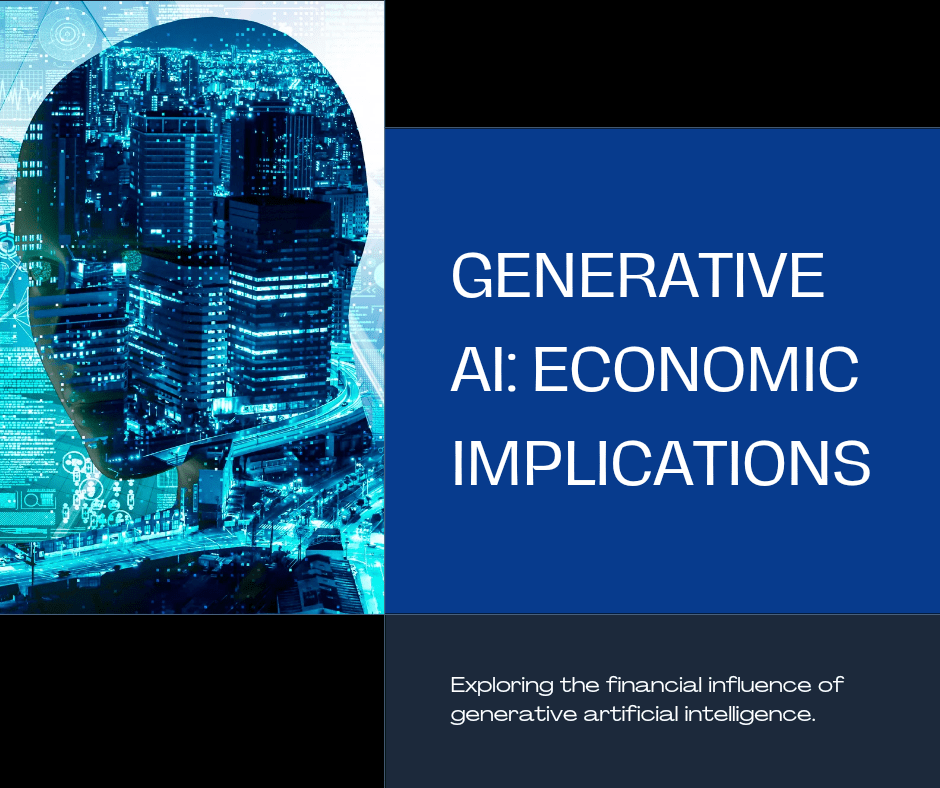
In recent years, the rise of generative AI has been nothing short of revolutionary. From creating photorealistic images to composing music and writing coherent articles, generative AI is at the forefront of technological innovation. But perhaps one of the most compelling aspects of this technology is how it is poised to reshape economies on a global scale. Let’s delve into the economic impact of generative AI and explore how it’s transforming business landscapes, labor markets, and even entire industries.
Boosting Productivity and Efficiency
Generative AI has the potential to significantly boost productivity across various sectors. By automating creative tasks, businesses can save time and resources, allowing human workers to focus on more strategic activities. For example, in graphic design, generative AI can quickly create multiple design options based on specific parameters, freeing designers to refine and perfect the best concepts rather than starting from scratch. This leads to faster turnaround times and increased output, which can ultimately translate into higher revenues and reduced operational costs.
Innovation and New Business Models
The capabilities of generative AI are spurring innovation and giving rise to entirely new business models. Startups and established companies alike are leveraging this technology to offer unique products and services. For instance, platforms that provide personalized content creation, such as AI-generated music or custom-written articles, are gaining traction. These innovations not only create new revenue streams but also offer consumers more tailored and engaging experiences.
Moreover, sectors like architecture and gaming are witnessing the transformation of traditional workflows. In architecture, generative design algorithms can propose optimal building designs based on specified constraints, leading to more efficient and sustainable structures. In gaming, AI-generated environments and characters add complexity and variety, enhancing the player experience and opening up new dimensions for storytelling and gameplay.
Labor Market Disruptions and Opportunities
While generative AI promises substantial economic benefits, it also poses challenges to the labor market. Certain roles that involve repetitive or lower-level creative tasks may become automated, potentially displacing workers in those areas. However, history has shown that technological disruptions often create new types of jobs that were previously unimaginable. For instance, the rise of the internet gave birth to entirely new professions like web developers and social media managers.
As generative AI continues to evolve, new career opportunities are likely to emerge in fields such as AI ethics, data curation, and human-AI collaboration. Preparing the workforce for these transitions through reskilling and upskilling initiatives will be crucial in mitigating job displacement and harnessing the full potential of this technology
Enhancing Consumer Experiences
One of the most noticeable impacts of generative AI is the enhancement of consumer experiences. Personalized content recommendations, improved customer service through AI chatbots, and customized marketing campaigns are just a few examples of how businesses are using generative AI to better serve their customers. These improvements can lead to increased customer satisfaction and loyalty, driving sales and business growth.
Challenges and Ethical Considerations
Despite its vast potential, the deployment of generative AI is not without challenges. Ethical considerations, such as the potential for AI-generated deepfakes or the misuse of AI in creating misleading content, need to be addressed. There is also the issue of intellectual property—who owns the rights to AI-generated content? Policymakers, industry leaders, and technologists must work together to develop regulatory frameworks that ensure the responsible and ethical use of generative AI.
The economic impact of generative AI is multifaceted, offering immense opportunities while also presenting significant challenges. By boosting productivity, fostering innovation, transforming labor markets, and enhancing consumer experiences, generative AI is set to become a pivotal force in the global economy. However, realizing its full potential will require a balanced approach that addresses ethical concerns and supports workforce transitions.
As we stand on the brink of this new era, it’s clear that generative AI is not just a technological advancement but a catalyst for economic transformation. Businesses, workers, and policymakers alike must prepare to navigate this evolving landscape to fully reap the benefits of this groundbreaking technology.
 "Connecting communities, empowering nations: Unifying the Regional and Global Economy ."
Leave a comment