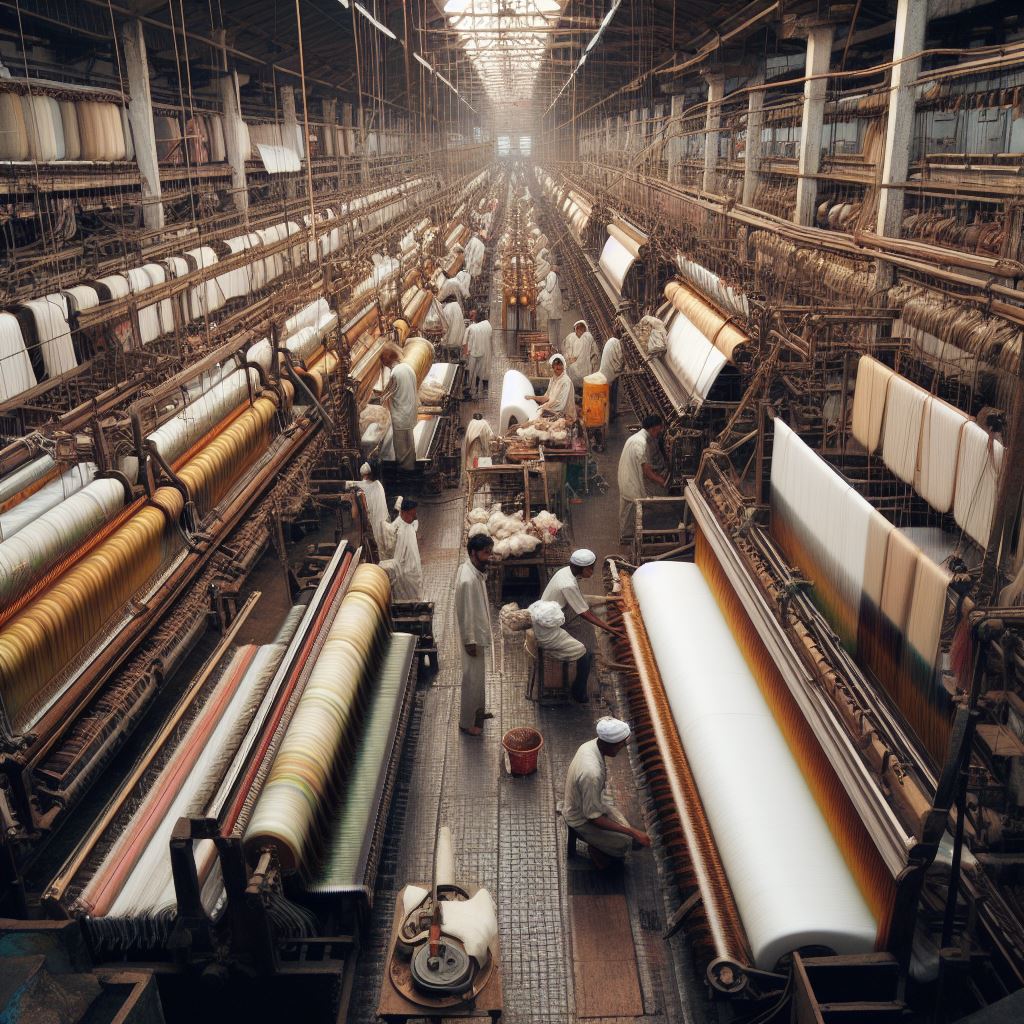
The powerloom sector in India plays a crucial role in the textile industry and contributes significantly to the country’s cloth production and exports. It serves as a decentralized network that provides employment to millions of people, particularly in rural areas. However, the sector also faces several challenges that hinder its growth and competitiveness, including fluctuations in yarn prices and quality, unfair competition from Chinese fabrics routed through neighboring countries, disparities in electricity prices, anti-dumping duties on viscose yarns, and technological obsolescence.
One of the major challenges faced by the powerloom sector is the fluctuation in yarn prices and quality. Yarn is a vital input in the production process, and any fluctuations in its cost can significantly impact the overall production costs and profitability of powerloom products. Moreover, variations in yarn quality can result in lower-quality fabrics, affecting the competitiveness of Indian textiles in both domestic and international markets.
Another challenge is the indirect routing of Chinese fabrics from countries like Bangladesh, which creates unfair competition for the powerloom sector in India. These fabrics are often sold at lower prices due to subsidies provided by the Chinese government. As a result, Indian powerloom products struggle to compete in the domestic market, affecting the livelihoods of workers and the overall growth of the sector.
Disparities in electricity prices across different areas also pose a challenge to the powerloom sector. Higher electricity costs in some regions create a disparity in production costs, making it difficult for powerloom units in these areas to compete with those in regions with lower electricity prices. This disparity ultimately affects the prices of fabrics, making it challenging for Indian products to remain competitive.
The imposition of anti-dumping duties on viscose yarns further adds to the challenges faced by the powerloom sector. Viscose yarns are essential inputs in the textile production process, particularly for the production of blended fabrics. Anti-dumping duties increase the pricing of these yarns, making it more expensive for powerloom units to procure them. This increase in input costs reduces the profitability of powerloom products and affects India’s ability to compete in the global market.
Technological obsolescence, fragmented structure, low productivity, and low-end quality products are also significant challenges for the powerloom sector. Due to limited access to capital and resources, many powerloom units struggle to adopt advanced technologies and upgrade their machinery. This leads to lower productivity levels and lower-quality products, limiting the growth and competitiveness of the sector.
Despite these challenges, there are also various opportunities that can help the powerloom sector overcome these hurdles and thrive in the industry. One such opportunity is technology upgradation. By investing in modern machinery and adopting advanced manufacturing technologies, powerloom units can improve the quality and productivity levels of their products. This, in turn, can make them more attractive for both domestic and international markets, helping them compete effectively.
Diversification of products is another opportunity for the powerloom sector. With changing consumer preferences and demands, there is a need to expand the range of products offered by powerloom units. By diversifying their product offerings and catering to different market segments, powerloom units can tap into new opportunities and meet the evolving needs of consumers.
The development of clusters is another opportunity for the powerloom sector. Clusters are geographically concentrated areas that offer better infrastructure, common facilities, marketing support, and skill development for powerloom units. These clusters can create economies of scale, improve efficiency, and enhance the competitiveness of the sector as a whole.
Furthermore, government schemes and policies can provide significant support to the powerloom sector. Various financial assistance programs, subsidies, incentives, insurance coverage, and export promotion initiatives can help alleviate the challenges faced by powerloom units. By leveraging these benefits, powerloom units can enhance their competitiveness and expand their market reach.
In conclusion, the powerloom sector in India plays a vital role in the textile industry and the country’s economy. While it faces several challenges such as fluctuations in yarn prices and quality, unfair competition, electricity price disparities, anti-dumping duties, and technological obsolescence, there are also opportunities for growth and improvement. By embracing technology upgradation, diversifying products, developing clusters, and leveraging government support, the powerloom sector can overcome these challenges and strengthen its position in the global textile market.
Citations
1) Unveiling the Challenges and Opportunities of India’s Powerloom Industry with Mr. Vishwanath R. Agarwal.
Link: https://textilevaluechain.in/in-depth-analysis/interviews/unveiling-the-challenges-and-opportunities-of-indias-powerloom-industry-with-mr-vishwanath-r-agarwal/
2) Problems and Prospects of Powerloom Industry – A Case of Gadag.
Link: https://www.ijcrt.org/papers/IJCRT1807466.pdf
3) Indian power loom industry: an overview.
Link: https://www.fibre2fashion.com/industry-article/2291/indian-power-loom-industry-an-overview
4) POWER LOOM CLUSTER IN INDIA – Textile Magazine, Textile News, Apparel.
Link: https://textilevaluechain.in/in-depth-analysis/articles/textile-articles/power-loom-cluster-in-india/
 "Connecting communities, empowering nations: Unifying the Regional and Global Economy ."
Leave a comment