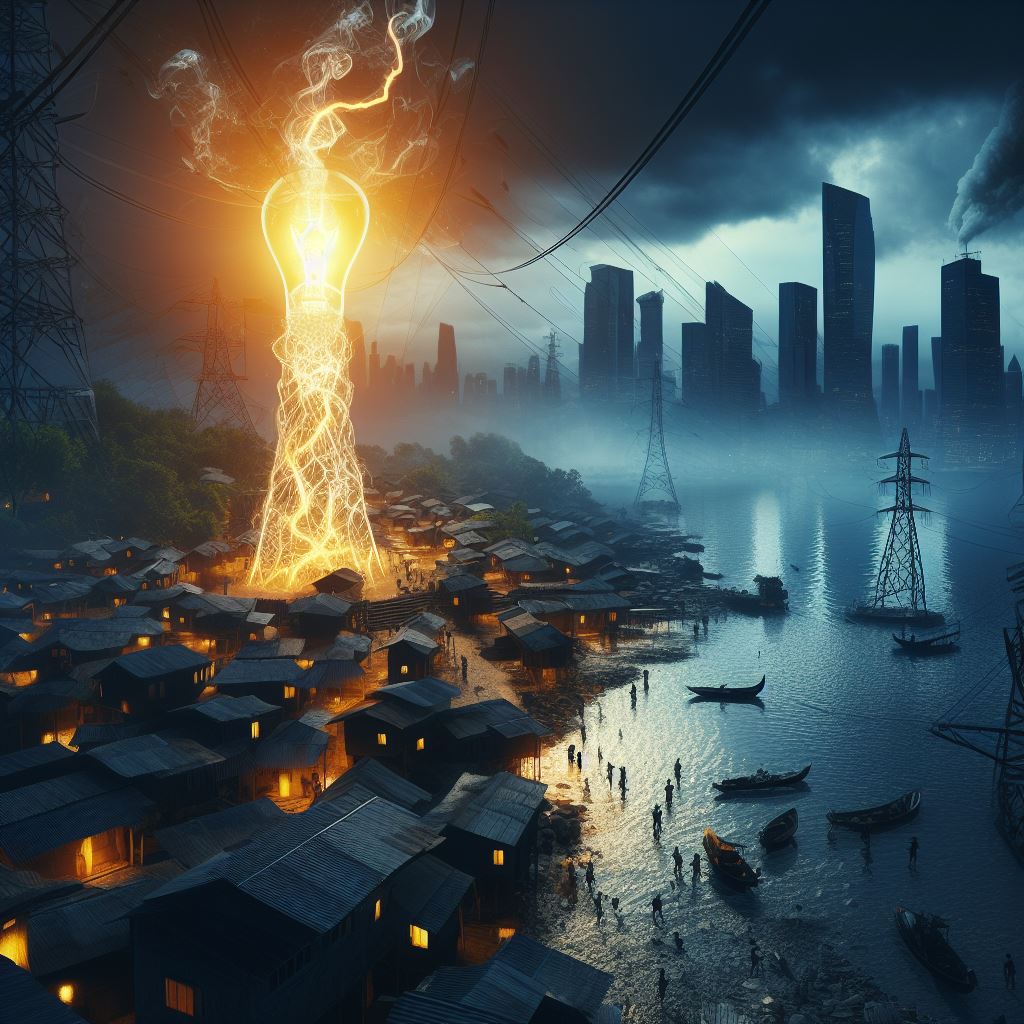
The world is facing two major energy problems: most of the energy we use still produces greenhouse gas emissions, which contribute to climate change, and hundreds of millions of people lack access to sufficient and reliable energy, which hampers their development and well-being. These problems are especially acute for the world’s poorest, who are often the most vulnerable to the impacts of climate change and the least able to afford or access clean energy solutions.
The energy crisis is a term that refers to the situation where the demand for energy exceeds the supply, or where the supply is unreliable, expensive, or harmful to the environment or human health. The energy crisis can have various causes, such as geopolitical conflicts, natural disasters, economic shocks, technical failures, or policy choices. The energy crisis can also have various consequences, such as power outages, price spikes, social unrest, environmental degradation, or human suffering.
The world’s poorest are the hardest hit by the energy crisis, especially at the food-energy-poverty nexus. This nexus refers to the interconnection and interdependence of food security, energy security, and poverty reduction. The lack of access to modern energy services affects the ability of poor people to produce, process, store, and transport food, as well as to cook it safely and efficiently. The high cost of energy also reduces the purchasing power of poor people and increases their vulnerability to food price shocks. Moreover, the reliance on traditional biomass fuels for cooking and heating exposes poor people to indoor air pollution, which causes respiratory diseases and premature deaths. According to the World Health Organization (WHO), more than 4 million people die each year from illnesses attributable to household air pollution¹.
The energy crisis also affects the climate system, which in turn affects food production and security. The burning of fossil fuels and biomass emits greenhouse gases that trap heat in the atmosphere and cause global warming. Global warming alters the patterns of precipitation, temperature, and seasons, which affect crop yields and quality, as well as pest and disease outbreaks. Global warming also increases the frequency and intensity of extreme weather events, such as droughts, floods, heat waves, storms, and wildfires, which damage crops and infrastructure, disrupt food supply chains, and displace populations. According to the Intergovernmental Panel on Climate Change (IPCC), climate change is projected to increase the risk of hunger and malnutrition for millions of people².
The energy crisis has triggered unprecedented momentum behind renewable energy sources, such as solar, wind, hydro, biomass, geothermal, and ocean energy. Renewable energy sources are those that are replenished by natural processes and do not deplete finite resources or emit greenhouse gases. Renewable energy sources have several advantages over fossil fuels: they are abundant and widely distributed; they are clean and environmentally friendly; they are cost-competitive and create jobs; they enhance energy security and reduce dependence on imports; they improve access to modern energy services and reduce poverty.
The International Energy Agency (IEA) predicts that the world is set to add as much renewable power in the next five years as it did in the past 20³. According to its report “Financing Clean Energy Transitions in Emerging and Developing Economies”, renewable power capacity additions in emerging markets and developing economies (EMDEs) are expected to increase by 50% between 2020 and 2025⁴. This is driven by several factors: falling technology costs; supportive policies and regulations; increasing private sector participation; growing social awareness; and rising climate ambition.
However, there are also several challenges that hinder the scaling up of renewable energy in EMDEs: inadequate financing; high perceived risks; complex project development; weak institutional capacity; insufficient grid infrastructure; limited consumer affordability; and competing policy priorities. To overcome these challenges, the IEA report proposes a series of actions for governments, development partners, investors, and civil society⁴. These actions include:
– Mobilizing public finance to leverage private investment
– Providing risk mitigation instruments and de-risking strategies
– Streamlining project development processes
– Building institutional capacity and stakeholder engagement
– Enhancing grid integration and flexibility
– Improving affordability and accessibility
– Aligning policies with clean energy transitions
By implementing these actions, EMDEs can unlock their renewable energy potential and reap multiple benefits for their economies,
societies, and environments.
They can also contribute to the global efforts to achieve net-zero emissions by 2050, which is necessary to limit global warming to 1.5°C above pre-industrial levels, as recommended by the Intergovernmental Panal on Climate Change (IPCC²).
In conclusion, the energy crisis is a serious challenge that affects the world’s poorest the most, especially at the food-energy-poverty nexus. However, the crisis also offers an opportunity to accelerate renewable energy transitions in Emerging and Developing Economies (EMDEs), which can improve their energy security, food security, and poverty reduction,
as well as mitigate climate change and its impacts. To seize this opportunity, EMDEs need to mobilize adequate finance, reduce risks, streamline, projects, build capacity, enhance grids, improve affordability, and align policies with clean energy goals.
Citations
(1) Unlocking renewable energy future in emerging markets. https://www.weforum.org/impact/clean-energy-in-emerging-markets/.
(2) A new approach to scaling up renewable energy in emerging markets. https://www.weforum.org/agenda/2020/06/scale-up-renewable-power-emerging-markets/.
(3) Financing clean energy transitions in emerging and developing economies …. https://www.iea.org/reports/financing-clean-energy-transitions-in-emerging-and-developing-economies.
(4) Renewable Energy Management in Emerging Economies. https://www.routledge.com/Renewable-Energy-Management-in-Emerging-Economies-Strategies-for-Growth/Wang/p/book/9781032337012
(5) It’s time to make clean energy investment in emerging and developing …. https://www.iea.org/news/it-s-time-to-make-clean-energy-investment-in-emerging-and-developing-economies-a-top-global-priority.
(6) The global energy crisis – World Energy Outlook 2022 – IEA. https://www.iea.org/reports/world-energy-outlook-2022/the-global-energy-crisis.
(7) The world’s energy problem – Our World in Data. https://ourworldindata.org/worlds-energy-problem.
(8) Global Risks Report 2023 | World Economic Forum. https://www.weforum.org/reports/global-risks-report-2023/in-full/1-global-risks-2023-today-s-crisis.
(9) Profiling poverty beyond income shows where to have the biggest impact …. https://www.undp.org/press-releases/profiling-poverty-beyond-income-shows-where-have-biggest-impact-world-crisis.
 "Connecting communities, empowering nations: Unifying the Regional and Global Economy ."
Leave a comment